Quick Answer
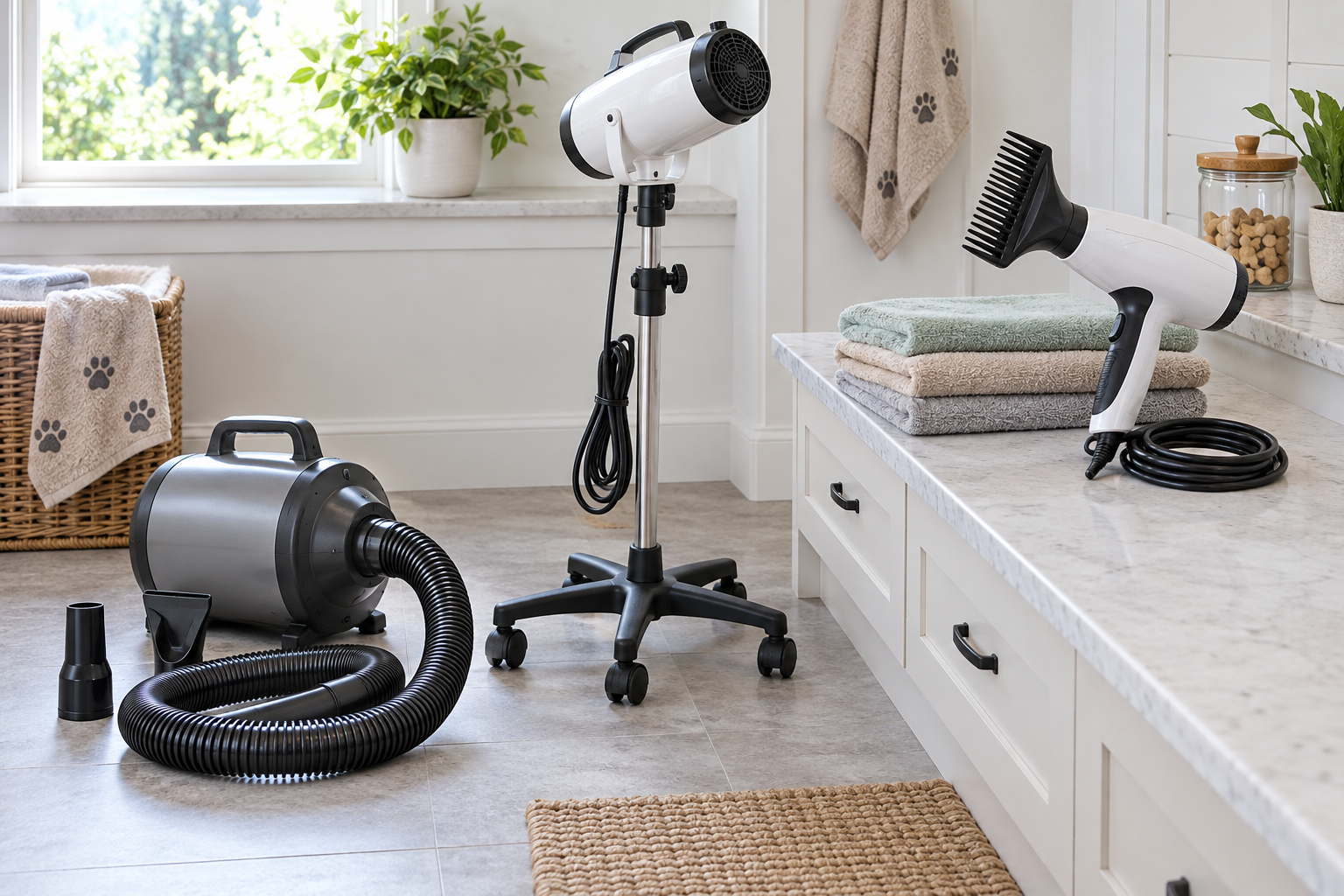
Choose a compact hose-based format when a separate base can remain dry and stable and the hose reaches the drying area without pulling. Choose a stand-mounted format when you have measured floor space for the base and want supported positioning. Choose a handheld format when compact one-piece storage matters and the tool is comfortable to hold. Skip powered drying when ordinary towels already work or the dog shows fear, pain, heat sensitivity, breathing difficulty, skin or ear concerns, or handling distress.
This guide is a purchasing framework, not drying technique. A dryer does not make a difficult bath safe or replace a qualified groomer or veterinarian. Ask a professional before adding powered drying when tolerance, coat condition, skin, hearing, breathing, pain, age-related vulnerability, or another health concern is uncertain.
What to Verify on the Current Listing and Manual
- Controls: Look for clearly documented airflow settings and how they are changed. Do not infer fine control from a dial pictured without explanation.
- Heat configuration: Determine whether the maker documents no added heat, a selectable heating element, or heat produced by motor operation. Do not treat any wording as a safety guarantee.
- Reach: Add the stated hose and cord lengths to your room sketch. Leave slack so neither pulls the base, crosses a wet zone, or creates a tripping route.
- Attachments: Check each included nozzle's documented purpose, connection, inspection, and replacement—not just the accessory count.
- Filter and intake: Confirm where hair and lint collect, how the filter is accessed, and the maker's cleaning and replacement directions.
- Electrical information: Look for the current manual, plug and power requirements, stated certifications where applicable, warnings, warranty, and seller return terms. Unclear documentation is a reason to skip.
- Footprint and storage: Measure the base, stand, hose coil, nozzles, and cord together. Store the fully dry, unplugged equipment away from pet access.
Noise descriptions are especially hard to compare across listings. Treat terms such as “quiet” or a listed sound figure as manufacturer information that needs context, not proof that a particular dog will tolerate the device.
Compact Hose, Stand-Mounted, or Handheld?
Compact hose-based dryer
The motor sits in a separate base while the user holds a hose and nozzle. Evaluate base stability, carrying handle, hose connection, bend radius, controls, intake clearance, and the combined storage footprint. A compact base is not necessarily a compact complete setup once the hose, cord, and attachments are included.
Stand-mounted dryer
A supported head changes the room-planning problem. Measure the base at its widest point, the documented adjustment range, the space needed to reposition it, and whether the cord stays outside wet and walking areas. A wheeled or adjustable stand still requires inspection and a level, stable placement under the maker's directions.
Handheld pet dryer
A one-piece tool can simplify storage, but tool weight, grip, control placement, intake location, cord reach, and the full handling time matter. A comb-style or broad nozzle should only be used as its maker directs; its appearance does not establish coat suitability or comfortable contact.
Plan the Dry Setup, Cleaning, and Storage
Map the routine before buying: where the dog stands voluntarily, where the unplugged equipment is stored, where it is placed during use under the maker's directions, and how hoses and cords stay away from water and walking paths. Use a properly installed outlet and follow all equipment warnings; do not improvise extension cords, adapters, mounting, heat settings, or wet-area placement. If electrical suitability is unclear, ask a qualified electrician rather than guessing.
After use, unplug and allow the equipment to cool if the manual requires it. Remove collected hair, clean filters and attachments, inspect the intake, housing, plug, cord, hose, stand, connectors, and nozzles, and let all cleanable parts dry as directed before storage. Stop using equipment with cracks, looseness, exposed wiring, damaged plugs or cords, unusual odor, sparks, or other damage, and follow the maker's service guidance.
For the rest of the bath setup, compare dog bath brush formats, small-tub shower attachments, and pet bath towels. The broader routine-care pillar is planned but not yet published, so these established guides are the most useful current path.
Who Should Skip a Dog Dryer?
Skip the purchase when towels already handle occasional baths, storage would force equipment into a damp area, the manual or electrical documentation is unavailable, the controls are unclear, or the complete hose-and-cord route does not fit the room. Also skip any format whose weight, stand footprint, intake access, cleaning steps, or replacement parts do not fit your routine.
Do not use shopping as a workaround for fear or difficult handling. Stop if a dog freezes, hides, struggles, pants unusually, vocalizes, snaps, tries to escape, or otherwise appears distressed. A qualified groomer can help with routine coat and equipment choices for a calm dog; a veterinarian is the right next step for pain, inflamed or broken skin, persistent itching, unusual odor, breathing or ear concerns, heat sensitivity, sudden coat changes, or uncertainty about whether home drying is appropriate.
Bottom Line
Start with the simplest format that fits a calm dog, a dry and stable setup, and your real storage space. Compare documented controls, heat configuration, complete reach, attachment directions, filter care, electrical information, dimensions, warranty, and returns. Skip vague listings and any setup that depends on improvised placement or pushing through distress.