This is a product decision guide, not advice on bathing frequency, skin conditions, medicated products, or coat treatment. Follow current product directions and any care guidance from your veterinarian or qualified groomer.
Quick Decision: Buy, Delay, Use Your Hands, or Skip
- Buy when home baths happen often enough to justify another tool, your dog accepts the contact, and a measured brush improves your wet grip or reach.
- Use your hands when the current routine is controlled, comfortable, and easy to clean up afterward.
- Delay until you know the dog's coat needs, the contact your dog accepts, your hand measurements, and where the tool will drain and dry.
- Ask a qualified groomer when coat type, matting, or tool choice is unclear but there is no medical concern.
- Skip and contact a veterinarian for pain, sores, redness, swelling, unusual odor, unexplained hair loss, persistent itching, or other skin or coat changes.
The Six-Part Worth-It Test
- Routine: Are home baths established and frequent enough that a dedicated tool solves a repeating problem?
- Dog tolerance: Does your dog remain comfortable with gentle hand contact where the brush would be used?
- Coat guidance: Does the maker clearly state a suitable species, coat use, contact material, and instructions?
- Hand control: Do the strap opening, handle dimensions, head size, and wet-grip surface fit your hand?
- Reset: Can every seam, reservoir, and contact surface be rinsed, drained, dried, and stored beyond pet reach?
- Value: Does the brush make an existing routine simpler enough to justify its cost and storage?
What a Bath Brush Changes—and What It Does Not
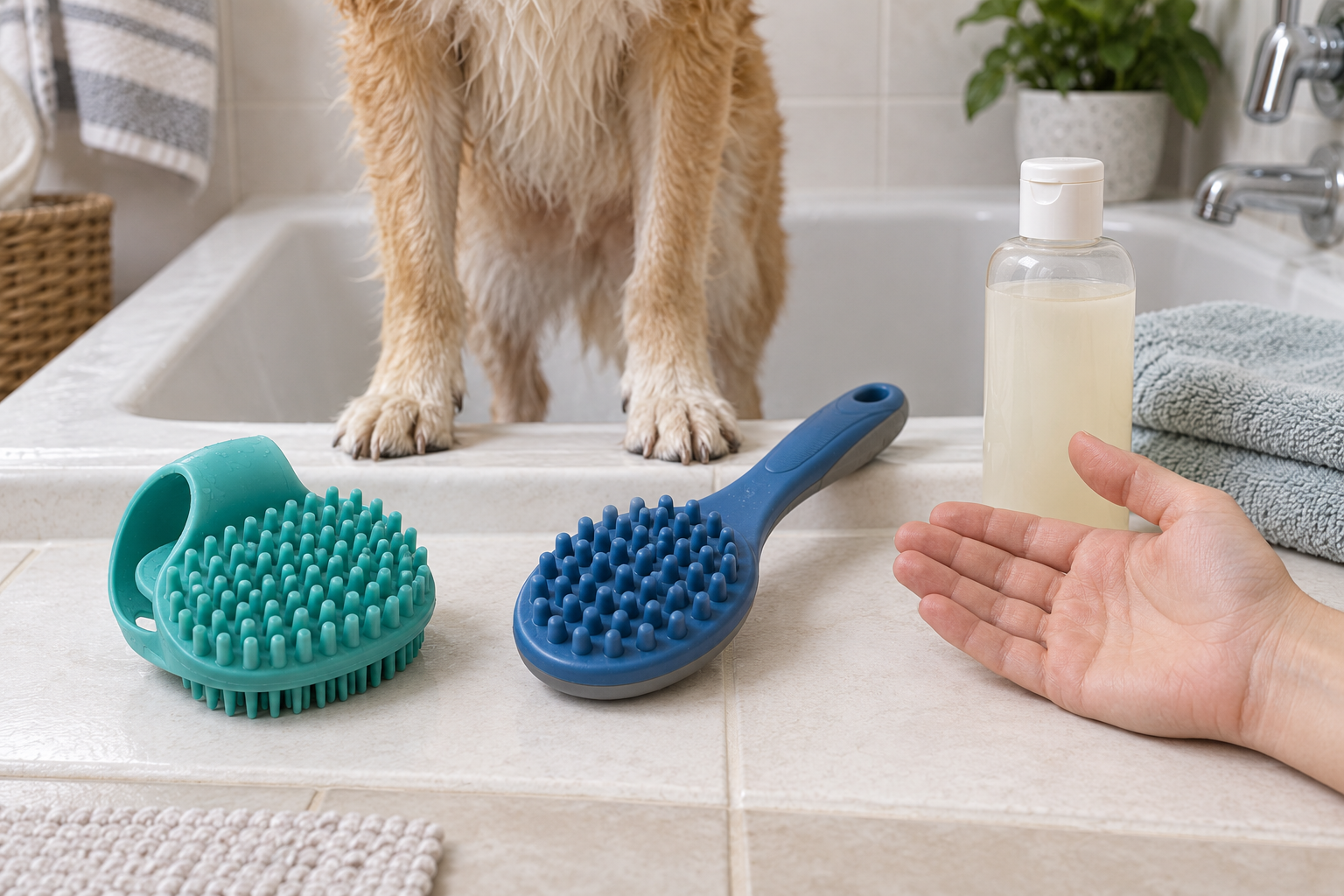
A flexible palm brush keeps the contact head close to your hand, while a handled brush separates your grip from the working surface. Either may be easier to hold than soapy hands for some owners. A dispensing brush adds a reservoir, but also adds parts to fill, rinse, inspect, and dry.
None of these formats proves better cleaning, healthier skin, calmer behavior, or a suitable bathing schedule. More or longer nubs are not automatically better. The useful comparison is measurable fit, controlled contact, current coat guidance, dog tolerance, and the maintenance you will actually complete.
When Hands or Professional Help Are Better
Your hands are the cheapest and simplest alternative when they provide enough control for an already manageable routine. They require no tool fit, drainage space, or replacement schedule. A soft washcloth may also suit a narrow cleanup task if its material and use are appropriate and your dog accepts it.
A qualified groomer is the better next step when coat handling, tangles, or tool selection exceeds your experience. A veterinarian—not a brush—is the right next step for skin changes, pain, wounds, parasites, sudden coat changes, or uncertainty about medicated products or whether bathing is appropriate.
Cost, Setup, and Maintenance Tradeoffs
A simple palm or handled brush is usually a smaller commitment than powered grooming equipment, but purchase price is only one cost. Check return terms when hand fit is uncertain, and plan a ventilated drying location that does not leave the tool on the tub floor or within chewing reach.
After each use, remove hair and residue, clean the tool as directed, open any reservoir or removable part, and let every surface dry fully. Inspect straps, seams, handles, contact points, and closures. Replace the brush if parts loosen, edges roughen, contact points crack, or a reservoir no longer closes as intended.
Red Flags and Who Should Skip
Skip listings with no usable dimensions, unclear species or coat guidance, vague material descriptions, no cleaning directions, or unsupported treatment and “deep cleaning” claims. Skip a palm brush that cannot be sized to your hand, a handle that becomes hard to control when wet, and a reservoir model you are unlikely to disassemble.
Also skip when your dog stiffens, repeatedly moves away, vocalizes, mouths, guards an area, or otherwise tries to end contact. Do not use a new tool to force an unwilling bath. Pause when handling becomes unsafe and seek appropriate professional guidance.
Bottom Line
A dog bath brush is worth it only when it improves hand control in an established home-bath routine, matches current coat guidance, suits a willing dog, and has a realistic cleaning and drying plan. Use your hands when they already work, delay until fit is measurable, and choose a groomer or veterinarian when the problem is handling, coat complexity, pain, or a skin concern rather than tool convenience.
If the category passes this test, use the dog bath brush buying guide to compare three formats. For the broader wash-area setup, compare portable and hanging bath-supply storage and a bath mat with a folded towel.