Quick Answer
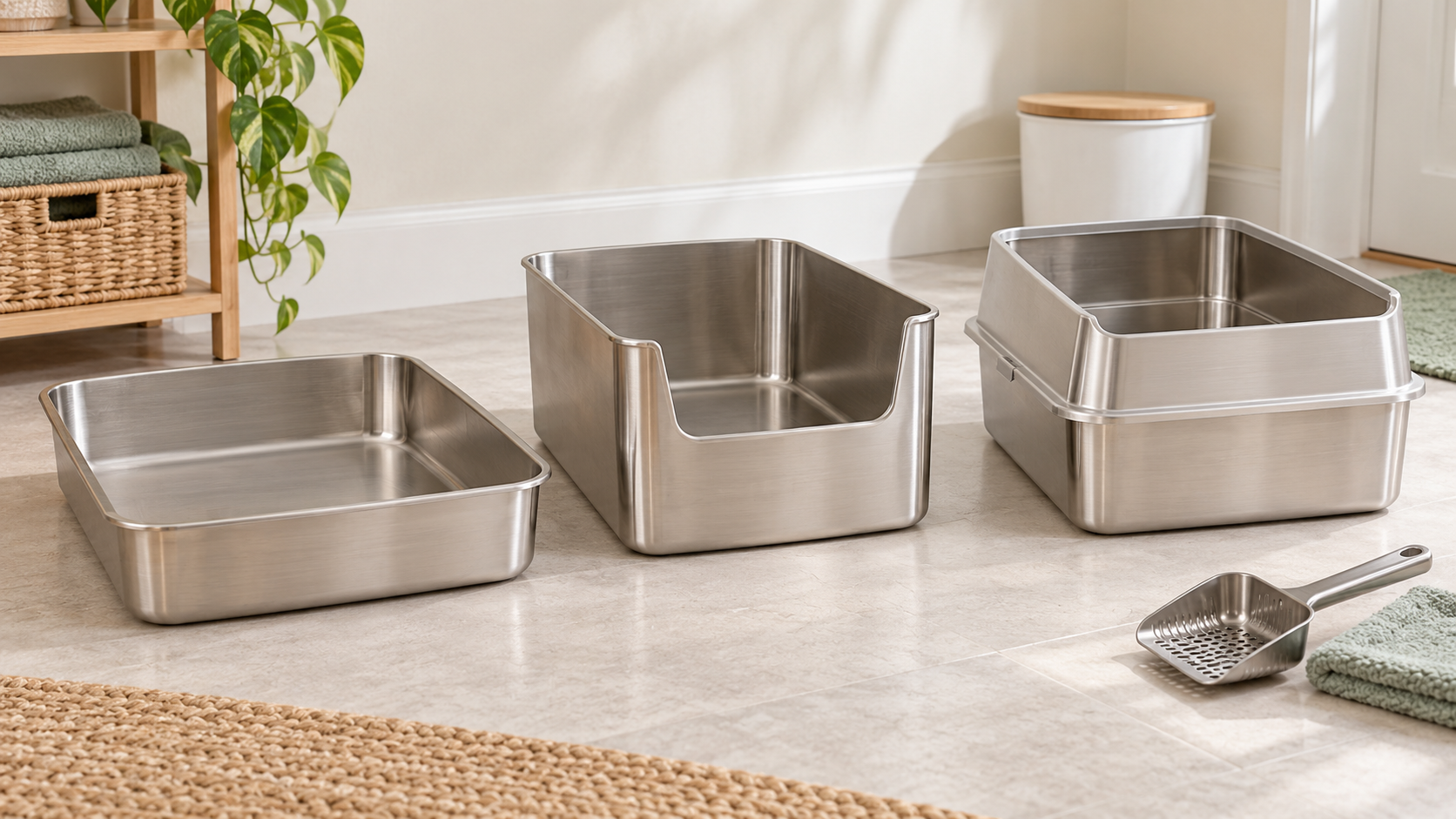
Choose a low open pan for easy entry and a simple one-piece wash routine. Choose a high-sided pan with a lower doorway when its measured entry is comfortable and more wall coverage helps. Choose a removable-rim pan when the upper piece adds useful coverage and you will clean its joints separately.
Stainless steel is a material choice, not a solution for odor, bacteria, inappropriate elimination, urinary problems, or litter avoidance. Sudden litter-box changes, straining, pain, blood, repeated trips, or inability to pass urine warrant prompt veterinary attention; difficulty passing urine can be an emergency.
Measure the Cat and Room First
Compare the usable flat interior length and width, doorway width, entry height, and every wall—not only exterior dimensions. Slopes, corners, and rims reduce room. If a listing omits measurements, ask the seller or skip it. Map the installed footprint with room to approach, turn, scoop, and lift. Avoid a location where a door, appliance, or other pet can block access. Owners sizing for a larger adult cat can use the extra-large litter box guide before deciding on material. Before adding another recurring supply, compare a litter box liner with a bare box by maker compatibility, fit, bunching, and full-change cleanup.
How the Formats Differ
Low open pans
These have few separate parts and direct cleaning access. Rounded corners may be easier to wipe, but inspect the actual seams. Low walls provide less coverage for cats that stand high or dig vigorously.
High-sided pans
Taller side and back walls add coverage while a lower opening preserves entry. Measure the doorway rather than trusting “low entry” wording. Skip it if the opening is awkward, the shell will not fit your wash area, or the cat is reluctant to enter. Height does not guarantee containment.
Removable-rim pans
A removable upper rim can add coverage and let you wash the base separately, but its joints collect litter. Check the attachment, edge finish, opening clearance, and whether it comes off without spilling the contents.
A Practical Selection Checklist
- Usable interior: Account for slopes, corners, and rims.
- Entry: Measure width and height for the individual cat; do not infer fit from breed labels.
- Construction: Inspect welds, seams, corners, and rolled edges for finish and cleaning access.
- Weight and grip: Plan how you will lift the empty and filled pan and prevent sliding.
- Care: Follow current maker instructions; not every steel alloy or finish has identical care.
- Room and sink fit: Measure the footprint and route to the wash area.
- Return terms: Confirm them before adding litter.
Clean and dry the pan and all removable pieces according to current directions. Inspect seams, rim joints, underside edges, and floor contacts. Stop using a damaged, rough-edged, unstable, corroded, or uncleanable pan.
For the tool decision, compare stainless steel and plastic litter scoops. For tracked litter, use the cat litter mat guide.
Who Should Skip One?
Skip stainless steel if a suitable pan is too heavy, does not fit the wash area, slides or rocks, lacks usable interior measurements, or offers no comfortable entry. A well-fitting plastic pan maintained consistently can be more practical.
Skip a low open pan when it lacks needed wall coverage. Skip a high-sided pan when entry or lifting is awkward. Skip a removable-rim pan when the joints complicate cleaning or reduce access and stability. Do not keep changing products to manage new toileting behavior without veterinary guidance.
Bottom Line
A low open pan is simplest to access and wash, a high-sided pan adds wall coverage when its entry fits, and a removable-rim pan trades coverage for more joints. Measure usable space, entry, room footprint, lifting route, and wash area, then verify the exact listing and care instructions.