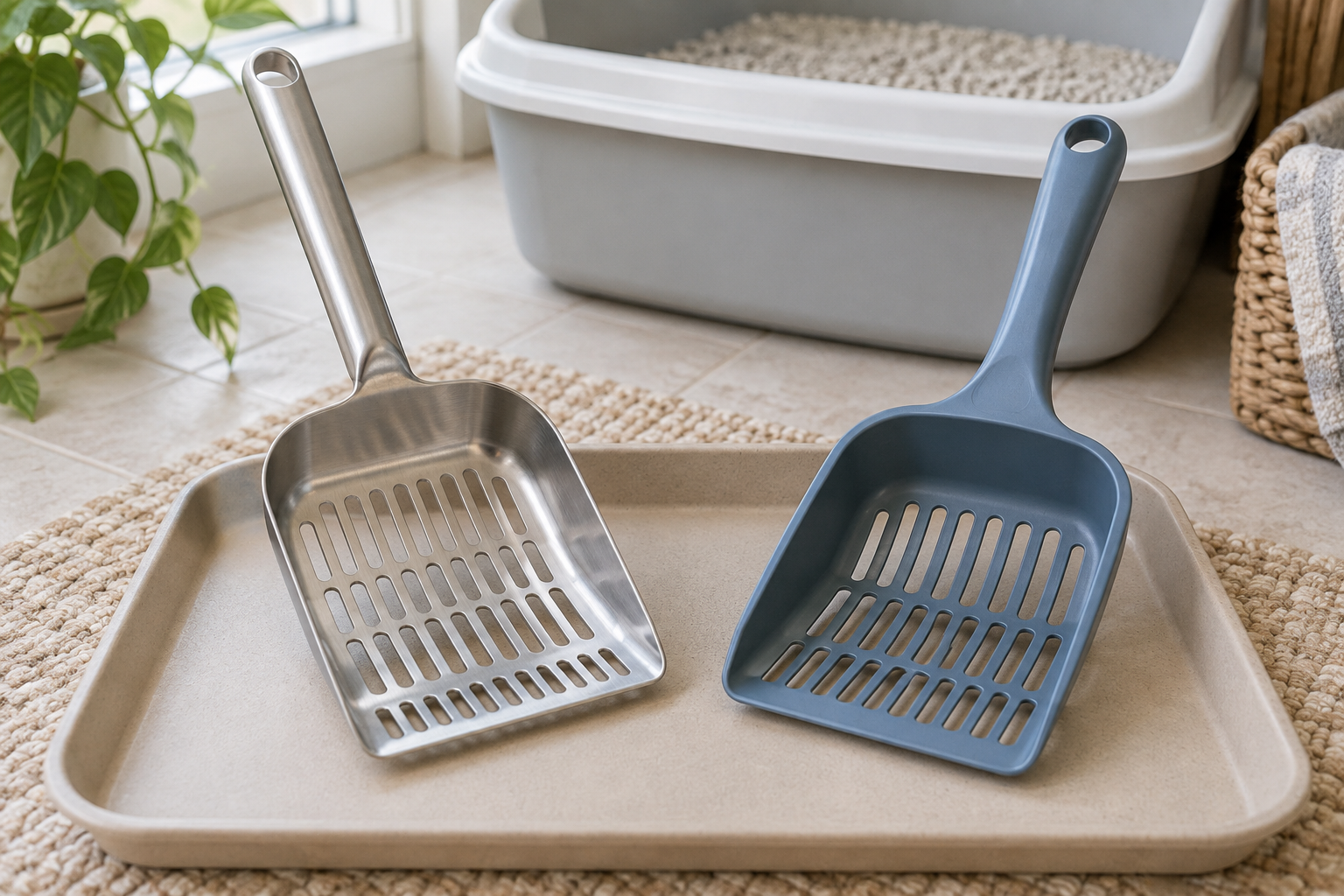
This is a tool-material decision, not a hygiene or health treatment. No scoop material prevents illness or fixes litter-box avoidance. Contact a veterinarian promptly about straining, pain, blood, diarrhea, constipation, or a sudden change in a cat's urine, stool, or litter-box habits.
Quick Comparison
Stainless steel: usually the better starting category when you want a rigid basket and firm edge and do not mind more tool weight. Plastic: usually the better starting category when low weight and a molded, less rigid basket suit your hand and box. Choose neither yet: when the current problem is really the wrong slot width, basket depth, handle length, box access, or storage setup.
When a Stainless Steel Scoop Fits Better
Consider steel when your present scoop flexes enough to make controlled lifting awkward or when you prefer a basket that holds its shape under an ordinary load. A firmer front edge may slide differently across a box bottom, but that is not automatically an advantage: inspect the edge finish and follow any litter-box liner directions to avoid damage.
Compare the complete scoop's listed weight and the joint between basket and handle. “Metal” does not describe every construction detail, and a steel basket with a separate grip or fastener can introduce seams that need inspection and drying. Do not infer a particular grade, corrosion resistance, or lifespan unless the current maker supplies that information.
When a Plastic Scoop Fits Better
Consider plastic when a light tool is easier for you to lift and turn or when you want a simple, low-cost spare. Molded construction can avoid some fasteners, but basket thickness, ribs, slots, and handle shape vary widely. Moderate flex may be acceptable; twisting, whitening, cracking, roughness, or a loose handle are replacement signals.
A thicker plastic edge may have more trouble reaching beneath a clump, while a thin edge may flex more. Look at the actual basket profile rather than treating all plastic scoops alike. Dark colors can also make some surface changes harder to see, so inspect the tool under good light.
What Matters More Than the Label
- Slot geometry: compare slot width, length, spacing, and direction with the litter granules. Slots that are too open can drop small clumps; very tight slots can slow sifting.
- Basket size: measure the box opening, interior corners, and the space around a hood. A wide rigid basket is unhelpful if it cannot turn inside the box.
- Edge profile: inspect the front edge for thickness, straightness, burrs, chips, or rough molding. Follow the box or liner maker's care guidance.
- Weight and control: compare the whole scoop, not material in isolation. A deep basket, long handle, or added grip can change balance and loaded control.
- Handle joint: one-piece construction and attached handles create different inspection points. Check seams, rivets, welds, screws, and molded transitions where applicable.
- Holder fit: confirm basket width, handle opening, total height, and whether the chosen scoop can sit securely without blocking the cat's route.
- Surface condition: replace either material when cracks, sharp edges, severe deformation, loose parts, or damage prevents thorough cleaning and safe handling.
Cleaning, Drying, and Storage
Remove loose litter first and clean the scoop according to its maker's current directions. Pay attention to slot ends, the underside of the basket, grip seams, and handle joints. Allow the tool and its tray or holder to dry fully before storage; do not assume that material alone makes a scoop easier to maintain.
Keep the scoop in a dedicated, washable spot away from food, water, children's items, and food-preparation tools. A heavy steel scoop needs a holder or hook that fits its actual dimensions and load. A lightweight plastic scoop still needs stable storage where it will not fall into the box or sit within easy chewing or pawing reach.
Who Should Skip Each Material?
Skip stainless steel when the complete tool feels heavy or poorly balanced in your hand, when its edge is incompatible with the box liner, or when seams and joints do not match the cleaning routine you can maintain. Skip plastic when the basket visibly twists during ordinary use, the edge is too thick for the litter routine, or the surface has cracks, sharp damage, or inaccessible rough areas.
Skip buying either for now when the current scoop fits the box, sifts the litter, remains intact, and is easy to clean and store. Changing material will not correct a slot-pattern mismatch, cramped box placement, unsuitable handle length, or a medical or behavior concern.
Next Steps for the Litter Station
Use the full litter scoop guide to compare basket depth, slot width, and edge shape. If reach or leverage is the sticking point, compare a long-handle scoop with a handheld one. Then decide whether a freestanding holder or wall hook fits the chosen tool and measured space.
For the surrounding setup, compare clumping and non-clumping litter by cleanup routine and browse the cleanup and odor-control hub.
Bottom Line
Choose stainless steel for a more rigid working basket when its weight, edge, joints, and care needs fit your setup. Choose plastic for lower weight when its flex, molded edge, and surface condition remain acceptable. Neither material wins in every litter box: the best fit is the scoop whose dimensions, slots, balance, construction, cleaning directions, and storage work together.