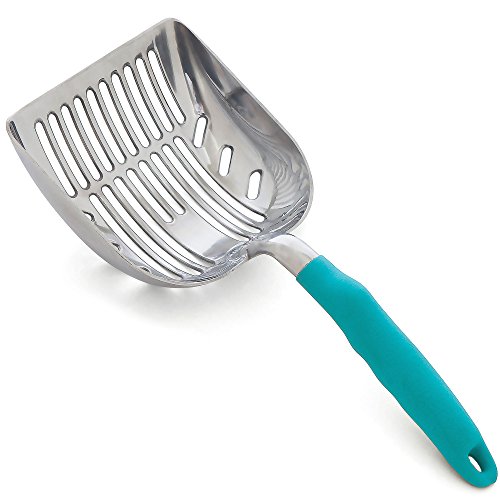
 iPrimio Cat Litter Scooper
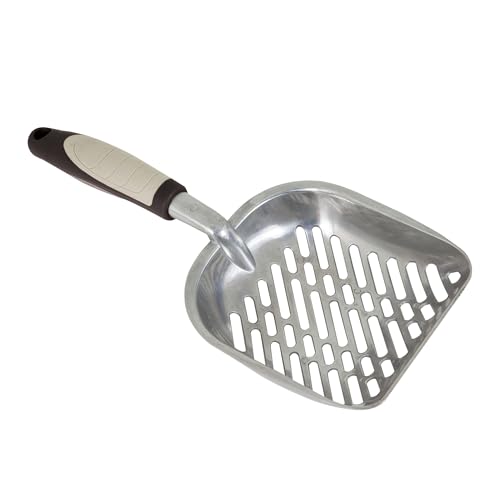 Petmate Metal Litter Scoop
This guide compares product construction and daily-use fit; it is not based on claimed hands-on testing. A scoop is a cleanup tool, not an answer to sudden litter-box avoidance, straining, pain, blood, diarrhea, constipation, or major changes in urine or stool. Contact a veterinarian promptly about those changes.
Our Shortlist by Cleanup Problem
- Best sturdy starting point: DuraScoop Original. Compare it when compacted clumps call for a rigid basket and firm leading edge, and extra tool weight is acceptable.
- Best for finer clumping litter: iPrimio Cat Litter Scooper. Start with a finer slot pattern when small clean granules pass through wider openings too quickly; confirm the slots suit your litter.
- Best lighter metal option to compare: Petmate Metal Litter Scoop. Consider a simpler metal design when you want rigidity without the bulk of a deep cast scoop.
- Best basic alternative: a smooth plastic wide-slot scoop. It can be light and inexpensive, but replace it when the edge warps, cracks, or develops rough areas.
Selection Criteria That Matter
- Slot width: Slots should release unused litter without letting small clumps fall through. Fine litter generally benefits from narrower gaps; coarse granules need enough clearance to sift.
- Front edge: A thin, firm edge reaches under clumps with less chopping. Rounded edges are gentler on liners but may struggle with material stuck to a flat floor.
- Basket depth: A deep basket carries more but becomes heavy and may be awkward in a compact box.
- Handle reach: Longer handles keep hands farther from litter and reach deep boxes; short handles offer more control and fit small holders.
- Material: Metal resists flexing but can be heavy and may scratch liners. Plastic is lighter but can bend, stain, crack, or retain rough damage.
- Cleaning: Follow the maker's wash directions. Wash separately from food tools, rinse crevices, and dry fully before storage.
- Holder design: A holder contains loose grains only if it is stable, washable, and large enough for the basket without touching the handle.
A Simple Comparison Framework
Fine slots versus wide slots: finer gaps preserve small clean granules but sift slowly; wider gaps work faster with coarse litter but may miss small clumps. Deep versus shallow basket: depth carries more, while a shallow scoop turns easily in compact boxes. Metal versus plastic: metal prioritizes rigidity; plastic prioritizes low weight and price. Long versus short handle: reach helps with deep boxes, while a shorter handle gives leverage close to the clump.
Questions to Check Before Buying
- Do the slots match the actual granule and clump size in your box?
- Can the leading edge slide beneath clumps without damaging a liner?
- Will the basket turn easily inside the box corners and around high sides?
- Is the loaded scoop weight comfortable for your hand and wrist?
- Can you wash and completely dry the basket, slots, handle joint, and holder?
- Where will it live so pets and children cannot play with it?
Who Should Skip These Picks
Skip a heavy cast-metal scoop if wrist or grip strain is likely; a lightweight plastic or thinner metal model may be easier to manage. Skip a sharp, rigid edge when your box uses a delicate liner that the manufacturer warns against scraping. Skip a deep basket in a small box where it cannot turn without pushing litter over the side. If bending is difficult, consider a genuinely longer handle and stable setup rather than overreaching.
Do not keep a scoop with cracks, corrosion, loose handle joints, sharp burrs, badly warped slots, or a surface that no longer cleans smoothly. Replacing a damaged tool is more useful than trying to disinfect inaccessible cracks.
Make Daily Cleanup Easier
Keep the scoop near the box in a washable holder or on a secure hook. Move slowly beneath each clump rather than chopping through it, sift only as long as needed, and follow the litter maker's depth and disposal directions. Do not flush clumps unless both the litter manufacturer and local wastewater guidance explicitly allow it.
Once the basket and slots are settled, compare a long-handle and handheld litter scoop by measured box clearance, reach, leverage, and storage. A well-placed litter mat can catch granules shaken loose during scooping. If the litter itself is the unresolved choice, compare clumping and non-clumping litter by cleanup routine. For compact waste storage, see the small-home litter disposal guide; if you are considering an enclosure, use our small-space litter furniture guide to check door clearance and cleaning access.
Need a Scoop for a Weekend Trip?
A full-size home scoop is usually easier to use, but it may not fit a portable box or cleanly pack inside a travel tote. Compare travel litter scoops for weekend trips by folded size, short-handle reach, case design, and temporary-box fit.
The Bottom Line
Start with the DuraScoop Original when rigidity and a firm edge are the priorities. Compare the iPrimio for a finer sift and the Petmate option for a lighter metal approach. The best choice is the scoop whose slots match your litter, whose basket fits the box, and whose handle and cleaning routine you can comfortably use every day.