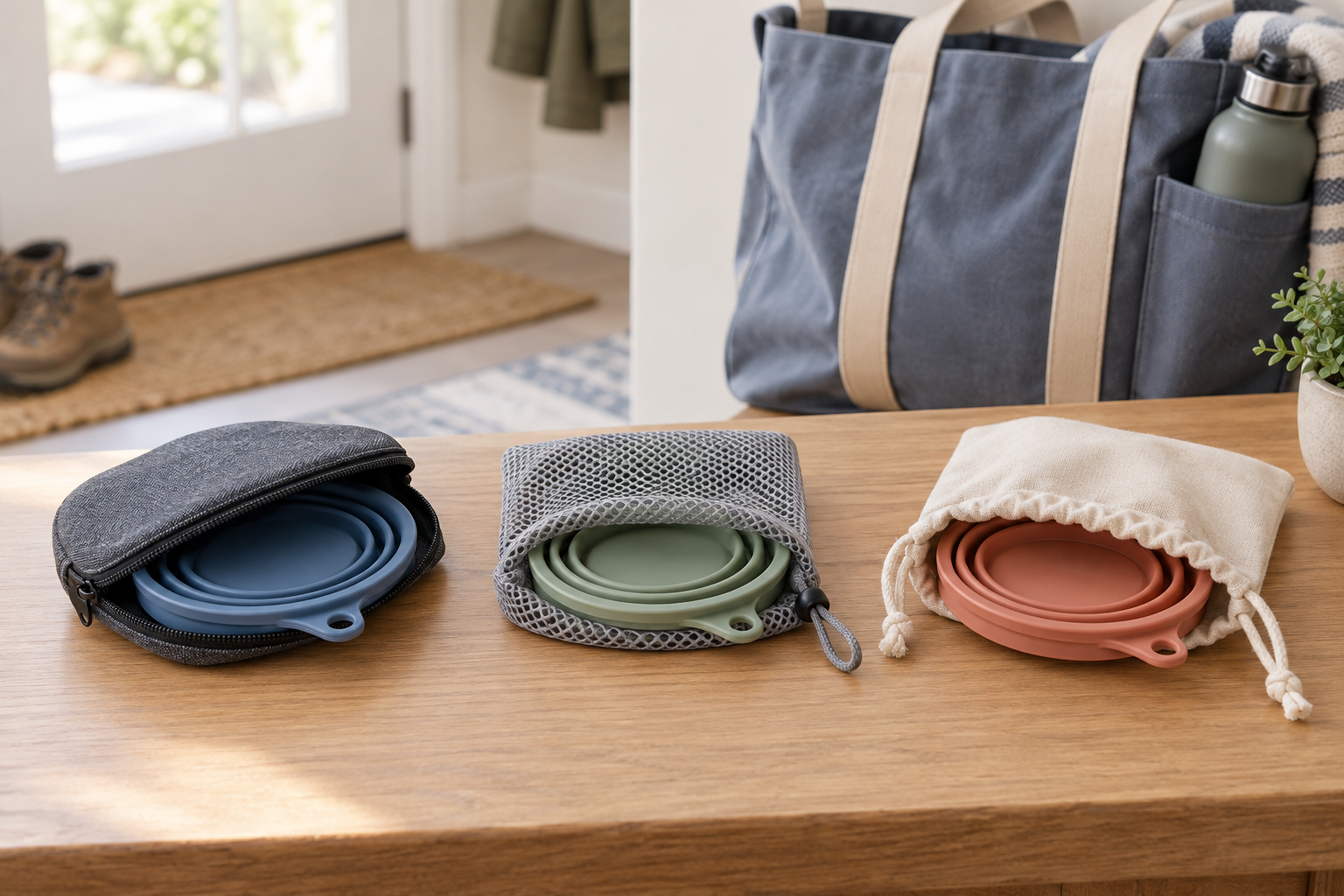
Quick Comparison
Zippered pouch: gives the bowl a defined compartment, but it can trap moisture and needs enough internal depth for the folded bowl and zipper path. Mesh sleeve: is easy to identify and more ventilated, but it may catch on hooks or rough gear and does not isolate small crumbs. Drawstring sleeve: flexes around irregular folded shapes, but the opening may not close completely and loose cords require careful storage. No sleeve: is often the better answer when your tote already has a washable dedicated pocket.
Selection Criteria That Matter
- Folded dimensions: measure the bowl at its widest points, including tabs, clips, rims, or carabiners. Compare those numbers with usable internal—not only external—sleeve dimensions.
- Closure clearance: a zipper should close without pressing on the bowl; a drawstring channel should not be stretched tight around a rigid rim.
- Ventilation: mesh provides more airflow, but every format still requires the bowl to be washed and fully dried before packing.
- Material and seams: look for current care directions and inspect edges, mesh, zipper tape, cord channels, and attachment loops for wear.
- Cleaning: choose a sleeve you can empty, turn out when permitted, wash or wipe as directed, and dry completely between trips.
- Attachment: clips and loops are conveniences, not guarantees. Check them regularly and do not rely on a sleeve attachment where dropping the bowl would create a hazard.
- Food separation: a sleeve organizes a bowl; it is not a sealed food container. Pack food according to its own storage directions.
A Practical Pack-and-Dry Routine
Before leaving home, place only a clean, dry bowl in a clean, dry sleeve. Keep the sleeve in a dedicated tote pocket away from waste bags that have been used, cleaners, wet towels, or loose treats. On the trip home, do not reseal a wet bowl simply to keep the tote tidy. Use a separate washable wet-item bag or an open, secure area until you can wash and dry everything according to its directions.
After each outing, remove the bowl and inspect the sleeve for trapped moisture, crumbs, torn mesh, a rough zipper, loose stitching, or frayed cord. Clean and fully dry both pieces before storing them. Replace the sleeve when its closure or attachment no longer works predictably.
Who Should Skip a Storage Sleeve?
Skip a separate sleeve if your bowl is routinely packed wet, the only options are too tight, your pet can reach and chew the fabric or drawcord, or your existing travel bag already has an easy-clean dedicated pocket. Also skip mesh when it will rub against hooks or rough equipment, and skip a drawstring format when loose cords cannot be secured away from pets and children.
A storage sleeve is an organization accessory, not a hydration, sanitation, or safety solution. Bring enough water for the outing and contact a veterinarian if your pet has unusual thirst, refuses water, vomits, seems unwell, or you are unsure about travel in heat.
Related Guides
Compare collapsible pet bowls for walks and day trips before choosing the sleeve. For a different pack shape, see clamshell versus roll-up dog travel bowls, or use the broader everyday pet outing kit to decide what deserves space in your bag.
Bottom Line
The best sleeve is the one that fits your own dry folded bowl without strain, matches your need for containment or airflow, cleans easily, and stays out of your pet's reach. Measure first, follow care directions, and skip the accessory when a washable tote pocket already solves the problem.