If you are still deciding whether specialized storage adds enough value, start with the dedicated pet gear tote worth-it test. This guide covers bags for pet supplies, not bags for carrying pets. A supply tote is not a carrier, restraint, food-safety device, or substitute for an appropriate pet travel setup. Follow food-package storage directions and the care instructions for every item you pack.
Quick Comparison: Match the Tote to the Trip
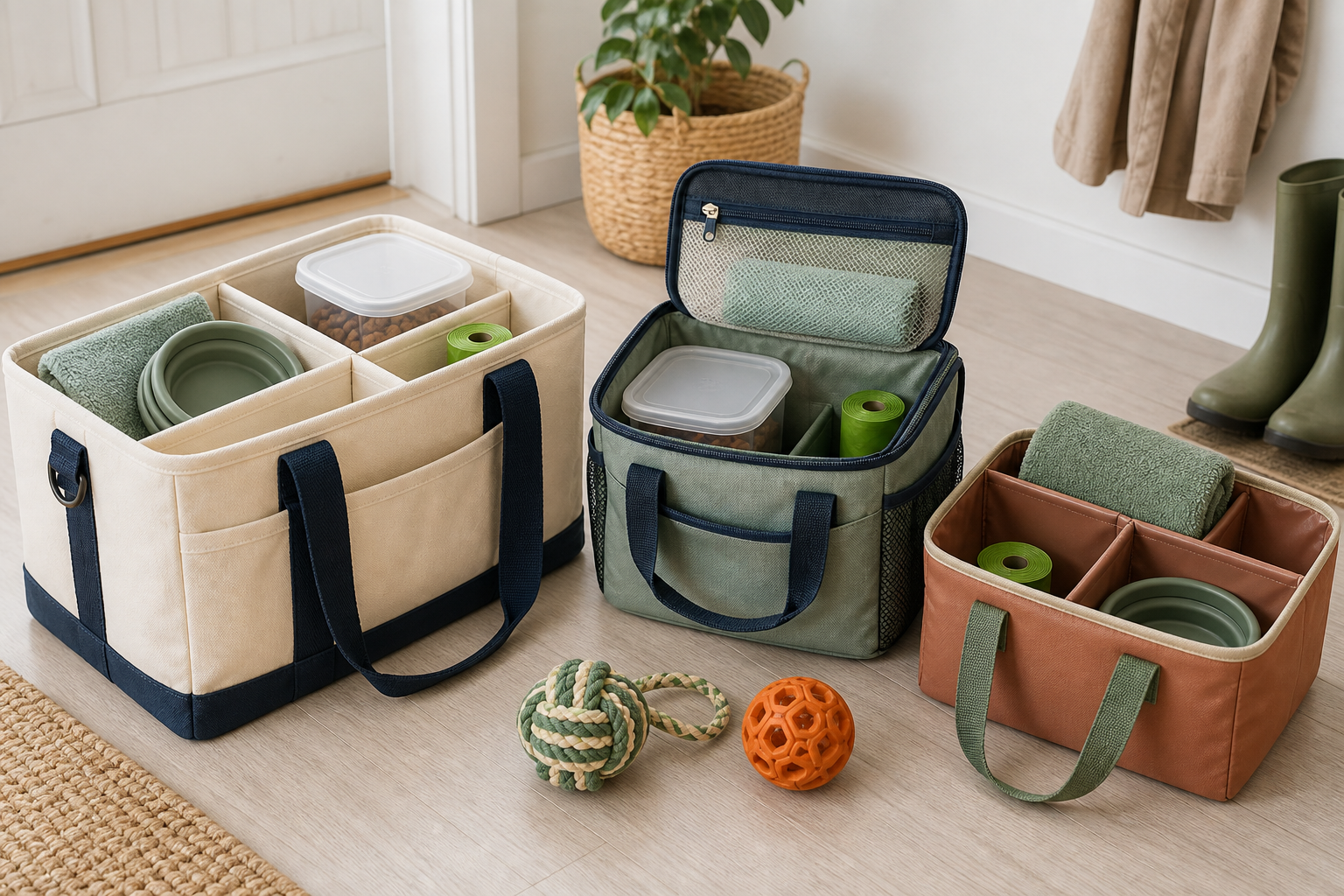
Structured open tote: fastest access
A boxy tote with a reinforced base and removable dividers suits a calm door-to-car-to-house routine. It makes small items visible and can stand beside a feeding or cleanup area. The tradeoff is an open top: loose toys or lightweight supplies may spill if the tote tips.
Zippered organizer: better containment
A soft organizer with a full closure fits trips where the bag shares a trunk, transit floor, or crowded closet. Internal mesh pockets can keep small supplies visible. Check whether the zipper opens wide enough to remove a bowl or container without unpacking everything.
Wipe-clean caddy: simple cleanup
A low caddy with coated compartments works for damp towels and ordinary cleanup gear when it stays upright. It is less suitable for long carries, rain exposure, or situations where an open bag could tip. Confirm that the maker actually describes how the lining should be cleaned.
Build the Packing List Before Measuring
Pack for the real visit rather than an imagined emergency kit. Lay out the empty bowl, closed food or treat container, water gear, towel, waste bags, cleanup supplies, leash accessories, and one or two familiar toys you normally use. Do not put medication or safety-critical records in an open general-purpose tote.
Measure the widest rigid item and the tallest closed container. Then check the tote's usable interior dimensions, not only its outside measurements. Leave enough room to lift items out without crushing a bowl, forcing a zipper, or placing a wet towel against food supplies.
Selection Criteria That Matter
- Usable capacity: Match interior length, width, and height to the packed list; a larger stated volume can still be awkward if the opening is narrow.
- Dividers: Removable panels add flexibility, but they should stay upright when one compartment is empty and come out for cleaning.
- Closure: An open top favors access. A zipper favors containment. Drawstrings can reduce the opening and make rigid items harder to remove.
- Liner and base: Look for documented washable or wipe-clean surfaces and a base that stays reasonably flat under the intended load.
- Pockets: Use pockets for light, dry items. Avoid layouts that press waste-bag hardware or rough objects against a collapsible bowl.
- Handles: Check handle length, attachment points, and whether the loaded bag can be carried without bumping your leg.
- Packed weight: Add the filled water and food containers when estimating the load. Several small supplies become heavy quickly.
- Storage: Decide whether the empty tote must fold, stand on a shelf, or remain loaded near the door between trips.
Keep Food, Damp Gear, and Cleanup Items Separate
Use a closed, appropriate food container and keep it in a clean compartment away from waste bags, used towels, and cleaning products. A divider organizes the bag; it does not make an open compartment leakproof or food-safe. Follow the food packaging and container maker's storage directions.
Empty the tote after each trip. Remove crumbs and hair, wipe or wash the parts according to the label, and let every section dry fully before repacking. If a spill reaches foam padding, cardboard reinforcement, or sewn-in panels that cannot be cleaned as directed, a simpler unpadded tote may be easier to maintain.
Who Should Skip a Dedicated Pet Supply Tote
Skip one when your ordinary backpack or reusable shopping tote already holds the few supplies you carry and can be cleaned appropriately. A separate tote also adds little value if every outing begins by transferring gear into a vehicle organizer or carrier pocket.
Do not use a supply tote as a pet carrier, even if a small pet can fit inside. Choose a properly sized carrier for the animal and follow its manufacturer guidance. For medical transport, temperature concerns, feeding questions, or a pet who becomes distressed during travel, ask a licensed veterinarian for situation-specific advice.
The Bottom Line
Choose a structured open tote for quick access, a zippered organizer for contained transport, or a wipe-clean caddy for upright messy-gear duty. The best fit is the smallest format that holds the real packing list without mixing closed food containers with damp or dirty supplies.
For the next step, compare pet travel water bottles, collapsible bowls for walks and day trips, or a car-ride cleanup kit.