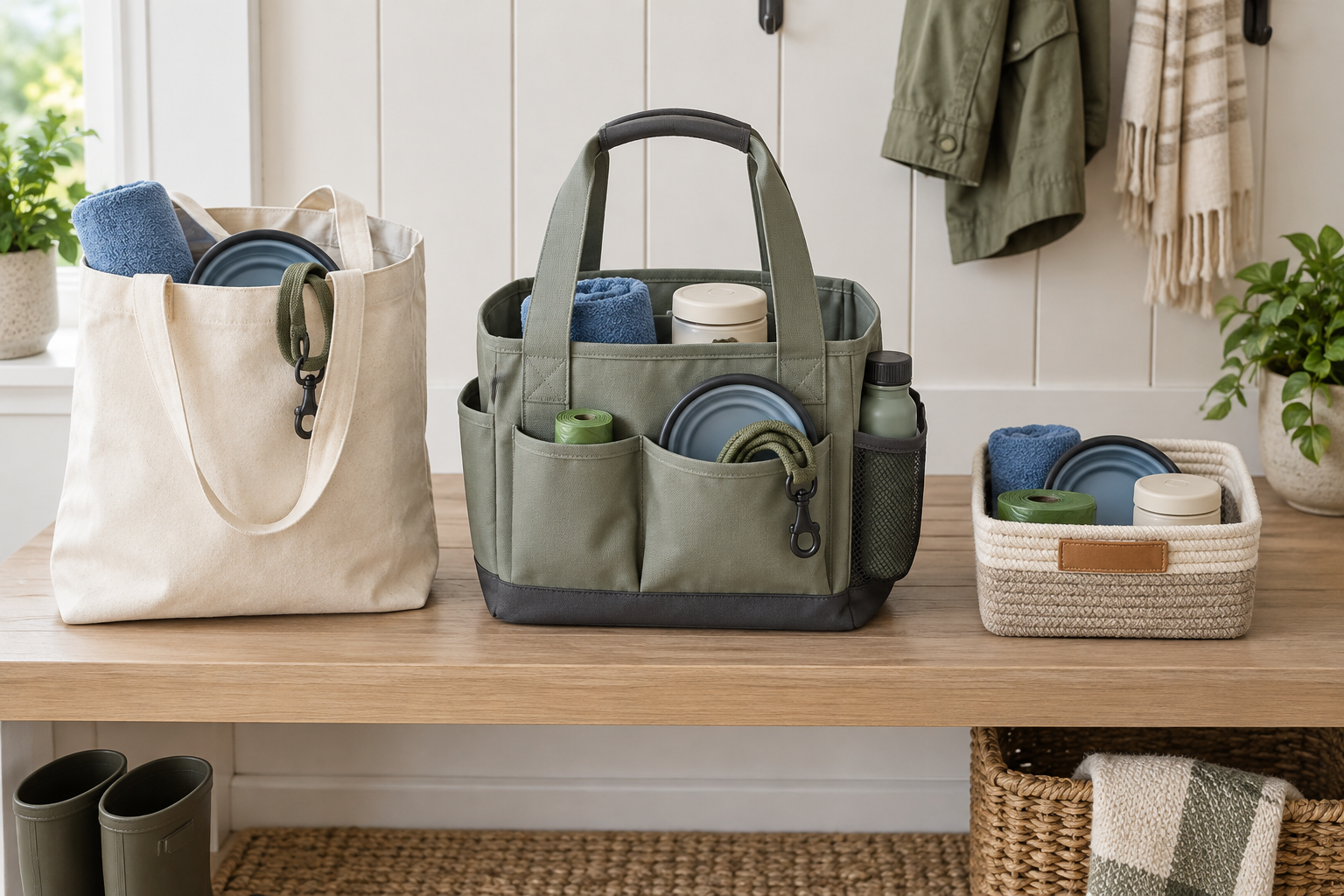
This is an organization decision, not a reason to carry every pet item together. Keep food in suitable closed packaging, separate it from used towels and cleanup items, and store medicines, cleaners, sharp tools, and small hazards securely away from pets and children.
Quick Decision: Buy, Repurpose, Simplify, or Skip
Buy a dedicated tote when the same group of supplies is packed several times a month and purposeful compartments solve a real access or separation problem. Repurpose a washable bag when simple pouches provide enough order. Use fixed storage when the routine stays in one place. Simplify when the proposed tote mostly holds “just in case” extras. Skip when the bag would duplicate storage you already use.
The Six-Part Worth-It Test
- Repeated use: Does one recognizable kit leave the house or move to the bath area often enough to stay packed?
- Measured fit: Do the opening and usable interior fit the widest bowl, closed container, towel, and other real items?
- Useful separation: Do dividers or pockets keep dry, clean items apart from ordinary damp or used gear?
- Manageable load: Can you carry the planned load, including filled bottles or containers, without overpacking?
- Cleanable construction: Does the maker give care directions that match the lining, base, padding, and dividers?
- Storage space: Does the tote have a sensible place to dry and park between uses?
Pack One Real Routine Before Measuring
Choose one job rather than combining every pet routine. A short outing kit might include a collapsible bowl, water gear, waste bags, a towel, and a small closed container. A bath kit has a different mess pattern and should not become permanent storage for products that need secure, label-directed storage.
Measure rigid items and compare them with the tote's usable interior and opening dimensions. Check whether the bag remains practical when full: pockets and dividers consume space, while bottles and closed food containers add more weight than an empty product photo suggests.
When a Household Tote Is Enough
An existing washable tote can be the sensible choice when trips are occasional and the kit is small. A removable zip pouch can corral waste bags or other light items without committing to a specialized organizer. Inspect the base, seams, handles, and closure before repurposing a bag, and do not assume an ordinary tote is leakproof or suitable for loose food.
If you need firm protection, a closure, or luggage-like organization rather than open carry access, first decide whether a pet travel supply case fits the trip. For supplies that repeatedly move between rooms at home, compare whether a pet supply cart earns its footprint.
Cleaning, Drying, and Separation
A “washable” label is useful only when the entire construction has workable care directions. Check the lining, reinforced base, foam, hook-and-loop dividers, pockets, and any removable panel separately. Empty the bag after use, follow the maker's cleaning directions, and let every part dry before repacking.
Keep closed food and water items apart from used towels, muddy gear, and waste supplies. A divider organizes contents; it does not create a sealed barrier. If wet gear is common, carry it temporarily in a suitable separate washable pouch and unpack it promptly rather than storing it damp. For muddy human footwear and a small dirty bundle, use the narrower washable boot bag worth-it test.
Who Should Skip a Dedicated Tote
Skip it if pockets or an existing bag already hold the essentials, if each outing needs a completely different load, or if the tote would stay packed with forgotten extras. Fixed home storage is usually better when the supplies never travel. For a wet-walk setup, compare an open tote and lidded bin for muddy dog gear before adding another container. A dedicated tote also adds little when everything immediately transfers into a vehicle organizer.
A gear tote is never a pet carrier or restraint. For the broader routine, build a right-sized pet outing kit for everyday errands. Ask a licensed veterinarian for situation-specific guidance when travel involves a health concern or your pet becomes distressed during routine transport.
Bottom Line
A dedicated pet gear tote is worth it when one measured, repeatable kit needs better access, separation, and cleanability than your current bag provides. Repurpose a washable tote for occasional simple packing, choose fixed storage for one-place routines, and skip specialized storage that mainly invites more gear.