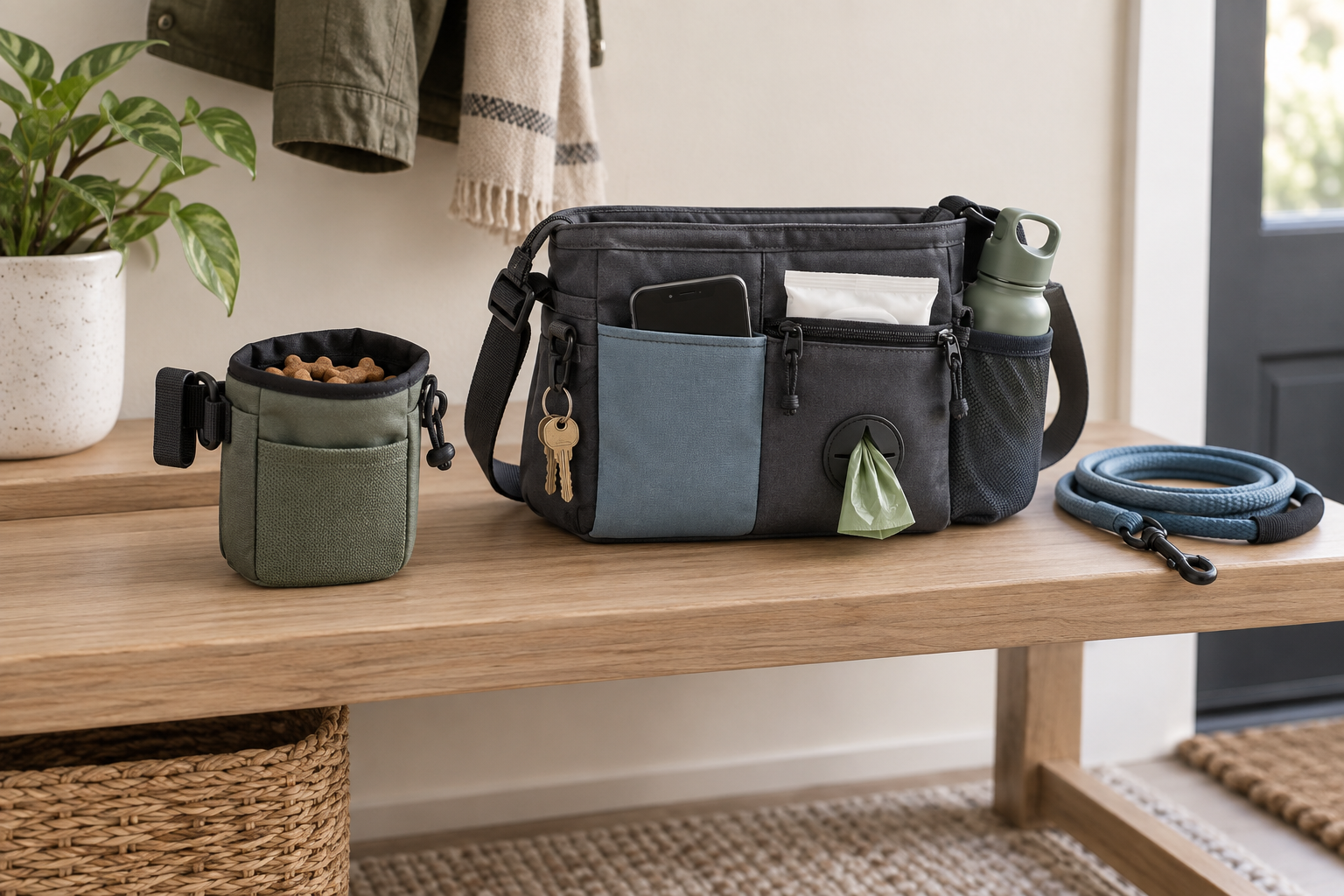
This is a carry-format comparison, not a training plan. Neither option improves leash skills, fixes pulling or fear, or makes an unsafe walk safe. If behavior makes handling difficult or risky, work with a certified trainer or another qualified professional; ask a veterinarian about pain, illness, or a sudden behavior change.
Quick Comparison
Treat pouch: better for quick reward access, a short supply list, low weight, and owners who keep phone, keys, and cleanup items elsewhere. Dog walking bag: better for separating treats, waste bags, wipes, phone, keys, and a compact water setup. Choose neither: when a pocket plus a leash-mounted waste-bag holder already works without interfering with handling.
When a Treat Pouch Fits Better
A treat pouch suits a reward-first routine. Its useful features are a hand-friendly opening, a closure you can operate without looking, a liner you can reach and clean, and an attachment that stays stable on the clothes you actually wear. It should hold enough for the route without becoming a general-purpose dump pocket.
Choose this format when waste bags already live on the leash, your phone and keys fit securely in clothing, and you do not carry a bottle or wipes. A small pouch can also be easier to move between jackets and belts. The tradeoff is limited separation: keys, used cleanup items, and loose treats should not share one compartment.
When a Dog Walking Bag Fits Better
A walking bag earns its extra bulk when several items otherwise compete for pockets. Look for a dedicated treat area, an accessible waste-bag route, a secure phone pocket, and enough measured space for the exact wipes or bottle you carry. Waist and close-fitting crossbody formats can keep both hands available, but only if the loaded bag does not bounce or slide into the leash path.
Choose the bag when longer routes or messy weather regularly require more than rewards and waste bags. Do not treat extra capacity as a packing target. A heavy bottle, oversized wipe pack, or dangling accessories can make a bag less comfortable and harder to manage.
Tradeoffs That Matter
- Access: a pouch usually offers the quickest route to rewards; a bag may place zippers and other pockets between your hand and the treat compartment.
- Capacity: bags hold more and separate items better, while pouches discourage overpacking.
- Carry comfort: compare loaded weight, strap width, belt range, bounce, and fit over seasonal layers—not just the empty product.
- Cleaning: treat residue favors a removable or reachable liner. Bags add seams and pockets that must be emptied and dried.
- Weather: a closed bag can shield contents from direct drizzle, but a zipper or fabric does not prove waterproof performance. Follow the maker's stated limits.
- Pet access: position either format where a dog cannot nose it open, grab food, chew a strap, or become tangled.
- Leash handling: skip attachments and dangling items that occupy the hand, waist space, or path you need for safe control.
Setup and Maintenance
Before buying, place the ordinary load on a table: waste bags, wipes, rewards, keys, phone, and water only if the route calls for it. Measure the phone with its case and the bottle at its widest point. Compare those measurements with current usable pocket dimensions rather than judging exterior photos.
Give treats their own cleanable compartment. Keep keys and cleanup supplies separate, remove crumbs after the walk, and follow the manufacturer's wash directions instead of assuming a fabric or liner is machine washable. Empty damp wipes or towels promptly, open pockets to dry, inspect seams and attachments, and replace the carrier when damage could spill contents or leave loose parts accessible.
Who Should Skip Each Option?
Skip a treat pouch when you consistently need a phone, keys, wipes, water, and cleanup supplies but have no secure place for them. Skip it when the visible food makes calm handling harder or the dog can reach the opening. Skip a walking bag when your route only needs waste bags and a few rewards, when the loaded bag bounces, or when it complicates leash handling.
Skip both when existing pockets and a small waste-bag holder already meet the routine. Equipment organization is also the wrong next step when fear, lunging, guarding, pain, or another safety concern is the real problem.
Next Steps and Related Guides
For a reward-first setup, use the dog treat pouch guide to compare magnetic, drawstring, silicone, waist, and clip-on formats. If you need several compartments, the dog walking bag guide covers waist packs, crossbody bags, minimal leash bags, and wet-weather considerations.
For walks that become errands or longer stops, build a pet outing kit rather than forcing every supply into a neighborhood-walk carrier. Compare everyday harness fit and attachment options separately; a carry bag should never be treated as handling or restraint equipment.
Bottom Line
Pick a treat pouch for fast reward access and a genuinely short loadout. Pick a dog walking bag when several cleanup and personal items need separate, reachable places. Buy only after checking the loaded setup against your clothing, leash hand, route, cleaning routine, and the dog's access to food and straps.