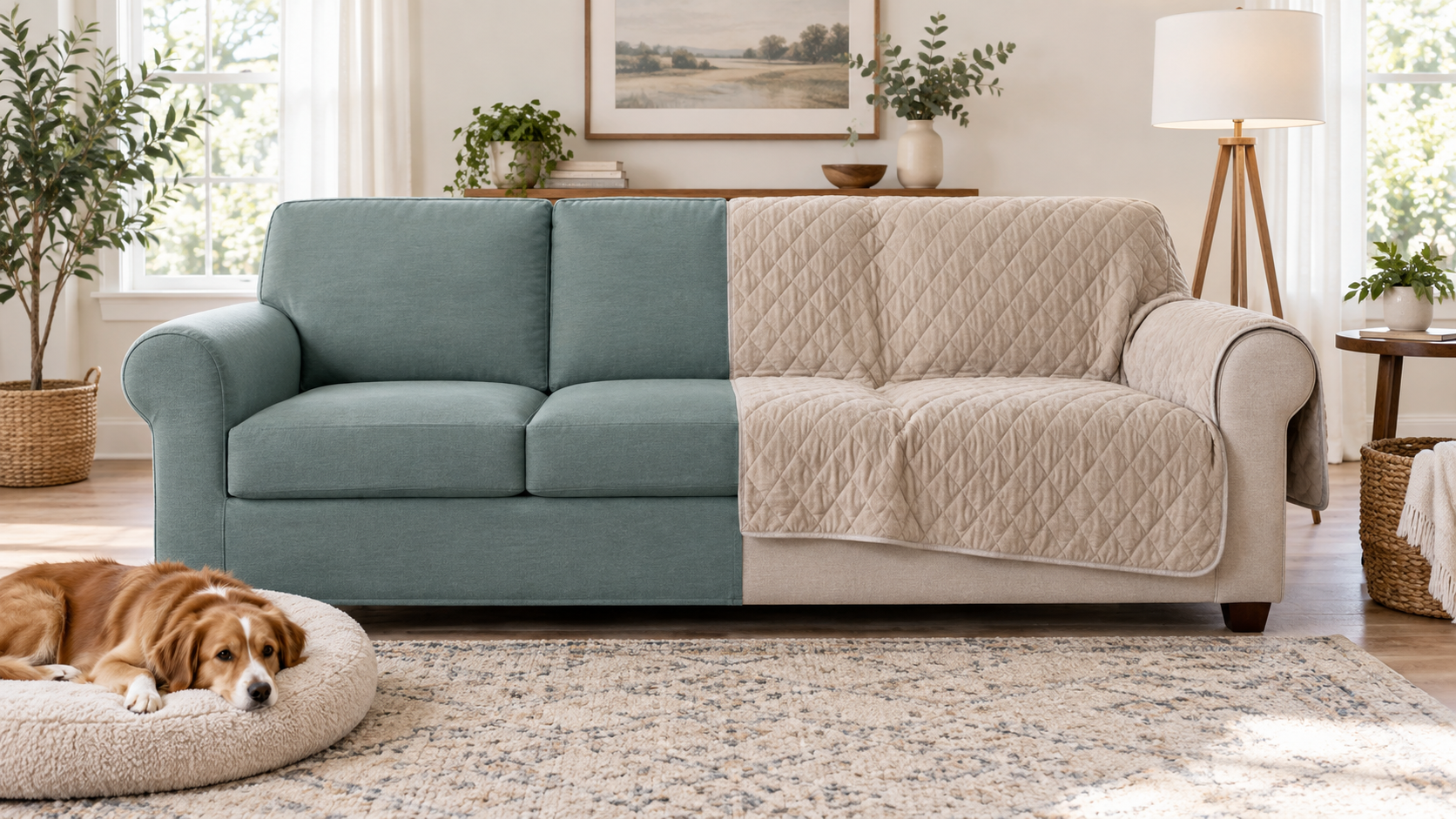
This is a format-selection guide, not a hands-on test and not a promise that a cover will prevent upholstery damage. A removable layer can simplify routine fur, dust, and light-mess cleanup, but seams, edges, gaps, and uncovered areas remain. Follow both the furniture maker's care guidance and the cover's current instructions.
Quick Decision
- Choose a fitted cover for a conventional sofa when broad arm, back, seat, and front-edge coverage is worth a slower installation.
- Choose a furniture throw when a pet uses one predictable spot and you want to lift the layer off quickly for guests or laundry.
- Choose neither when the sofa reclines, the fabric maker advises against a cover, your pet chews loose fabric or fasteners, or either option would be difficult to wash and dry correctly.
Where the Formats Differ
| Decision | Fitted sofa cover | Pet furniture throw |
|---|---|---|
| Coverage | Can cover the back, arms, seat, and front edge when the pattern fits. | Usually protects a chosen seat-and-back zone while leaving more edges exposed. |
| Setup | Needs careful measurement, orientation, tucking, and elastic or tie placement. | Drapes quickly but may need frequent smoothing or repositioning. |
| Laundry | Often creates one large load; multi-piece sets add sorting. | May be a smaller load, depending on its finished dimensions and fill. |
| Storage | Bulkier and more shape-specific when removed. | Usually folds like a blanket, though quilted versions can still be bulky. |
| Best fit | Conventional furniture inside the exact size and shape range. | One favorite lounging area or irregular furniture that resists a fitted pattern. |
Measure Before You Shop
Record the outside arm-to-arm width, seat width and depth, back height, arm shape, and whether seat and back cushions are fixed or removable. For a sectional, recliner, chaise, T-cushion, wooden arm, or pillow-back sofa, use a listing diagram made for that exact layout rather than assuming stretch fabric will solve the mismatch.
For a throw, measure the actual zone you want covered, including enough material to stay under normal sitting without creating long loose edges on the floor. Compare the finished product dimensions, not a room photo or the labels “sofa size” and “loveseat size.”
Check Attachment, Shifting, and Pet Access
Fitted covers may use an elastic hem, ties, straps, zippers, or tuck pieces. Throws may use a textured backing, arm flaps, or straps. None of those features guarantees that the layer will stay in place on every upholstery fabric or during every pet's movement.
Keep loose straps, foam anchors, torn seams, and removable fasteners away from pets who chew or swallow objects. Stop using a cover that bunches into a trip hazard, interferes with a reclining mechanism, blocks furniture ventilation, or repeatedly exposes parts your pet can pull apart.
Make the Laundry Test Realistic
Read the complete wash and dry directions before buying. Check whether the cover can be washed as one piece, whether cushion sleeves need separate loads, and whether line drying requires space you do not have. A throw is not automatically easier: thick quilting, large dimensions, or an absorbent fill can still produce a bulky wet load.
Remove loose fur before washing, secure closures as directed, and do not crowd the washer. If laundry turnaround is the main constraint, two smaller throws may be more practical than one full cover—but only if the uncovered zones are acceptable.
Material and Upholstery Tradeoffs
- Stretch knit: follows curves and can look tidy, but claws may catch loose loops or seams.
- Quilted fabric: adds structure and a clear lounging zone, but folds into a thicker wash load.
- Backing: may change grip, but check the furniture maker's guidance for leather, delicate finishes, heat, dyes, and prolonged contact.
- Moisture wording: water-resistant is not the same as waterproof; seams and uncovered edges can allow liquid through.
Who Should Skip Each Option?
Skip a fitted cover if your furniture falls outside the stated measurements, moves mechanically, lacks safe tuck space, or needs constant retucking. Skip a throw if exposed arms and front edges defeat your purpose, smooth upholstery makes it slide, or loose corners invite chewing. A washable blanket you already own may be sufficient for a small, predictable lounging spot.
A cover is a cleanup convenience, not a medical or behavior solution. Sudden house-soiling, drooling, discomfort, or a new inability to settle deserves advice from a licensed veterinarian. Persistent destructive scratching or fabric chewing may call for a qualified behavior professional and a safer environment, not a heavier cover.
The Bottom Line
A fitted sofa cover earns the extra measuring and setup when you need wider, tidier coverage on compatible furniture. A pet furniture throw is the lower-commitment choice for one favorite spot, faster removal, and simpler storage. Choose the layer that matches the exposed zone and the laundry routine you can sustain, then verify every dimension and care direction on the current listing.
Once the format is settled, use our washable sofa-cover guide to compare specific construction styles. For cleanup between wash days, see pet-hair removers for sofas and bedding.