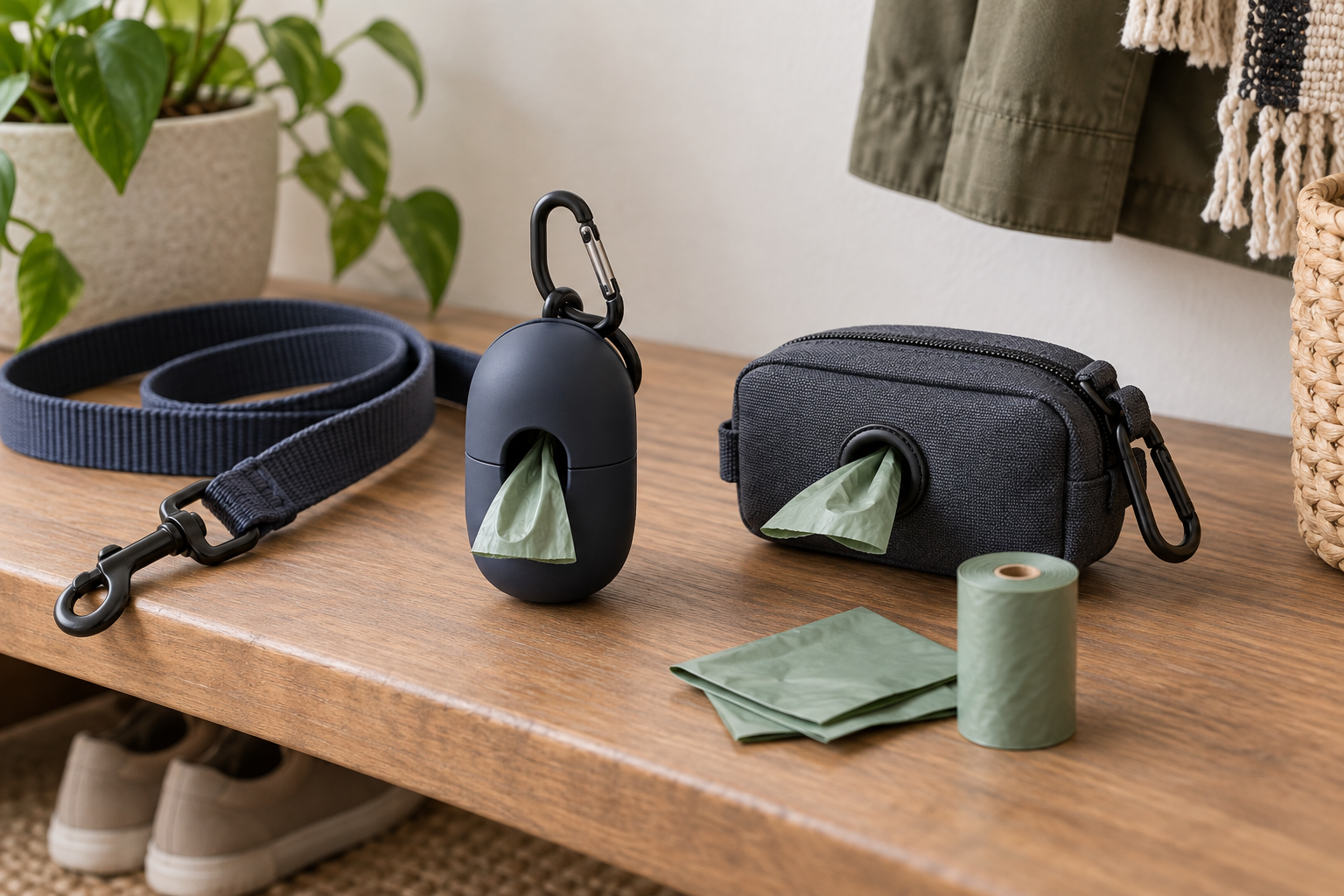
Quick Comparison
Choose a hard shell when you want a dispenser that holds its shape and gives the roll a fixed dispensing path. Expect more rigid bulk and possible tapping or rattling against leash hardware. Choose a soft pouch when you prefer a flexible body, zippered refill access, or room for a backup bag. Expect seams and fabric care to matter more. Choose neither when a jacket pocket or existing walking bag already keeps a roll accessible without affecting leash handling.
Check the Roll and Attachment Before the Material
Measure or inspect the rolls you already use. “Standard roll” is not enough if the dispenser opening, core width, or first-bag feed does not match. Check whether the roll turns without crushing and whether the dispensing opening lets one bag advance without pulling several loose.
Then inspect the leash or bag attachment point. Keep the dispenser clear of the handle, snap, moving joints, and your normal grip. Clips and loops can loosen or wear, so inspect them before walks; neither construction makes the attachment fail-safe.
Hard-Shell and Soft-Pouch Tradeoffs
Hard-shell dispenser
- Refilling: often uses an end cap, twist seam, or split body; confirm how it closes after repeated opening.
- Dispensing: a fixed slot can guide the roll, but the edge and roll alignment still determine how smoothly bags pull.
- Carry: the shape stays consistent, which makes dimensions predictable, but it can knock against clips or feel bulky near the hand.
- Cleaning: a smooth shell may wipe clean, though seams, the dispensing slot, and attachment points still need inspection.
Soft-pouch dispenser
- Refilling: a zipper or flap usually opens more of the compartment, which can make the roll easier to position.
- Capacity: some pouches have room for a loose backup bag, but extra contents can crowd the roll or make the pouch swing.
- Carry: fabric compresses when partly empty, while the loaded shape depends on the roll, seams, and attachment layout.
- Cleaning: check current wash or wipe directions and dry the pouch fully before restocking it.
Selection Criteria That Matter
- Compatibility: compare the stated roll dimensions with the bags you actually buy.
- One-bag access: look at slot shape and where the perforation rests after a bag is removed.
- Refill closure: inspect caps, zippers, snaps, and seams for wear or accidental opening.
- Attachment: check clip gate, loop stitching, connector dimensions, and clearance from leash hardware.
- Loaded bulk: judge the dispenser with a full roll, not only an empty listing photo.
- Weather exposure: follow the maker's material guidance; do not assume either format is waterproof.
- Pet access: keep unused bags and the dispenser out of chewing reach during storage and use.
Cleaning, Refilling, and Replacement Checks
Remove the roll before cleaning unless the maker says otherwise. Wipe or wash the dispenser according to current directions, clear debris from the dispensing opening, and let every part dry fully before loading a new roll. Replace the dispenser if the shell cracks, the zipper fails, seams separate, or the attachment hardware no longer closes as designed.
Carry filled bags separately from unused rolls and follow local disposal rules. A dispenser organizes unused bags; it is not a container for used waste unless the product is specifically designed and labeled for that purpose.
Who Should Skip a Dedicated Dispenser?
Skip one when your pocket or existing walking bag already keeps a roll dry, contained, and easy to reach. Skip a hard shell if rigid bulk or noise distracts you, and skip a soft pouch if its fabric care or loaded shape does not fit your routine. Avoid any design that crowds your leash hand or encourages you to clip more weight near moving hardware.
Related Guides
For a fuller carry setup, use the dog walking bag guide. If you mainly carry treats, compare a walking bag and treat pouch. For a prepacked multi-stop kit, see the pet outing kit.
Bottom Line
A hard shell suits owners who prefer a fixed shape and dispensing path; a soft pouch suits owners who value flexible, wide-opening storage. The better choice is the one that fits the current roll, stays clear of leash handling, can be cleaned and inspected, and adds less friction than simply using a pocket.