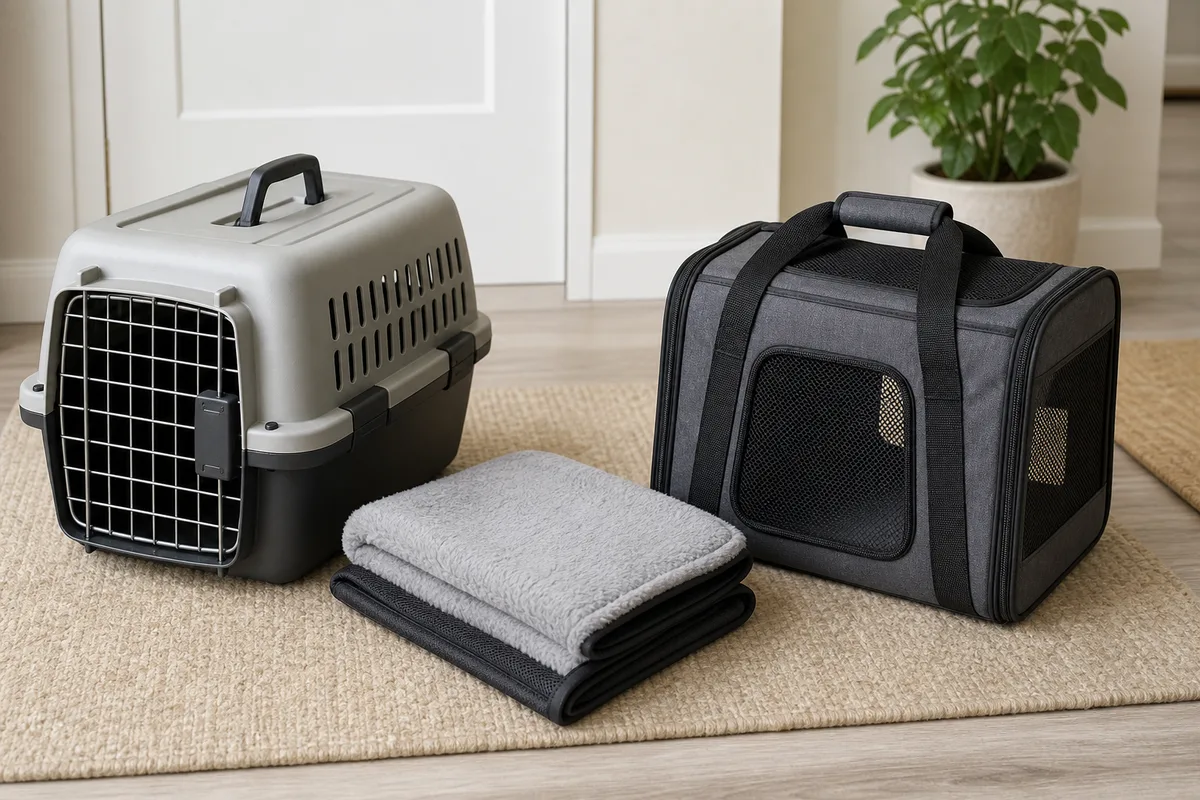
This is a practical format comparison, not a crash-test ranking, airline approval guide, or veterinary recommendation. Always check the product's current size and weight limits, measure your pet, and follow your veterinarian's instructions for medical visits, recovery, or travel restrictions.
Quick Difference
Choose a hard-sided pet carrier when you want a rigid shell, wipe-clean surfaces, secure-feeling latches, and easier top or front access for vet visits and short car trips.
Choose a soft-sided pet carrier when you want a lighter carrier, shoulder strap, more flexible storage, and a calmer-looking setup for brief errands or short trips with a pet who already fits and settles well.
Neither format is automatically safer, calmer, or better for every pet. Fit, ventilation, door design, cleaning, and your pet's tolerance matter more than the label on the carrier.
Option A: Hard-Sided Pet Carrier
A hard-sided carrier usually has a plastic shell, a rigid base, a front door, and sometimes a top-loading door. It is the format many pet owners picture for vet visits because it keeps its shape and is easy to set on the floor, in the car, or on an exam-room surface.
The main advantage is structure. The sides do not collapse inward when your pet shifts, and the base is usually easier to wipe clean after drool, urine, shed fur, or a spilled water dish. A removable top can also make some vet handling easier, though that depends on the carrier design and the clinic's preference.
Who Hard-Sided Carriers Fit
- Vet-visit routines: cats and small dogs who need a stable carrier for short car rides and exam-room handling.
- Mess-prone trips: nervous pets, young pets, or car rides where accidents, drool, or shed fur are likely.
- Pets who push against walls: animals who need a carrier that keeps its shape when they turn around or lean.
- Owners with storage room: homes with a closet, garage shelf, or entryway spot for a bulkier carrier.
Tradeoffs With Hard-Sided Carriers
Hard-sided carriers can be bulky, awkward on stairs, and less comfortable to carry for more than a short walk from home to car to clinic. The handle position matters because a poorly balanced carrier can swing or tilt.
They also need careful sizing. A carrier that is too small is stressful and uncomfortable; one that is much too large can slide around in the car and feel harder for a small pet to brace inside. Look for enough room for your pet to stand, turn, and lie down naturally within the product's weight guidance.
Option B: Soft-Sided Pet Carrier
A soft-sided carrier usually uses fabric panels, mesh ventilation, zippers, a removable pad, and handles or a shoulder strap. It often feels less bulky around the house and may collapse or flatten for storage.
The main advantage is carry comfort. A shoulder strap, lighter body, and softer edges can be easier for errands, short walks to the car, or apartment hallways. Some pets also like the padded base and fabric feel, especially when the carrier is introduced gradually at home.
Who Soft-Sided Carriers Fit
- Short errands: brief trips where the carrier will be carried by hand or shoulder for more than a few steps.
- Small-space storage: apartments, closets, or car trunks where a rigid carrier takes up too much room.
- Pets who settle calmly: cats and small dogs who do not scratch, chew, dig, or forcefully push against seams and mesh.
- Owners who want removable bedding: carriers with washable pads that can be cleaned after fur, dirt, or light accidents.
Tradeoffs With Soft-Sided Carriers
Soft-sided carriers are more dependent on stitching, zipper quality, mesh strength, and base support. A pet who claws, chews, or panics in confinement may damage fabric or push against mesh more easily than a rigid door.
Cleaning can also be less straightforward. Removable pads help, but fabric walls, seams, and mesh can hold odor or residue. Check whether the pad is machine washable, whether the carrier body is spot-clean only, and how long everything takes to dry.
Setup and Maintenance Issues to Check
Measurements: Measure your pet's length, standing height, and weight before shopping. Product weight limits are not enough by themselves; a long, tall, or broad pet may need a larger format even if they are under the listed weight.
Door style: Front doors work for pets who walk in calmly. Top-load access can help with reluctant cats or small dogs, but the latch and opening must feel secure and easy for you to use.
Ventilation: Look for multiple ventilation panels that do not leave your pet pressed against one small opening. Soft mesh can provide airflow and visibility, while hard-sided vents are easier to wipe but less flexible.
Bedding fit: A washable pad, towel, or liner can add traction and absorb small messes. Avoid loose, bulky bedding that crowds the interior or makes the carrier too warm.
Cleaning routine: Hard plastic usually wipes down faster. Soft-sided carriers need more attention to pads, seams, zipper tracks, mesh, and full drying before storage.
Car placement: Place the carrier where it sits flat and cannot tumble. Do not rely on marketing language alone for vehicle safety claims, and avoid leaving pets unattended in cars.
Trip-by-Trip Decision Guide
For routine vet visits, start with hard-sided. It is easier to clean after stress messes, keeps its shape in busy waiting rooms, and may offer top access or removable sections that help clinic staff handle your pet with less wrestling.
For apartment-to-car errands, soft-sided may be easier. If your pet is calm in confinement and fits comfortably, the lighter body and shoulder strap can make the trip less awkward.
For nervous or messy pets, prioritize cleanability. A carrier that can be wiped, lined, and dried quickly is more useful than one that looks cozy but traps odor after every trip.
For storage-limited homes, soft-sided has an edge. A collapsible or flatter carrier can live in a closet or under a bed, which makes it easier to keep the carrier accessible instead of buried somewhere inconvenient.
For pets who scratch, chew, or push hard, choose structure first. A sturdier carrier with secure latches is usually the more practical starting point than mesh-heavy fabric.
Who Should Skip Each Carrier?
Skip a hard-sided carrier if you cannot lift and carry it comfortably with your pet inside, you have no realistic storage space, or the rigid shape makes every short trip harder than it needs to be.
Skip a soft-sided carrier if your pet chews fabric, claws at mesh, pushes forcefully at zippers, has frequent accident cleanup needs, or needs a carrier that will stay rigid during handling.
Skip buying on style alone if the carrier lacks clear dimensions, weight guidance, ventilation photos, cleaning instructions, and door details. A good-looking carrier that does not fit your pet or routine will not solve the problem.
When to Ask a Professional
Call your veterinarian if your pet is panting heavily, vomiting, eliminating unexpectedly, showing pain, refusing to enter the carrier after a sudden change, or needs transport for illness, injury, surgery recovery, or medication-related visits. Product choice cannot replace medical guidance.
If carrier loading has become a serious struggle, a certified trainer or qualified behavior professional can help with a gradual, low-pressure plan. A different carrier may help, but it is not a guaranteed fix for fear, reactivity, or panic.
Related Next Steps
If you want broader buying criteria, use our guide to pet carriers for vet visits and short trips. For packing around the carrier, build an everyday pet outing kit with wipes, waste bags, water, and a spare towel.
For car cleanup, pair the carrier with a pet cleanup kit for car rides and day trips. If water is the missing piece for walks and errands, compare pet travel water bottles before packing more than you need.
Bottom Line
Choose a hard-sided pet carrier when you want rigid structure, easier wipe-down cleanup, secure-feeling doors, and a practical setup for vet visits or short car trips. Choose a soft-sided pet carrier when you want lighter carrying, easier storage, and a flexible format for a calm pet who fits comfortably.
The best carrier is the one your pet can fit inside safely, you can carry without struggling, and you can clean well enough that the next trip starts calmly.