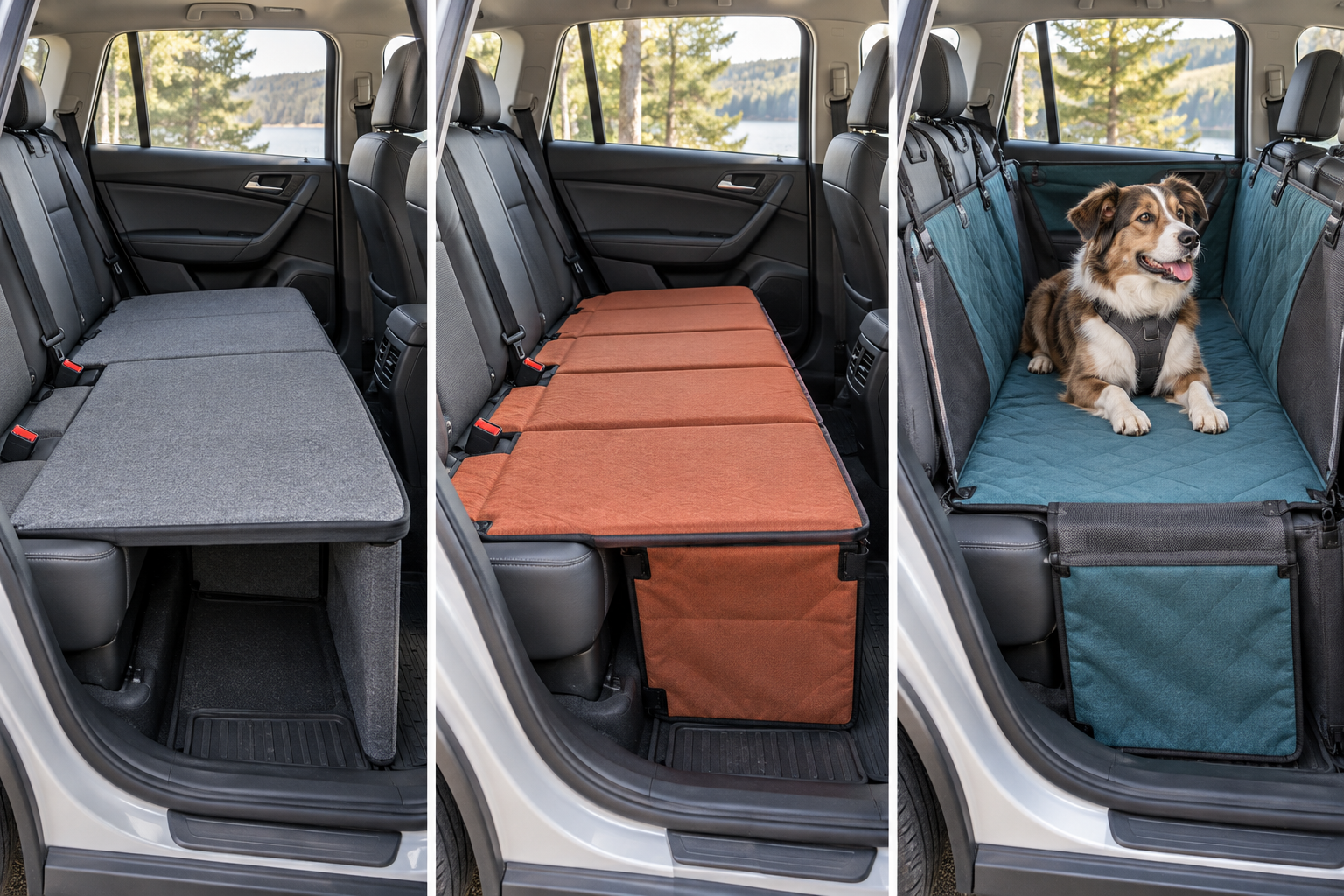
Quick Verdict: Buy, Delay, Choose an Alternative, Escalate, or Skip
Buy only when seven ordinary trips show a repeated footwell-space problem, the exact product passes every current vehicle and product instruction, the full platform is supported as designed, and a separate appropriate travel-restraint plan remains usable.
Delay when you have not measured the rear bench and footwell, do not know which seats and buckles must remain available, cannot find current installation and care instructions, or have not planned where the removed extender will be secured.
Choose an alternative when a fitted seat cover addresses upholstery mess, an established carrier or crate already fits the trip, or changing the riding zone under current vehicle and equipment instructions solves the actual problem with less setup.
Ask for qualified help when vehicle compatibility, restraint routing, seat or airbag functions, or installation is unclear. Ask the vehicle or product manufacturer and, where appropriate, a qualified vehicle-equipment installer. Contact a veterinarian about pain, mobility limits, repeated vomiting, heavy panting in mild conditions, panic, or a sudden reluctance to ride.
Skip when the product would block a required buckle, anchor, vent, console, door control, seat track, child-seat position, airbag area, or passenger space; when any section would be unsupported; or when the purchase is meant to replace an appropriate restraint.
Run a Seven-Trip Problem Audit Before Shopping
For seven ordinary trips, record the current setup without changing several variables at once. Do not let a dog ride loose to perform this audit. This worksheet identifies the owner's space problem; it does not evaluate crash protection or prescribe a restraint.
| Record after each trip | What it helps decide |
|---|---|
| Dog's current riding zone and established travel equipment | Whether an extender would conflict with what already works |
| Who used the rear seats before or after the trip | Whether passenger changeovers make removal impractical |
| What entered the footwell and where | Whether the open footwell is actually the repeated problem |
| Mud, hair, moisture, or cleanup needed | Whether a simpler fitted cover solves the main task |
| Setup, removal, cleaning, and storage minutes | Whether adding another large item is realistic |
| Distress, sickness, pain, or movement difficulty | Whether to stop product shopping and contact a professional |
If the footwell never causes a practical problem, the no-buy result is useful. More platform area is not automatically a better travel setup.
Vehicle-and-Product Fit Worksheet
Park on a level surface. Copy the exact extender's deployed dimensions, required support locations, attachment method, stated load guidance, permitted seat configurations, buckle openings, care directions, and folded size from current maker material. Then compare them with your vehicle manual and measurements.
- Rear bench: usable width and cushion depth, including split-fold seams and raised contours.
- Footwell: opening width, front-to-back depth, floor-to-seat height, center tunnel, console, vents, and seat tracks.
- Front-seat positions: measure with the driver and front passenger seats in their normal safe positions; do not plan around restricting a needed adjustment.
- Required access: doors, windows, handles, locks, controls, buckles, anchors, sensors, emergency equipment, and any occupied child-seat or passenger position.
- Extender storage: folded dimensions and a secured location outside the passenger footwell when the item is removed.
- Separate travel setup: confirm that every required connection and routing point remains accessible exactly as its maker directs.
Labeled hypothetical example: a household measures a 20-inch front-to-back footwell opening, but a rear console occupies 6 inches in the center and the driver's normal seat position changes the left-side depth by 3 inches. A single “54-inch wide” listing number cannot establish fit. The household needs the exact panel shape and support map or should delay. These figures illustrate the worksheet; they are not product or vehicle specifications.
Cost, Setup, and Maintenance Tradeoffs
Count more than the purchase price: delivery, return shipping or restocking terms, installation time, passenger changeovers, cleaning and drying, replacement covers or parts if the maker offers them, and secure storage. A low checkout cost can still be poor value if the extender must be removed every weekday or cannot be stored safely.
Initial setup belongs in a parked, empty vehicle. Follow the vehicle and extender instructions, move the front seats only through their normal permitted range, open both rear doors, and verify that each required function remains accessible. Do not add improvised blocks, legs, straps, holes, anchors, or restraint-routing points.
Before each use, inspect supports, panels, hinges, straps, seams, edges, covers, and contact points. After a messy trip, clean only as directed and dry every layer completely before storage. Stop using the extender if it shifts, bows, cracks, delaminates, exposes a sharp edge, creates a gap, interferes with the vehicle, or no longer installs as directed.
Red Flags That Change the Answer
- A “universal fit” claim appears without complete deployed dimensions, support locations, and compatible seat geometry.
- The product is marketed as a restraint, crash barrier, or protection system without evidence and instructions that specifically support that use.
- A stated load number is treated as proof of crash performance, vehicle compatibility, or suitability for a particular dog.
- The installation depends on blocking or improvising access to vehicle or restraint hardware.
- The plan assumes a dog can move freely around the cabin because the footwell is covered.
- Current installation, inspection, cleaning, warranty, return, or replacement-part information is missing.
- Travel distress, sickness, pain, weakness, or sudden behavior change is the reason for shopping.
Who Should Skip a Back-Seat Extender?
Skip one if rear passengers, child seats, folding seats, or frequent cargo changes need the same area; if you cannot lift and secure the extender between uses; if the vehicle has no clearly compatible supported layout; or if a simple seat cover solves the only documented problem.
Skip it when a carrier, crate, or other established setup already fits appropriately. Also skip any plan that treats extra floor area as treatment for anxiety, motion sickness, pain, mobility changes, or unsafe movement. Those concerns need veterinary or other qualified input, not a larger platform.
Alternatives and the Next Step
If upholstery cleanup is the real problem, first decide whether a dog car-seat cover is worth it. If the riding zone is undecided, compare a rear-seat hammock with a cargo liner. When the audit and measurements establish that an extender is warranted, use the dog back-seat extender format guide to compare rigid, folding, and hammock-integrated layouts. Browse the outings and travel pillar for related setup decisions.
Evidence Boundary
A back-seat extender is a platform decision, not a restraint decision. In its accessible 2015 Carrier Study results, the Center for Pet Safety distinguishes distraction prevention from crash protection and says proper pet-passenger restraint is critical for crash protection. That source evaluates carriers and carrier connections—not back-seat extenders—so it does not establish extender crash performance, fit, or certification. Keep the extender separate from the appropriate travel-restraint plan, follow the current instructions for the exact vehicle and travel equipment, and take unresolved routing or compatibility questions to their manufacturers or a qualified installer. Contact a veterinarian when pain, mobility changes, sickness, distress, or a sudden reluctance to ride is driving the purchase decision.
This page makes no model-level specification, crash, restraint, load, fit, comfort, or safety claim. The decision worksheet narrows the household problem and identifies conflicts; it cannot certify a combination. The existing format guide supplies product-category comparisons only after this necessity decision is made.
Bottom Line
A dog back-seat extender is worth considering only when a repeated footwell problem survives a seven-trip audit, the exact vehicle-product combination passes current written instructions, the separate travel setup remains intact, and the household accepts the setup, cleaning, passenger, storage, and return tradeoffs. Delay when evidence is missing, choose a simpler alternative when it solves the task, and skip rather than improvising fit or protection.