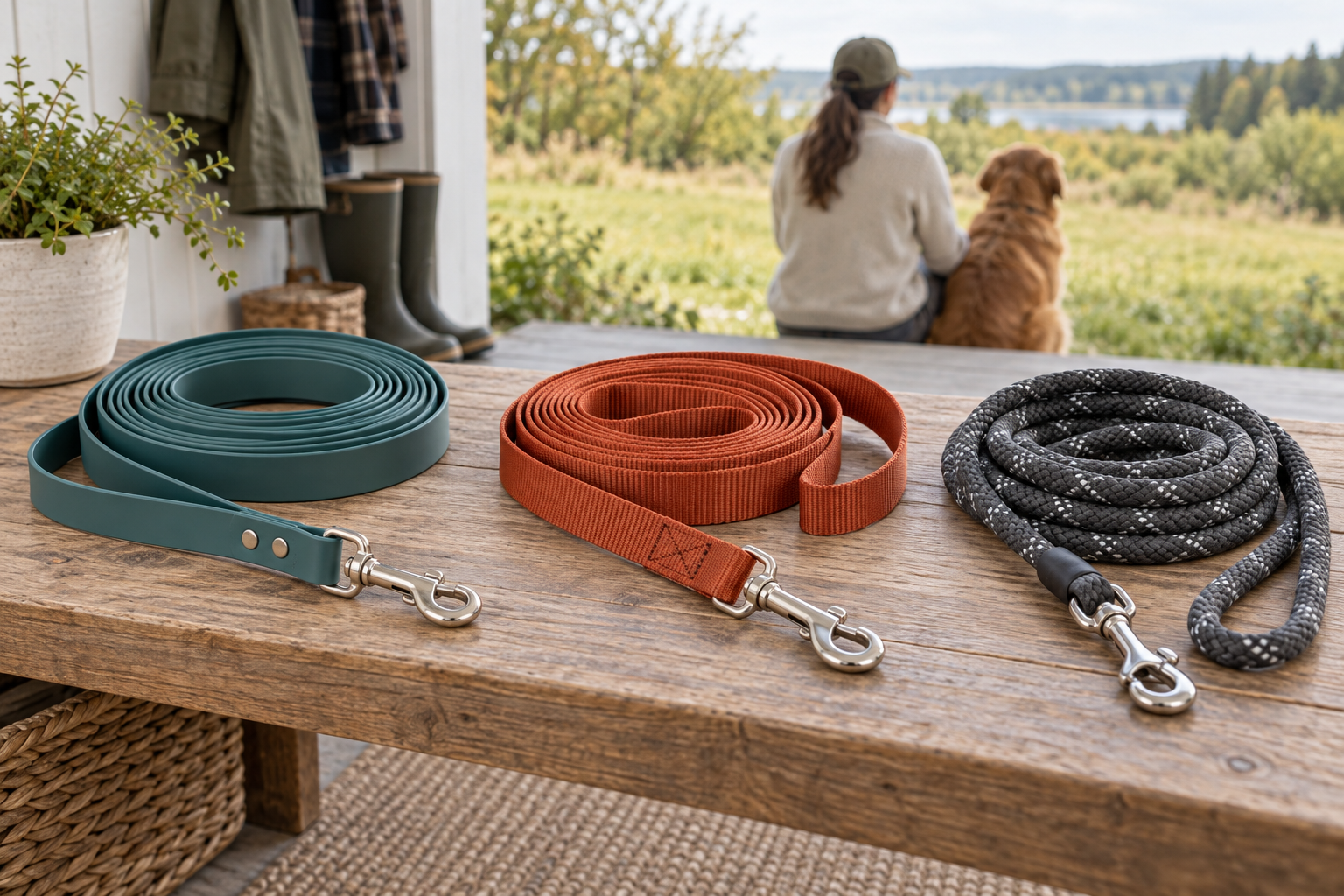
This is a category decision guide, not a hands-on test, restraint guarantee, or behavior plan. A harness can organize an everyday walking setup, but it does not automatically stop pulling, prevent escape, or make a stressful route safe.
Quick decision: buy, skip, delay, or get help
Buy when a correctly sized harness offers a clear practical advantage: your dog tolerates the dressing routine, the attachment point suits your handling, and you will use it often enough to justify fitting, washing, and checking it.
Skip when your dog walks calmly in a well-fitted collar-and-leash setup, the harness adds rubbing or fuss, or you only expect it to fix pulling without training.
Delay when you have not measured your dog, cannot check the return terms, or do not yet know whether an over-the-head, step-in, back-clip, or front-clip design fits the routine.
Choose an alternative when the current setup already works. A standard leash and appropriate collar may be simpler for short, calm outings. If the main problem is carrying bags and keys, a walking bag solves a different job without changing the dog's gear.
Escalate strong pulling, lunging, fear, reactivity, repeated backing out, or handling distress to a certified trainer or qualified behavior professional. Ask a licensed veterinarian about coughing, breathing changes, pain, skin irritation, mobility trouble, or a sudden change in walking behavior.
Practical criteria before you buy
- Measured fit: Use the maker's current measuring method and chart. Do not choose by breed label or weight alone.
- Dressing routine: Decide whether your dog is calmer with an over-the-head, neck-buckle, or step-in design.
- Adjustment: Check where straps tighten and whether hardware sits away from armpits, throat, and other high-friction areas.
- Leash attachment: Back clips are straightforward; front clips change the leash angle; dual-clip designs add options and complexity.
- Escape checks: Look for gaps when the dog turns, lowers the head, or backs up. No harness is escape-proof for every dog.
- Material and weather: Padding may feel softer but can hold water, heat, dirt, and odor. Mesh still needs fit and wear checks.
- Cleaning: Confirm wash instructions and drying time before muddy or rainy walks make upkeep part of the routine.
- Visibility: Reflective details may add visibility but do not replace attentive handling, lighting, or route choices.
Cost, maintenance, and setup tradeoffs
Cost: A harness costs more than continuing with gear you already own. Budget for replacement if fit changes, straps wear, hardware cracks, or the material no longer cleans properly.
Setup: The first fit takes time, and adjustment can shift with laundering or repeated use. Check it before walks rather than assuming yesterday's setting remains right.
Maintenance: Dirt and moisture collect under straps and padding. Follow the maker's care directions, dry the harness fully, and inspect stitching, buckles, rings, and adjustment points.
Convenience: A design is only convenient if both dog and owner can put it on without a wrestling match. More clips and padding can improve options while adding bulk and drying time.
Training limit: Equipment changes where and how you hold the leash; it does not teach loose-leash walking or resolve fear and reactivity by itself.
Who should skip a harness for now
Skip or delay a new harness if your current appropriate setup is comfortable and reliable, your dog becomes distressed during dressing, or you cannot verify fit and hardware before use. Also skip a particular design if it rubs, twists, restricts normal movement, traps moisture against irritated skin, or leaves enough space for backing out.
Do not use shopping as a substitute for assessment when walks involve pain, coughing, breathing difficulty, collapse, injury, aggression, panic, or repeated escape behavior. Those concerns need veterinary or qualified training help as appropriate.
Red flags in a harness or listing
- No usable size chart, measurement points, material details, or care instructions.
- Claims that one size fits every dog or that the harness is completely escape-proof.
- Promises to cure pulling, anxiety, reactivity, or other behavior problems.
- Sharp edges, cracked buckles, bent rings, loose stitching, or straps that will not hold adjustment.
- Pressure, rubbing, hair loss, redness, or restricted movement after fitting.
- A return policy that makes careful at-home fit checking impractical.
When a collar or different setup is enough
For a calm dog on a familiar short route, an appropriate, well-fitted collar and standard leash may remain the simplest setup. Keep identification needs separate from leash-control choices; follow local requirements and get individual guidance when you are unsure what is appropriate.
If you want a harness but the example above does not fit, compare adjustable back-clip, front-clip, dual-clip, and step-in formats in the dog harness guide for short walks. Compare a standard and retractable leash separately, because leash format introduces its own handling tradeoffs.
Plan the whole walking routine
A harness is one part of a walking setup. The site's walking, travel, and outing gear hub connects leash, cleanup, visibility, and carry-gear decisions. For a small grab-and-go routine, use the pet outing kit guide.
Bottom line
A dog harness is worth it for short everyday walks when a measured, well-tolerated design gives you a clear handling or dressing advantage and its cleaning routine fits your week. It is optional, not an automatic upgrade for every dog.
Skip it when existing gear already works or a harness creates friction without solving a defined problem. Delay until you can measure and compare formats. Escalate health concerns, distress, strong pulling, lunging, or escape behavior instead of expecting equipment alone to solve them.