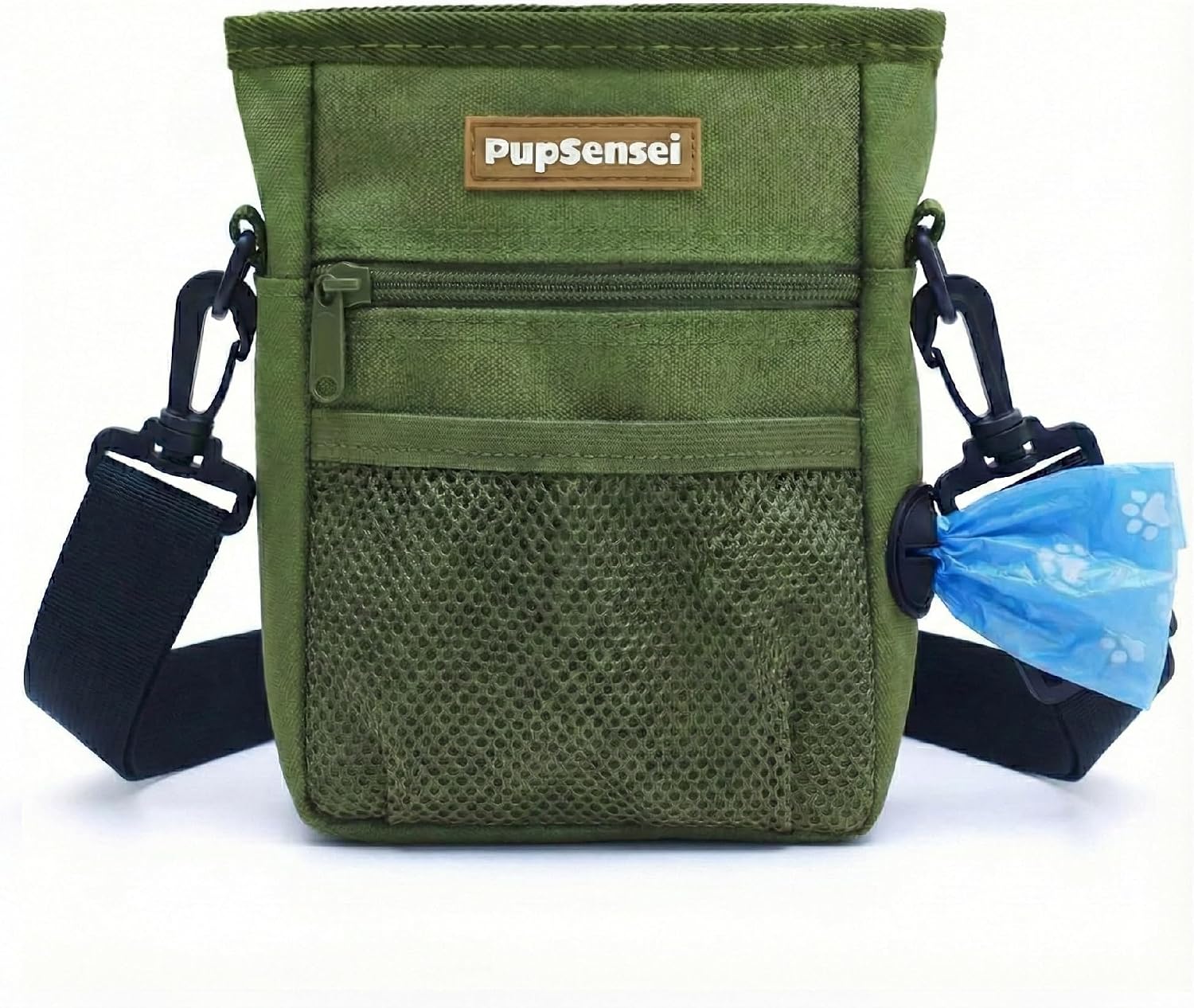
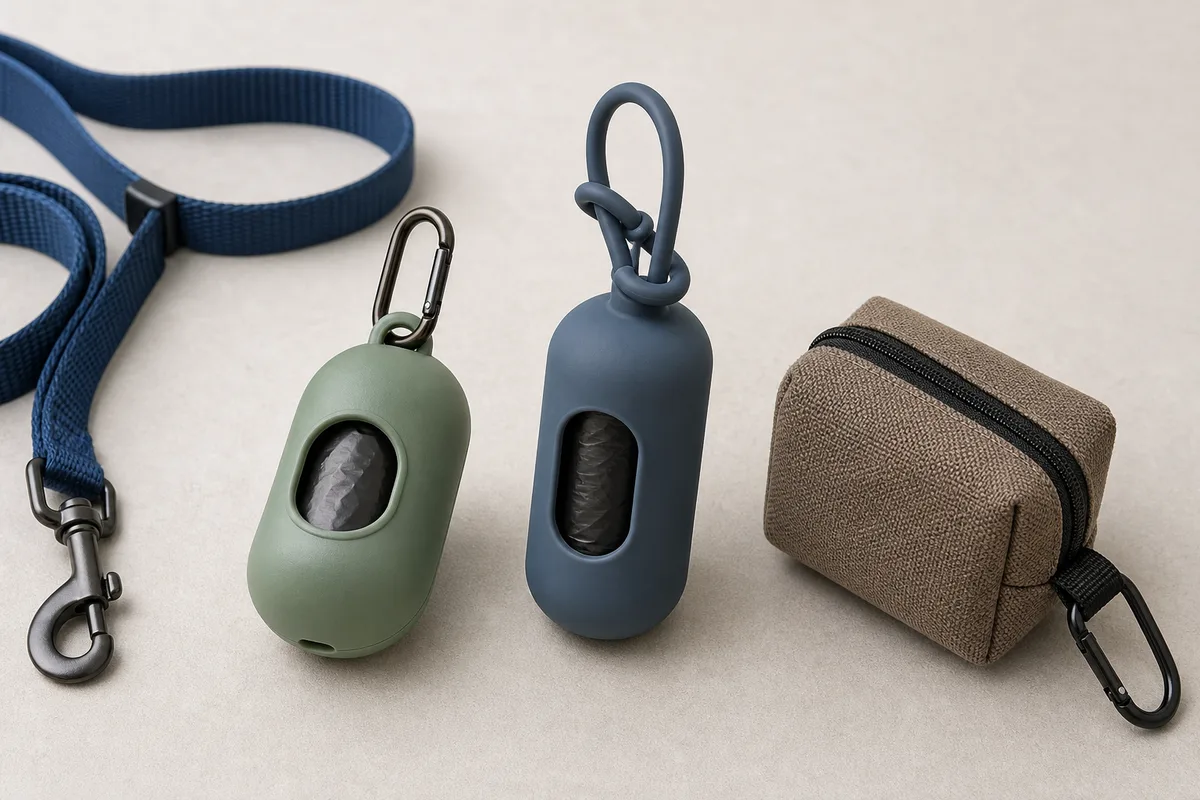
 Minimal waste-bag holder
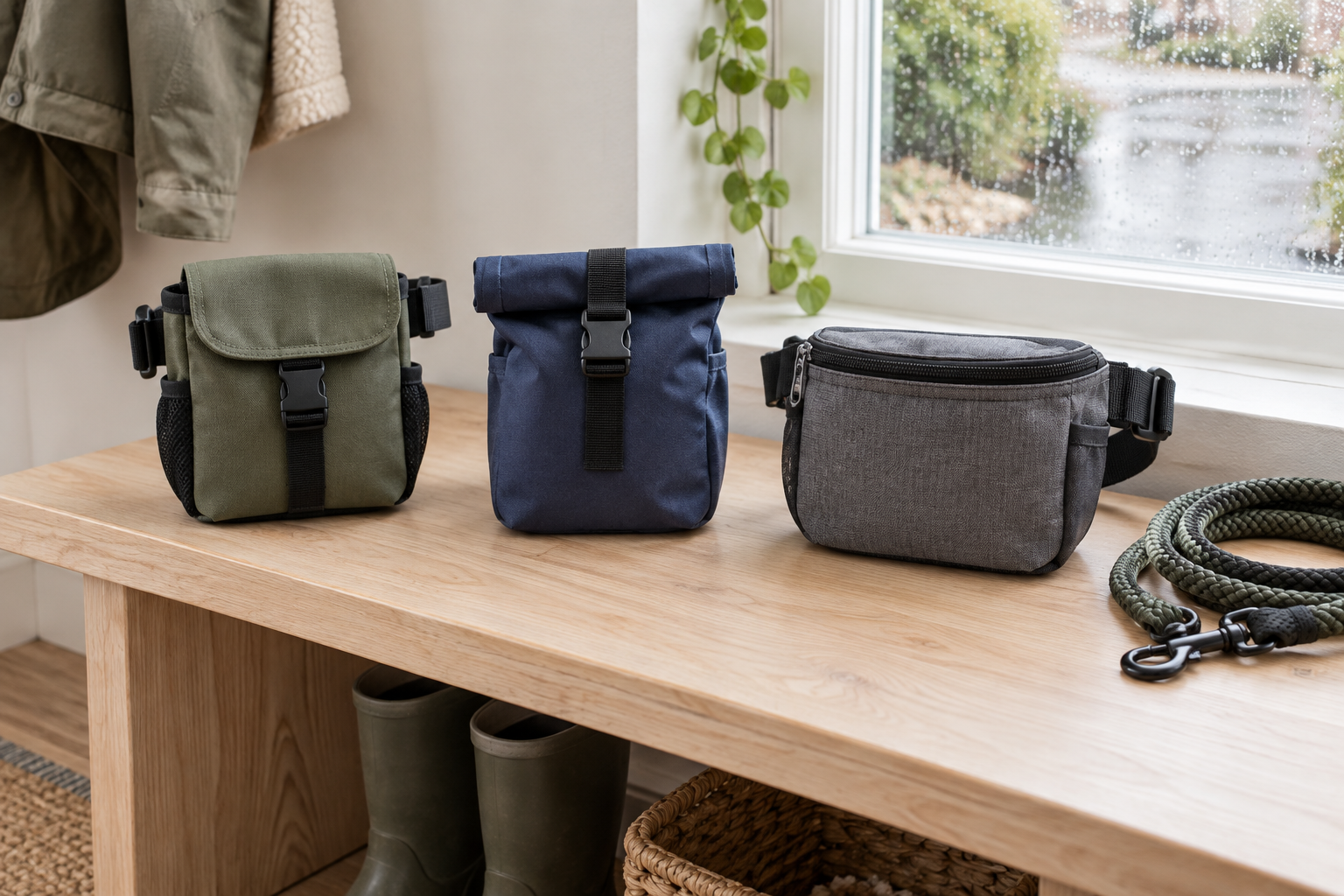 Treat-first walking pouch
This is a purchase framework for carrying small supplies on routine walks. A waist pack is a convenience item, not a leash, restraint, visibility device, training plan, or safety guarantee.
Quick Answer
It may be worth it if you regularly carry more than your pockets hold, need items without taking a bag off, and can wear the loaded pack without bounce, pinching, or interference with the leash.
It is probably not worth it if pockets already work, you only need a waste-bag roll, or the supplies you carry are better supported by a crossbody bag, backpack, or car-based kit.
Audit What You Carry Before Shopping
Lay out only what goes on a normal walk: waste bags, keys, phone, any rewards you already use, wipes, and perhaps a compact water setup. Remove “just in case” items that live more usefully in the car or at home. Measure the largest item with its case and note what must stay separate from food.
Then try an existing pocket or small bag for several ordinary routes. Record the actual friction: digging for bags, a phone pressing against keys, a shoulder strap swinging, crumbs in clothing, or no suitable place for a used cleanup item. A dedicated pack should solve one of those repeated problems.
When a Waist Pack Can Earn Its Place
- You need hands-free storage: the pack stays close to your body while the leash remains in your hand.
- Fast access matters: waste bags or other routine supplies have a dedicated reachable opening.
- Small items need separation: the layout keeps food away from keys, phone, wipes, and cleanup supplies.
- Your clothing changes: one adjustable pack replaces unreliable seasonal pockets.
- The loaded pack stays manageable: the belt and body fit without bouncing, twisting, or restricting normal movement.
When to Use Pockets or Another Bag
Skip a dedicated pack when one pocket safely holds a phone and keys while a small leash-mounted holder carries waste bags. A treat pouch may fit better when quick reward access is the only job. A crossbody bag or backpack can be more sensible when you carry a full water bottle, towel, extra layer, or supplies for a longer outing.
Also skip any pack that encourages overloading, interferes with mobility or medical equipment, sits where your dog jumps or grabs, or cannot keep food separate from dirty items. If a product's stated belt range or compartments do not fit, a different carry format is the answer—not forcing the closure.
Check Fit and Features With the Real Kit
- Belt range: confirm the maker's current range over the clothing you actually wear, with enough adjustment left for comfort.
- Usable capacity: compare internal dimensions with the measured phone, keys, bag roll, and other essentials; outside dimensions can overstate usable space.
- Compartment layout: use a washable food compartment or removable container when carrying treats, and keep them apart from cleanup items.
- Closures: choose pulls and buckles you can operate while stationary without looking away from the surroundings for long.
- Dispenser path: make sure the bag roll feeds without jamming and that the opening does not weaken a seam.
- Loaded comfort: assess bounce, belt pressure, pocket access, and whether a bottle changes balance before relying on it outdoors.
Reflective trim, coated fabric, or a covered zipper should be treated only according to the maker's current wording. Do not infer nighttime visibility, waterproofing, load capacity, or durability from appearance.
Cleaning, Drying, and Secure Storage
Empty food and crumbs after use. Follow the maker's directions for the fabric, lining, closures, belt, and any removable pieces, then open compartments and let the pack dry fully. Inspect seams, buckle, zipper tracks, dispenser edges, and strap attachment points before the next walk.
Keep unused waste bags dry, separate clean items from used cleanup materials, and store the pack where pets cannot reach food residue, straps, clips, or plastic bags.
When Carry Gear Is Not the Answer
A waist pack cannot correct pulling, fear, lunging, aggression, escape attempts, pain, or a medical problem. If a walk is difficult or unsafe, pause the gear experiment and speak with a veterinarian when health or pain may be involved, or an appropriately qualified, reward-based trainer or behavior professional for behavior and handling support.
Bottom Line
A dog walking waist pack is worth buying when a measured, lightly packed layout fixes a recurring access or carry problem and stays comfortable through the real route. If pockets or a bag you already own work, keep them and skip the extra product.
For format choices beyond a waist pack, use the dog walking bag guide. If rewards are the main item, compare dog treat pouch formats; for longer errands, start with the everyday pet outing kit.