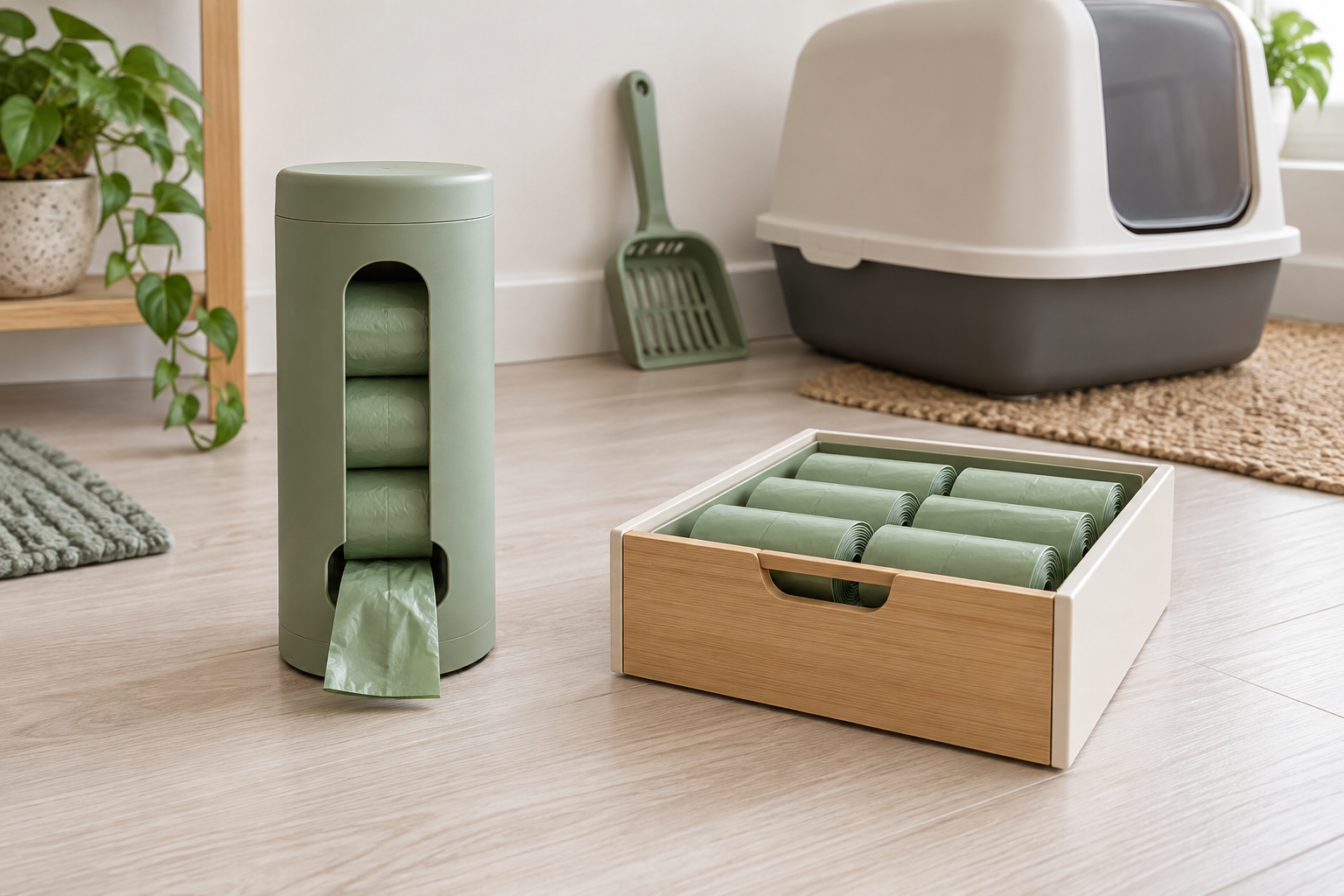
This decision covers storage for clean, unused bags only. A dispenser does not control odor, sanitize a litter area, or store filled waste. Wash your hands after litter-box cleanup, and contact a licensed veterinarian about straining, pain, blood, litter-box avoidance, or abrupt urine or stool changes.
Quick Decision: Buy, Repurpose, Delay, or Skip
Buy when clean bags are used often, the refill fits, and a measured dispenser creates easier access without obstructing the litter box. Repurpose when a clean drawer, tray, or lidded container already provides the same access. Delay when you are changing bag formats or the litter-station layout. Skip when the original box works or your cat can reach and chew exposed plastic.
The Six-Part Worth-It Test
- Repeated friction: Are you actually searching for bags or handling an awkward package during most scooping sessions?
- Refill compatibility: Does the unit accept your roll width, roll diameter, loose-bag stack, or boxed format?
- Placement: Is there a dry, stable location that does not narrow the cat's route or your cleaning path?
- Access: Can the intended user take one bag and reload the dispenser without moving other supplies?
- Maintenance: Can every surface be inspected, wiped or washed as directed, and dried fully?
- Total cost: Does the organizer work with bags you already buy, or does it require proprietary refills that change the ongoing expense?
Match the Dispenser to the Bag Format
Identify whether you use small rolls, loose folded bags, or bags in a dispensing box. Measure the refill itself and compare it with the product's usable interior, opening, spindle, and loading door. Outside dimensions do not prove that a roll will turn or a stack will feed.
Look at how the next bag separates. A narrow slot may hold back a roll but catch thicker bag seams; a wide opening may release several loose bags. Treat “one-handed” wording as something to verify from current product details and your placement, not as a guarantee.
Placement, Setup, and Cat-Reach Tradeoffs
A freestanding dispenser needs a level surface and enough base stability that a normal pull does not tip or drag it. A wall-mounted model requires a suitable wall, permitted installation, correct hardware, refill-door clearance, and a height that the intended person can reach comfortably.
Keep loose bags, refill cores, caps, cutters, and mounting hardware away from cats and children. Do not place a dispenser above the box where a loose component could fall, beside food preparation, or where it blocks the box entrance. If your cat mouths plastic, use inaccessible closed storage instead of an exposed dispenser.
When Existing Storage Is the Better Alternative
The original bag box is usually the cheapest answer when it remains intact, fits the shelf, and dispenses without bunching. A dedicated drawer can work when it stays clean and is not shared with used tools. A smooth washable tray or lidded container may help loose bags, provided it is reserved for clean supplies and easy to inspect.
Run the alternative through several ordinary scooping cycles. If the bags remain easy to reach and reload, buying a separate dispenser is unlikely to improve the routine. If the box collapses, the stack scatters, or you repeatedly move supplies to reach it, then a measured organizer has a clearer job.
Cleaning and Maintenance Costs
A dispenser adds one more surface and, depending on the design, a lid, spindle, spring, slot, adhesive pad, or mounting point. Follow the maker's care directions and confirm that you can reach interior corners. Let washable parts dry fully before loading clean bags.
Inspect the opening, base, fasteners, and removable parts when refilling. Stop using the unit if cracks create sharp edges, mounting loosens, or small parts become accessible. Replacement refills, mounting supplies, and the time needed to reload and clean the unit belong in the cost decision alongside the purchase price.
Red Flags and Who Should Skip
- The listing does not state compatible refill dimensions or show how bags load.
- The planned location blocks litter-box access, walking space, a door, or routine cleaning.
- The dispenser relies on a mounting method that is not approved for the surface or lease.
- The interior has seams or mechanisms you cannot inspect and clean.
- The product requires an unclear proprietary refill when ordinary bags already work.
- Your cat reaches, paws at, or chews exposed bags or removable pieces.
Skip the dispenser when the real problem is filled-waste storage, odor, litter tracking, an awkward scoop, or a cat avoiding the box. Those are different decisions, and an unused-bag organizer will not solve them.
When to Escalate Instead of Changing Gear
Bag access is a household organization issue. Sudden litter-box avoidance, straining, repeated unproductive trips, vocalizing, pain, blood, or marked urine or stool changes are reasons to contact a veterinarian promptly. Do not delay professional care while rearranging accessories.
Bottom Line
A litter waste bag dispenser is worth buying when compatible clean bags are used often, current storage causes repeated friction, and a safe measured location makes access and refilling simpler. Repurpose existing storage when it does the same job, delay while the routine is changing, and skip any setup that puts loose plastic within a cat's reach.
If a dedicated unit passes that test, compare wall-mounted and freestanding litter waste bag dispensers. For adjacent decisions, see the small-home litter disposal guide, the litter scoop holder decision, or the cleanup and odor-control guide hub.