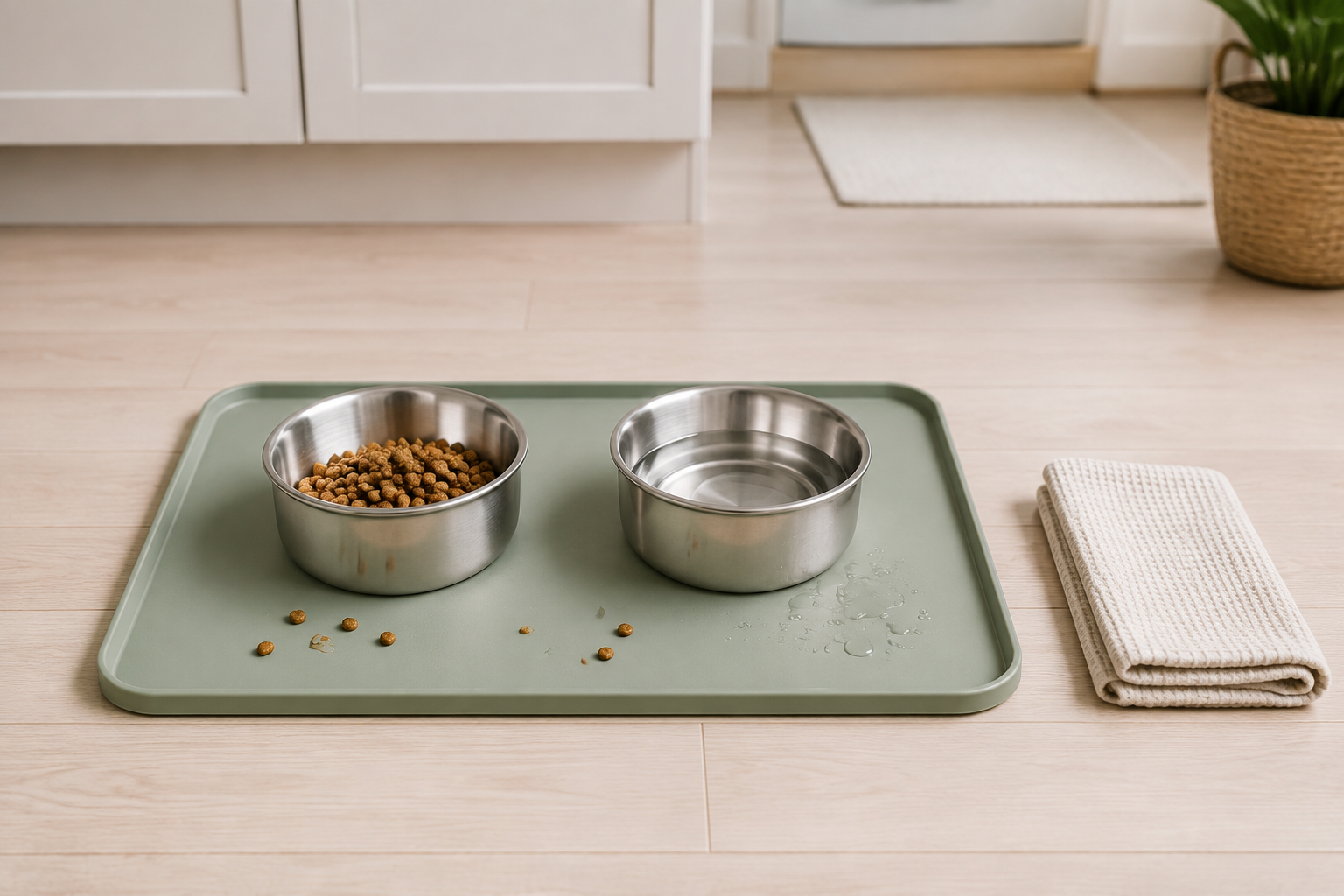
A feeding mat is a cleanup convenience, not a health or behavior solution. It cannot explain or correct sudden changes in eating, drinking, swallowing, elimination, or how a pet approaches the bowls.
Quick Decision: Buy, Repurpose, or Skip
Buy a dedicated mat when an ordinary meal leaves a predictable mess outside the bowls, the mat can cover that footprint, and its care fits your routine. Repurpose a washable layer when a towel or low-profile household mat already catches occasional crumbs without sliding, bunching, or harming the floor. Skip a mat when the floor wipes easily, the mess is infrequent, or your pet chews, flips, digs at, or avoids mat edges.
Observe the Mess Before Measuring
Watch several normal meals rather than planning around one unusually large spill. Note whether the real issue is scattered food, dripped water, a sliding bowl, or a poor location. A mat helps most with a repeatable footprint of crumbs and light moisture. It is less useful when the bowl itself tips, a narrow walkway causes bumps, or water travels far beyond any practical mat.
Outline the farthest routine crumb or drip, then measure the bowls in their normal arrangement. Include room to lift one bowl without knocking the other. Compare those measurements with the product's usable inner surface—not only its outside dimensions.
When a Dedicated Mat Earns Its Space
- The mess repeats: food or water reaches the floor often enough that a lift-and-wipe surface shortens cleanup.
- The footprint is contained: both bowls and the usual splash or crumb zone fit inside the usable area.
- The mat stays accessible: you can lift it, clean beneath it, and dry both the mat and floor.
- The material fits the mess: a wipe-clean surface suits pooled drips; a washable absorbent layer suits light scattered moisture when laundry is easy.
- Your pet leaves it alone: the edges do not become a chewing, digging, or flipping target.
When a Towel or Existing Surface Is Enough
A dedicated product is optional if a washable towel already handles an occasional splash and you can replace it before it stays damp. A bare, compatible easy-clean floor may be simpler still. Repurposing works only when the layer lies flat, does not slide under the bowls, dries fully, and does not trap moisture against a sensitive finish.
Do not use a thick folded layer if it makes the bowls unstable. Avoid loose loops, torn backing, foam, or frayed edges that your pet mouths. If the current bowl moves, a stable wide-base bowl may solve the problem more directly than putting a larger mat beneath it.
Match Material to Cleaning, Not Appearance
Raised-edge silicone or similar wipe-clean mats are useful for ordinary water drips because liquid stays visible and can be removed promptly. Flat fabric mats can catch crumbs and absorb scattered drops, but they need a realistic wash-and-dry rotation. Layered waterproof fabric may feel softer while adding seams and drying time.
Check the maker's current care directions instead of assuming a mat is dishwasher-safe, machine-washable, or dryer-safe. Compare silicone and fabric feeding mats when material is the main unresolved choice.
Check the Floor Beneath It
Moisture can remain hidden under a mat even when the top looks dry. Confirm that the backing is suitable for your floor finish, especially on sealed wood, laminate, vinyl, or other surfaces with specific care requirements. Lift the mat regularly, wipe beneath it, and let both surfaces dry before resetting the bowls.
A raised rim can contain small spills, but it also adds a lip for a small or cautious pet to step near. Make sure the mat lies flat and does not curl into a tripping edge in a human walkway.
Who Should Skip a Feeding Mat?
Skip it if the only available size blocks a door or walking path, if the mat moves more than the bowls did, or if cleaning its grooves and underside takes longer than wiping the floor. It is also a poor fit for pets that repeatedly chew or tear accessible edges. Remove damaged products and follow the maker's replacement guidance rather than relying on a fixed schedule.
If your pet suddenly drinks much more or less, stops eating, coughs, gags, vomits, appears painful, or abruptly avoids the feeding area, contact a veterinarian. A mat may contain the evidence of a change, but it should not be used to explain that change away.
Choose the Next Useful Guide
If a mat makes sense, compare feeding-mat formats for food and water messes, then use the low-mess feeding-station guide if bowls, storage, placement, and cleanup all need attention. New pet owners can keep the overall list restrained with the practical starter-supplies guide.
Bottom Line
A pet feeding mat is worth it when it contains a measured, recurring mess and is easier to clean and dry than the floor beneath it. Buy for the spill pattern you actually see, not for a generic pet label. When a washable layer or quick floor wipe already works, skipping another product is a perfectly practical choice.