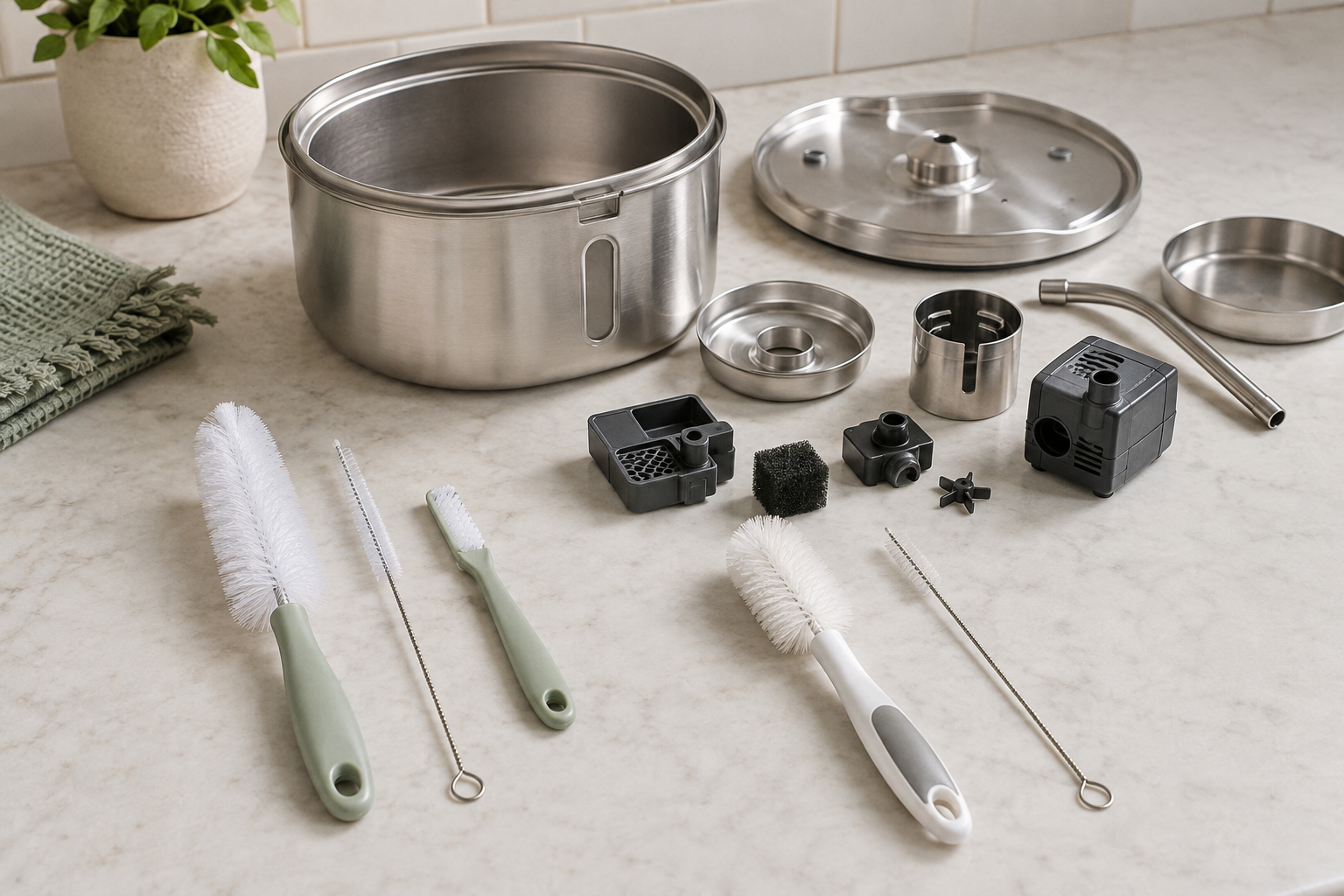
This is a buy-or-skip framework for mechanical cleaning tools, not a sanitation protocol, water-quality claim, or veterinary recommendation. Follow the fountain maker's instructions for unplugging, disassembly, cleaning products, rinsing, drying, and reassembly.
Quick Decision: Buy, Skip, Delay, or Repurpose
Buy a kit when several documented cleaning points need different brush shapes and the listed dimensions match them. Buy one brush when a single tube or accessible cavity is the only gap. Skip it when broad removable parts and existing tools are enough. Delay until you find the manual and measure the openings. Repurpose clean, suitable brushes only when they have safe tips and can be reserved for the fountain.
The Six-Part Worth-It Test
- Documented access: Does the manual identify the part as removable and cleanable?
- Real reach gap: Is there a passage your current tools cannot contact?
- Measured fit: Can the brush move without wedging, while reaching the full passage?
- Surface fit: Are its bristles and tip appropriate for the fountain material?
- Low duplication: Will most kit pieces serve a distinct recurring job?
- Dry storage: Can you rinse, inspect, air-dry, label, and safely store the tools?
If there is no reach gap, a dedicated kit adds clutter without improving the routine.
Inventory the Fountain Before Shopping
Unplug the fountain and consult its current manual. List the basin, lid, filter tray, removable spout or tube, pump cover, intake screen, impeller area, and seams the maker allows you to access. Never assume a sealed motor body or tiny opening should accept a brush.
Measure accessible openings and passage length where practical. Compare those with the bristle diameter, bristled length, shaft flexibility, and end finish. A long handle with a short brush section can still leave the middle of a tube untouched.
When Existing Brushes Are Enough
A clean soft bottle brush may handle a broad basin. A reusable-straw brush may suit a straight removable tube if its diameter, reach, wire end, and material are compatible. Reserve repurposed tools for the fountain, mark them clearly, and dry them separately.
Do not force an oversized brush, press exposed twisted wire against plastic or seals, or reuse a tool exposed to unsuitable household chemicals. Replace brushes with shedding bristles, rust, cracks, loose caps, or kinked shafts.
What a Kit Cannot Fix
A kit cannot repair a cracked basin, damaged cord, failing pump, missing part, or difficult-to-disassemble design. It cannot make an unsupported soap, disinfectant, descaler, or cleaning schedule appropriate. Use only methods the fountain maker permits.
A cleaning kit is a convenience item, not a health solution. If your pet suddenly drinks much more or less, avoids water, or seems unwell, contact a licensed veterinarian rather than trying to solve the change with an accessory.
Cost, Storage, and Maintenance Tradeoffs
A compact kit keeps matched tools together, but more pieces mean more items to rinse, inspect, dry, and store. One correctly sized brush may cost less and create less clutter. A generic high-count set can be poor value if only one tool fits.
For future fountain purchases, use the easy-clean fountain checklist to compare pump access, open surfaces, filters, and maintenance before choosing the appliance.
Bottom Line
A pet fountain cleaning kit is worth it when several measured, maker-approved cleaning points need different tool shapes and your current brushes leave real gaps. Skip it when suitable reserved brushes already cover the job; buy one brush when only one passage causes trouble.
Once dedicated tools are justified, compare fountain brush varieties by reach and shape, or browse the feeding and water routine hub.