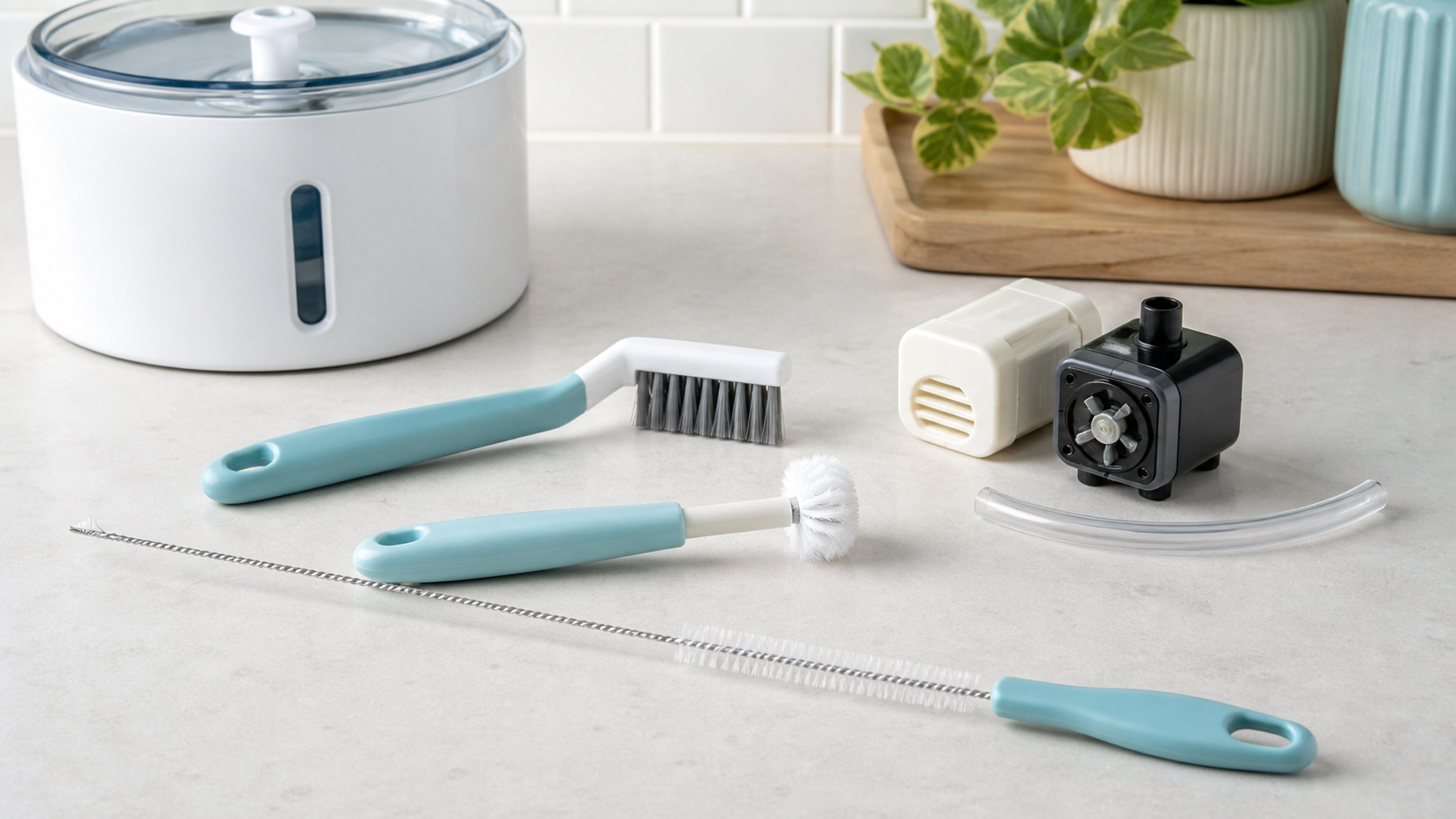
This is a buying framework for mechanical cleaning tools, not a sanitation protocol or veterinary recommendation. Follow the fountain maker's directions for disassembly and cleaning. Do not add soaps, disinfectants, descalers, or other chemicals unless the manufacturer explicitly permits them, and rinse every part as directed before putting the fountain back into use.
Quick Comparison: Choose by the Narrowest Job
Flexible tube brushes: reach matters most
A long, narrow brush can reach through a removable spout or tube that a sponge cannot. Compare the bristled length as well as the total tool length: a long handle with only a short brush section may leave part of a tube untouched. The brush should pass without scraping or becoming stuck, and any twisted-wire end should be capped or rounded.
Round pump brushes: compact control
A small round or tufted head gives more control around a pump cover, intake screen, and accessible cavity. It should be small enough to turn without levering against an impeller shaft or seal. Never force a brush into a sealed motor body or opening the instructions do not identify as cleanable.
Angled seam brushes: side contact for open surfaces
An angled head is useful where residue collects along basin corners, lid seams, and open channels. A broad, stiff head may scratch soft plastic or fail to enter a groove, so favor a modest head and bristles compatible with the fountain material.
Inventory the Fountain Before Buying
Unplug the fountain and use its manual or official care guide to identify which parts are removable. Note the pump model, tube length and inside diameter, spout shape, filter tray, basin material, and any narrow seams. Manufacturer-specific kits can be convenient, but the listed compatibility must match the exact fountain or pump model—not merely the brand.
Also check whether a brush is already included with the fountain. Replacing one worn tool may be simpler than buying a large kit with duplicate sizes. Do not use one brush interchangeably for pet dishes and unrelated household cleaning jobs; dedicated, clearly stored tools are easier to keep track of.
Selection Criteria That Matter
- Brush diameter: It should contact the inner surface without wedging in the tube or bending a delicate part.
- Useful reach: Compare the full passage length with the bristled portion, handle, and flexible shaft.
- Bristle stiffness: Softer bristles suit scratch-prone surfaces; firmer bristles need enough room to move without gouging.
- Tip finish: Avoid exposed sharp wire ends near plastic, silicone seals, cables, and pump parts.
- Handle control: A non-slip grip and modest head make careful work easier than an oversized handle in a small pump housing.
- Material compatibility: Follow the fountain maker's guidance for stainless steel, ceramic, plastic, silicone, and pump components.
- Kit overlap: Each included tool should solve a distinct job rather than add unused duplicates.
- Drying and storage: Look for hanging holes, a ventilated holder, or another way to dry tools fully between uses.
Clean the Tools, Dry Them, and Inspect for Wear
Use brushes only after disconnecting power and removing parts according to the manual. Work where small pump covers and impellers cannot fall into a drain. Use light pressure, rinse loosened debris away, and stop if a brush binds. A cleaning tool is not a pry bar.
Afterward, clean the brushes as their maker directs, rinse them, shake out trapped water, and let them dry fully in a ventilated place away from pet access. Replace a brush if bristles shed, wire kinks, a cap loosens, rust appears, or the handle cracks. Reassemble the fountain exactly as directed and keep cords and connections dry.
Who Should Skip a Dedicated Kit
Skip a kit if the fountain has only wide, open, dishwasher-safe parts and its included brush already reaches the pump and channel. A small dedicated soft brush may be enough. Also skip a generic kit when the manual requires a model-specific tool or warns against inserting brushes into a component.
A brush kit cannot correct damaged wiring, a cracked basin, a noisy or failing pump, unavailable replacement parts, or a fountain your pet avoids. Replace or stop using damaged equipment according to the maker's guidance. If your pet suddenly drinks much more or less, avoids water, or seems unwell, contact a licensed veterinarian rather than treating the fountain setup as the cause.
The Bottom Line
Choose the smallest useful set that covers the fountain's documented cleaning points: a flexible tube brush for narrow passages, a compact round brush for accessible pump parts, and an angled brush for open seams. Correct diameter, controlled bristles, protected tips, and a practical drying method matter more than a high piece count.
For the next maintenance decision, use our easy-clean fountain checklist or compare replacement fountain filters by exact model fit.