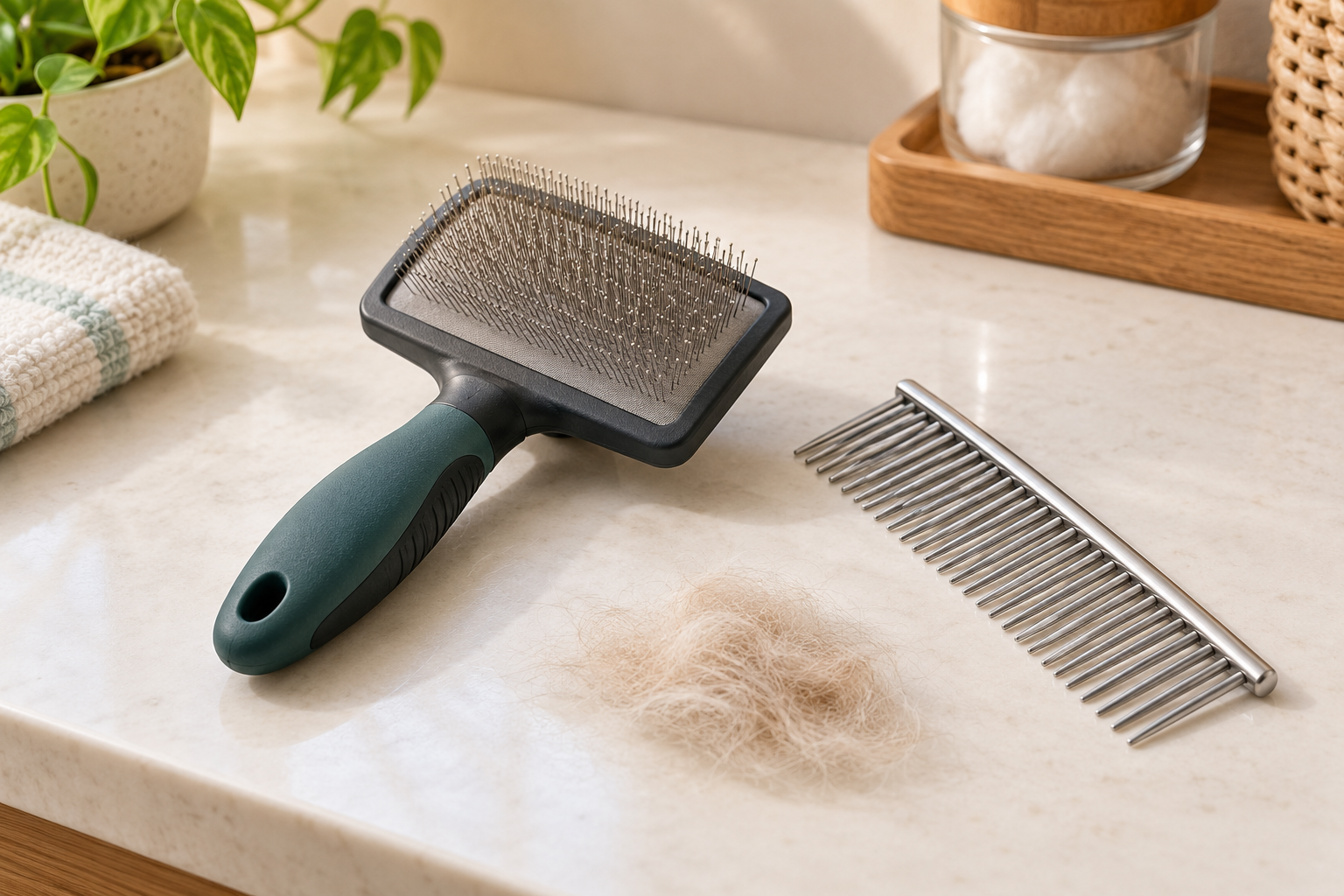
Quick Verdict: Buy, Delay, Choose an Alternative, Escalate, or Skip
Buy when the brush maker lists the dog's coat type, the head size allows controlled placement, the handle fits your hand, and the dog remains comfortable during a short observed trial.
Delay when coat guidance is vague, you cannot inspect the pin tips, the working head is too large for deliberate control, or you do not yet know whether the dog tolerates this tool.
Choose an alternative when a suitable comb or another tool already maintains the healthy coat according to the dog's established guidance. Buying a duplicate tool does not simplify the routine.
Escalate to a qualified groomer when there is matting you cannot separate gently or handling is becoming difficult. Contact a veterinarian for pain, inflamed or broken skin, sores, swelling, persistent itching, bald areas, unusual odor, or a sudden coat change.
Skip when the dog repeatedly moves away, stiffens, turns toward the brush, vocalizes, guards an area, or snaps; when the brush has rough, bent, or loose pins; or when marketing replaces clear coat and care guidance.
Five Criteria That Make a Slicker Brush Worth It
- Documented coat fit: Use the current maker's species, coat, size, and use guidance rather than assuming every long coat needs the same pin length.
- Controlled head size: A broad head covers more area, while a compact head can be easier to place deliberately. Bigger is not automatically better.
- Inspectable pins and cushion: Pin tips, the pin field, cushion, head edge, and handle should be easy to check before each use.
- Comfortable hand fit: The grip should let you hold and reposition the brush without squeezing excessively or losing control.
- Dog acceptance: Voluntary, comfortable participation matters more than a feature list. Pause rather than forcing a session.
Cost, Setup, and Maintenance Tradeoffs
Include more than the purchase price. A slicker needs a clean, dry storage place where pins will not be crushed; hair must be removed from the head; and the pins, cushion, edges, handle, and any release mechanism need regular inspection. Self-cleaning mechanisms can make hair release easier, but add moving parts that can trap hair or stick.
Pin reach and head width trade coverage for control. Longer pins may suit some listed coat types, but they do not justify added pressure. Curved heads follow a different contour than flat heads, while a compact rectangular head may take more passes. These are fit questions, not performance guarantees.
Set up the first check while the dog is calm and you can stop immediately. Follow current maker directions and the dog's existing professional grooming advice. This page does not prescribe brushing frequency or technique.
Red Flags: Stop, Delay, or Get Help
Do not use a brush with bent, missing, loose, rusty, or rough pins; a cracked cushion or head; a sharp edge; a loose handle; or a sticking release mechanism. Replace or return it according to the seller's current terms rather than improvising a repair near the coat.
Do not pull a slicker through resistance or use it to solve severe tangles. Stop when the dog shows discomfort or the skin condition is uncertain. A qualified groomer can assess a difficult coat, and a veterinarian is the right next step when pain, skin changes, injury, or sudden coat changes may be involved.
Who Should Skip a Slicker Brush?
Skip the category when an existing appropriate comb or brush already covers the routine, the dog's coat is outside the product's current guidance, or storing the pins safely is impractical. It is also a poor choice when the person brushing cannot maintain gentle control or the dog cannot comfortably participate.
Do not buy a more aggressive-looking brush to compensate for matting, persistent resistance, or a rushed routine. Those are reasons to pause and get qualified help, not reasons to increase pin length, stiffness, or pressure.
Alternatives and the Next Decision
A suitable grooming comb can be simpler when the established routine only needs deliberate section checks. Another brush category may fit better when recommended for the individual coat. If the routine is uncertain, ask a qualified groomer which tool type and dimensions make sense before shopping.
Use the grooming and routine-care hub for the broader product path. If a slicker passes this decision test, compare slicker brush formats for long-coated dogs. For a different grooming feel, see whether grooming gloves are worth it.
Bottom Line
A slicker brush is worth it only when current coat guidance, manageable head size, sound pins, comfortable hand control, realistic cleaning, and the dog's calm participation line up. Delay for clearer guidance, choose an existing suitable tool when it already works, and seek qualified grooming or veterinary help when matting, discomfort, skin changes, or difficult handling are part of the decision.