This page helps with the category decision before you compare formats. It does not teach grooming technique, promise less shedding, treat skin or coat problems, remove mats, or replace a veterinarian or qualified groomer.
Quick Answer: Buy, Keep Your Brush, or Skip?
Buy a grooming glove when your pet already accepts relaxed hand contact, loose surface hair is the routine problem, and a well-fitted wearable tool would be easier for you to control and clean. Keep your current brush when it already matches the coat, works comfortably, and is simple to maintain. Ask a qualified groomer when coat type, tangles, or tool choice is unclear. Skip home grooming and contact a veterinarian for pain, inflamed or broken skin, sudden coat changes, sores, swelling, parasites, persistent itching, or distress.
The Six-Part Worth-It Test
- Willing contact: Does your pet remain comfortable with ordinary hand contact in the areas you plan to groom?
- Clear job: Are you collecting routine loose surface hair rather than trying to pull through mats or solve a skin concern?
- Secure hand fit: Does the maker provide enough sizing detail for the palm, fingers, wrist, and left- or right-hand use?
- Useful control: Can you feel and limit contact instead of relying on stiff nubs or exaggerated pressure claims?
- Manageable reset: Can you remove hair, clean the glove as directed, dry it fully, and store it beyond chewing reach?
- Real improvement: Does the glove make the established routine simpler, or would it merely duplicate a brush you already use?
What a Grooming Glove Can and Cannot Do
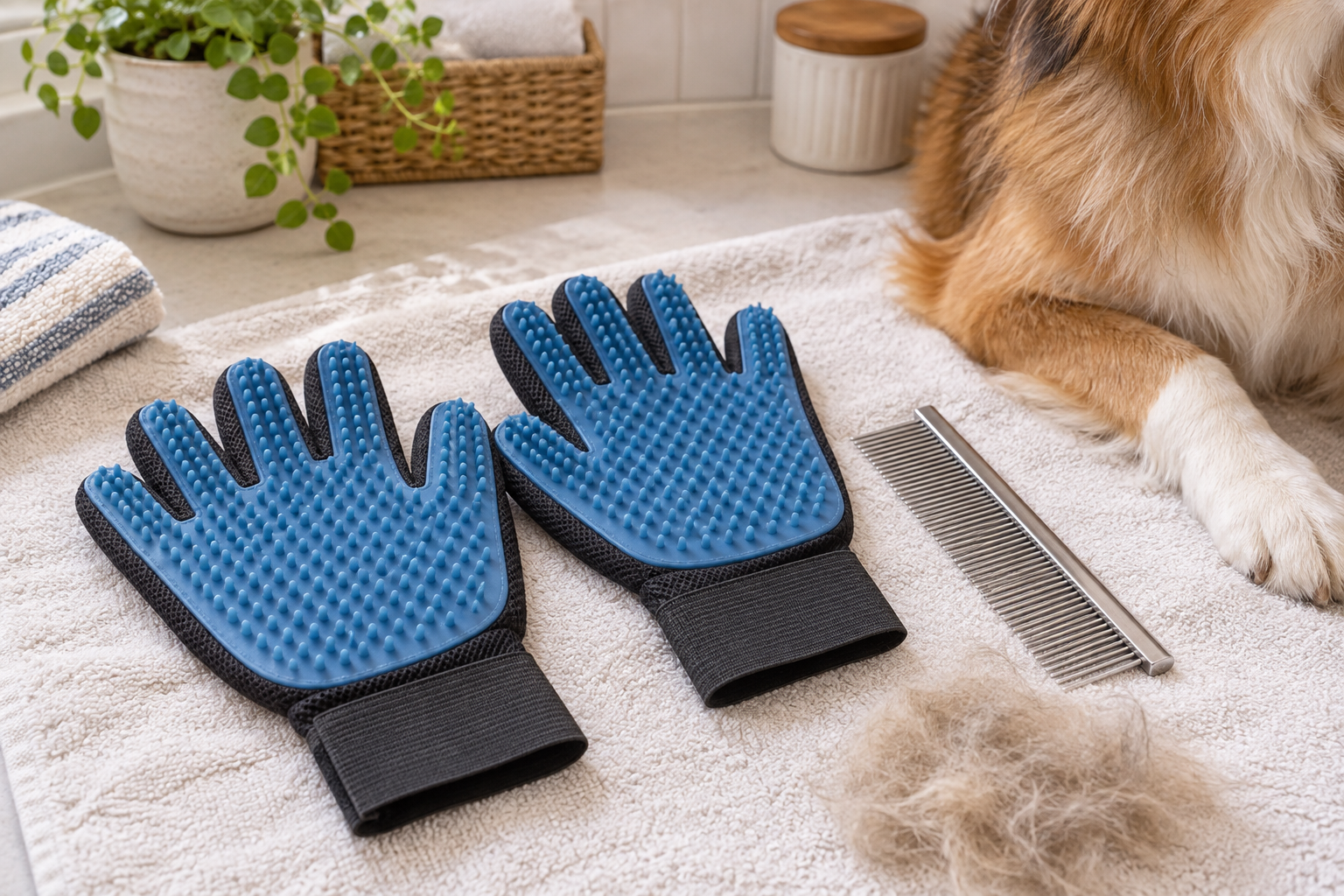
A grooming glove combines a wearable fabric or mesh backing with a textured palm, often using flexible silicone or rubber-like nubs. That broad surface can make routine collection of loose hair feel more like ordinary hand contact for some pets and owners. The format may also help you follow broad body contours without holding a separate handle.
Those features do not make the glove universally gentler or appropriate. A loose glove can twist, long fingers can fold, firm nubs can catch, and broad contact may be unwelcome to a touch-sensitive pet. A glove cannot diagnose coat changes, safely work through tight mats, guarantee calm behavior, or replace coat-specific advice.
When Your Existing Brush Is the Better Choice
Do not replace a tool simply because a glove looks easier. If a brush already fits your hand, matches the coat guidance you follow, cleans easily, and your pet accepts it, the glove may add clutter without improving the routine. A handled brush can also offer a smaller, more defined contact area than a full palm.
If you are choosing among conventional grooming tools, use the routine coat-cleanup brush guide. It separates flexible rubber brushes, rounded-pin tools, and fine-tooth formats without treating one tool as right for every coat.
Hand Fit Matters More Than a One-Size Label
Compare the maker's palm and wrist measurements, finger length, cuff closure, handedness, and whether the glove is sold singly or as a pair. A cuff can steady a correctly sized glove, but it cannot fix excess material in the palm or fingertips. Seams, closures, and backing fabric should sit flat rather than creating pressure points.
Also check the contact surface: nub height, spacing, flexibility, edge finish, and any wet-or-dry directions. More nubs, longer nubs, or a “massage” label do not prove a better fit. Choose based on measurable construction and the contact your pet already accepts.
Cleaning, Drying, and Storage Tradeoffs
Hair-release claims can depend on collecting enough loose fur to lift it as a layer; small amounts may still need to be picked or rinsed away. Follow the current care directions for the palm, backing, cuff, and closure. Do not assume that a mesh back makes a glove machine washable or suitable for bathing.
Dry every layer fully before closed storage, inspect for cracked nubs, opened seams, or loose pieces, and replace a damaged glove. Store it where a pet cannot chew the fabric, closure, or silicone surface. For the rest of the kit, the grooming organizer guide compares washable, securely stored formats.
Who Should Skip Grooming Gloves?
Skip the category if your pet moves away, stiffens, hides, vocalizes, guards an area, swats, mouths, or repeatedly tries to end contact. Stop rather than using the glove to push through reluctance. A certified trainer or qualified groomer can help with an appropriate handling plan; choose professional help rather than expecting a product to change behavior.
Also skip when there are tight mats, wounds, painful areas, unexplained hair loss, inflamed skin, or other health concerns. Contact a veterinarian about sudden or concerning changes. A product purchase is not the next step when the problem may require examination or professional care.
Bottom Line
Grooming gloves are worth it for a narrow use case: a willing pet, routine loose surface hair, a securely fitted hand tool, and a cleanup process you will actually follow. Keep a suitable brush when it already works, and skip the glove when it would duplicate that tool or when discomfort, matting, skin changes, or distress call for professional help.
If the category passes this test, continue to the grooming glove format comparison to choose among five-finger gloves, broad mitts, and compact adjustable-cuff options.