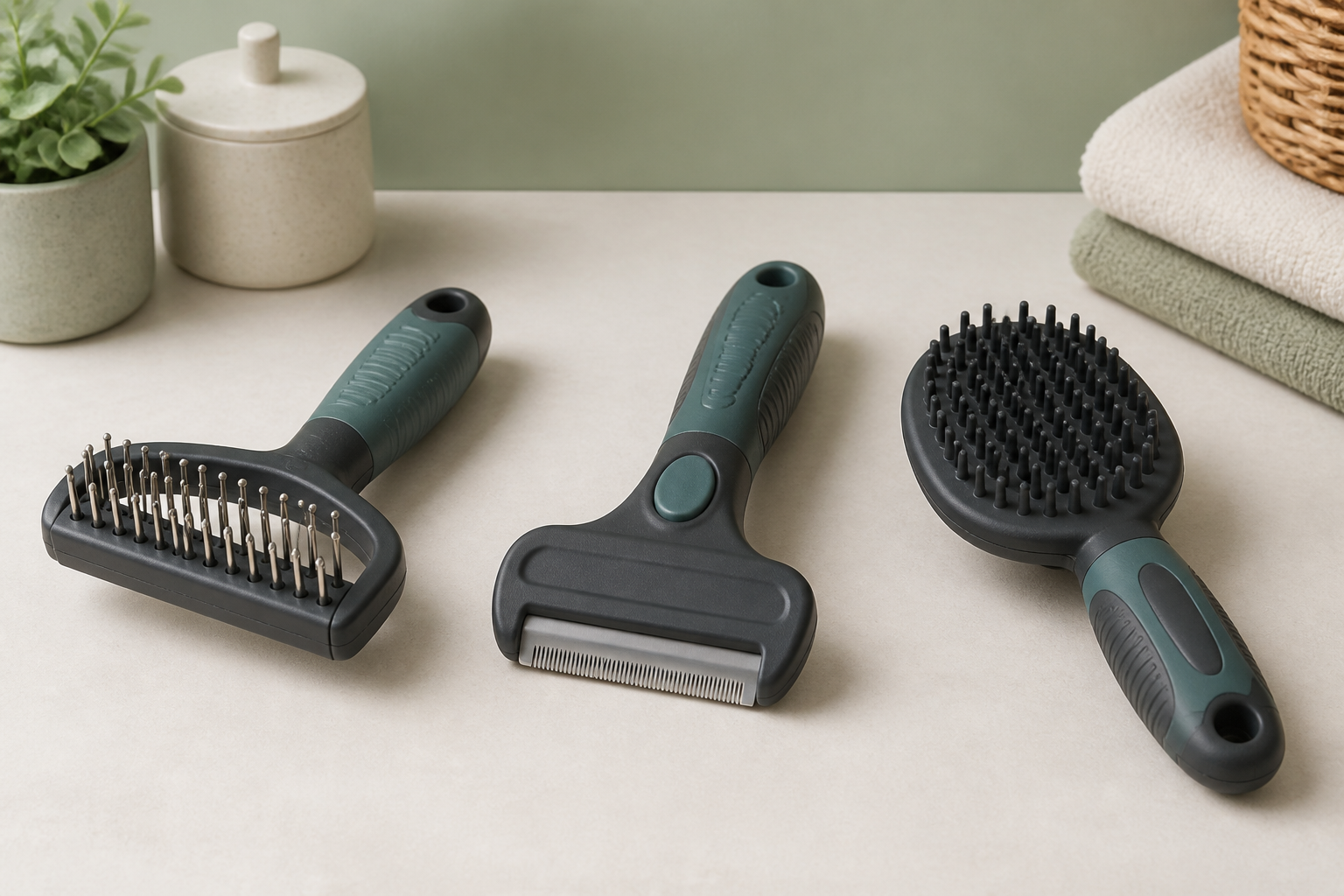
This guide is a buying framework for routine grooming on a healthy, comfortable coat. It does not diagnose coat or skin problems, teach mat removal, promise less shedding, or replace advice from a veterinarian or qualified groomer.
Quick Comparison: Which Brush Format Fits?
Rounded-pin undercoat rakes: for matching reach to a denser coat
A rake separates longer coat layers with spaced pins. The useful comparison is not “more teeth”; it is whether the pin length reaches loose undercoat without scraping skin, snagging, or dragging through tangles. Rounded tips, a manageable head width, and clear coat guidance matter. Skip a rake when you cannot see or feel how it moves through the coat without resistance.
Fine-tooth deshedding tools: for a narrow, exact use case
A fine metal edge can collect loose hair efficiently when its design matches the listed coat type and length. That precision also makes fit important. Compare working width, edge protection, tooth length, pressure guidance, and cleaning. This format is a poor default when the coat is tangled, fragile, very short, or outside the manufacturer’s stated use.
Flexible rubber brushes: for broad contact on many short coats
Soft rubber nubs can gather loose surface hair while flexing with the body. They are often simpler to clean and less visually intimidating, but “soft” does not guarantee comfort. Compare nub height and stiffness, hand size, grip security, and whether the instructions allow wet use. Stop if the tool pulls, creates friction, or bothers sensitive skin.
Selection Criteria That Matter
- Coat fit: Use the manufacturer’s stated species, coat type, and coat-length guidance. A dog-or-cat label alone is too broad.
- Contact surface: Check tooth or nub length, spacing, tip shape, edge protection, and working width. Choose control over maximum coverage.
- Pet tolerance: A pet that moves away, stiffens, vocalizes, guards an area, or repeatedly tries to stop the interaction is giving you a reason to pause.
- Grip and control: The handle should fit your hand without forcing a tight grip or awkward wrist angle. A wide head can be clumsy around small areas.
- Cleaning: Look for clear directions for removing captured hair and washing or wiping the tool. Dry metal parts fully and inspect for bent teeth, cracks, or rough edges.
- Storage: Keep grooming tools dry and outside your pet’s reach. Protect fine teeth from being bent against other supplies.
- Instructions: Prefer listings with specific coat guidance, maintenance directions, warnings, and reachable manufacturer support.
A Practical Comparison Framework
First, identify the everyday task: lifting loose surface hair, reaching a dense undercoat, or using a flexible tool during a calm routine. Then confirm coat compatibility and choose the narrowest working head you can control comfortably. Treat release buttons, self-cleaning heads, and bundled combs as conveniences only after the core tool fits.
When the category is uncertain, ask a qualified groomer to identify an appropriate general format for your pet’s coat. A groomer can also show you when a tangle or mat is beyond routine brushing. Do not use a deshedding tool to cut, pull, or work through a mat tight to the skin.
Who Should Skip a Deshedding Brush?
Skip home deshedding when your pet is fearful of handling, may bite or scratch, has tight mats, or shows pain. Contact a veterinarian about sudden coat changes, bald spots, broken or inflamed skin, sores, swelling, parasites, persistent itching, or pain. Those are not product-selection problems.
Also skip buying a new tool if a simple brush you already own comfortably handles routine loose hair. No deshedding brush stops normal shedding, replaces appropriate coat care, or makes frequent forceful grooming a good idea.
Keep the Routine and the Room Manageable
Store the clean, dry brush where the routine happens, but beyond pet access. Before adding powered collection, compare a pet grooming vacuum with a standard grooming brush by pet tolerance, noise, control, upkeep, storage, and cleanup. The grooming organizer guide covers washable caddies and closed storage. For fur already on furniture, bedding, or car seats, use the separate surface hair-remover guide; grooming tools are not designed for upholstery.
Short-haired cat? Use the narrower short-haired cat grooming brush guide to compare soft bristle, flexible rubber, and shallow rounded-tip pin formats by gentle contact and cat tolerance.
The Bottom Line
Compare a rounded-pin rake for coat-depth fit, a fine-tooth tool for a precisely matched use case, or a flexible rubber brush for broad short-coat contact. Coat compatibility, gentle control, easy cleaning, and pet comfort matter more than tooth count or aggressive “maximum hair” claims. When skin, pain, mats, or handling fear enter the picture, pause the purchase and ask a veterinarian or qualified groomer.