Quick Answer
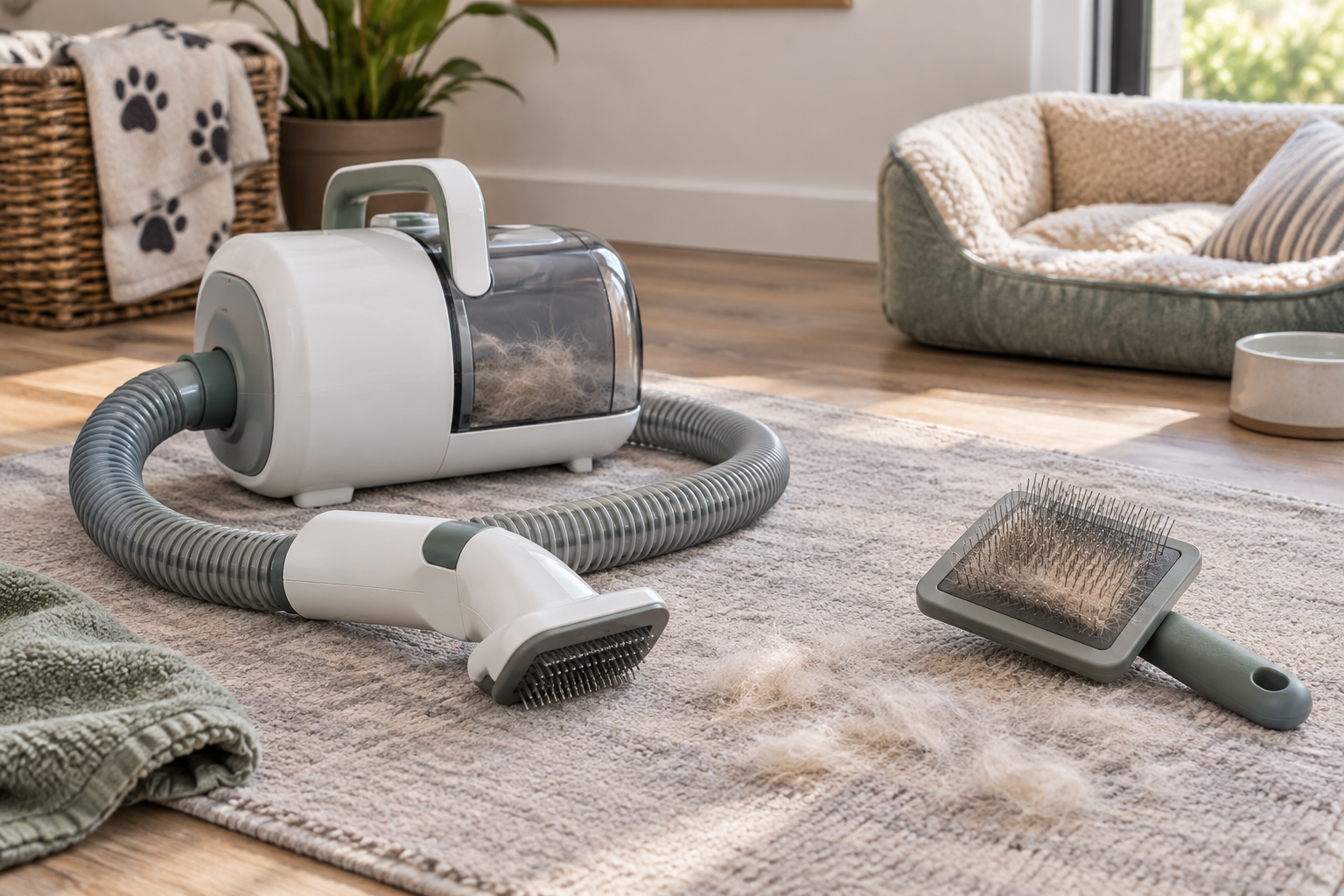
Choose a grooming vacuum when powered collection solves a real cleanup problem, the complete setup fits your room, and your pet remains relaxed around both the sound and moving hose. Confirm that the exact attachment is intended for your pet and coat; a long accessory list is not the same as a good match.
Choose a standard brush when you want direct feedback through the handle, minimal setup, quiet operation, and a tool that stores in a drawer or caddy. Plan to remove hair from the brush and clean the surrounding area afterward.
Choose neither yet when you do not know the coat type or appropriate tool, your pet resists ordinary handling, or there are tight mats, skin changes, pain, or sudden coat changes. Ask a qualified groomer or veterinarian before turning that problem into a purchase.
Who a Pet Grooming Vacuum Fits
A grooming vacuum fits a household that brushes often enough for captured hair to offset the extra setup. The unit needs floor or shelf space, an outlet if corded, enough hose reach to avoid tugging, and room to move the attachment without the hose brushing unexpectedly against the pet.
Pet tolerance is the first gate, not suction strength. A pet that willingly accepts a quiet manual brush may still dislike a motor, airflow, hose movement, or a bulky head. Follow the maker's introduction instructions, use only stated settings and attachments, and stop if the pet shows distress or tries to escape, bite, or attack the equipment.
The format is less useful when brushing sessions are brief, storage is tight, filters and bins will not be maintained, or hair cleanup is already manageable with a brush and nearby waste bin. Powered collection is a convenience feature, not a treatment and not proof that more frequent or more forceful grooming is appropriate.
Who a Standard Grooming Brush Fits
A standard brush suits short routines, small spaces, travel, and owners who value quiet, immediate hand control. It can be placed and lifted precisely, and there is no suction setting, hose, cord, filter, or collection bin to manage.
The category still requires careful matching. Pin length, bristle firmness, head width, edge shape, and the maker's coat guidance matter. Labels such as universal or all coats should not replace a specific fit check. Use gentle passes and inspect the tool for bent pins, sharp edges, cracked cushions, or loose handles.
A brush is not automatically the cheaper choice if the wrong format is bought repeatedly. Ask a qualified groomer which general tool type fits the coat if you are uncertain, especially before buying a narrow, fine-tooth, or bladed tool.
The Practical Tradeoffs
- Hair collection: A compatible vacuum attachment can direct some loosened hair into a bin while brushing. A manual brush holds some hair in its head and leaves the rest for separate cleanup. Neither format stops normal shedding.
- Noise and movement: A vacuum adds motor sound, airflow, and hose movement. A manual brush is quieter, but the sensation of its pins or bristles still must suit the pet.
- Control: A brush gives direct feedback through one handle. A vacuum setup asks the user to manage the grooming head, hose position, setting, and machine placement together.
- Setup time: A brush can be picked up and used after a quick damage check. A vacuum may need assembly, the right attachment, a cord or charged battery, an empty bin, and a clear route for the hose.
- Maintenance: Both formats need hair removal and cleaning according to their instructions. Vacuum bins, filters, hoses, and attachments create more separate parts to inspect and dry.
- Storage: A manual brush fits a caddy or drawer. A powered kit needs a measured footprint and a way to keep the hose, cord, and small attachments together and out of pet reach.
- Cost: Compare the full kit and expected replacement filters or parts, not only the machine. A manual brush generally has fewer components, but exact prices and availability change.
Compare the Exact Tools, Not the Category Labels
For a grooming vacuum, record the unit dimensions, weight, hose length, cord length or battery instructions, stated settings, bin volume, filter type, included grooming heads, and replacement-part route. Look for clear cleaning directions and a stable place for the main unit where it cannot tip or block the working area.
For a manual brush, compare the working surface rather than marketing adjectives. Measure the head, check the shape and finish of anything contacting the coat, confirm the listed pet and coat uses, and decide whether the grip remains controllable with a small amount of hair on it. A self-cleaning button may simplify hair removal, but it also adds moving parts to inspect.
Do not assume the powered tool is more effective or the manual tool is gentler. Fit, technique, pressure, session length, coat condition, and the individual pet all affect the routine. This page compares ownership formats; it does not rank grooming outcomes.
Setup, Cleaning, and Storage
Before using either format, choose a calm, well-lit space with secure footing and an easy exit for the pet. Keep sessions within the pet's willing tolerance. Avoid forcing position, restraining a distressed pet, or continuing because the equipment has already been set up.
With a vacuum, inspect the hose, cord, plug, housing, bin, filter, and attachment before use. Keep electrical parts away from water and follow the manual for assembly, emptying, filter care, and allowed cleaning methods. Never wash a part unless the maker says it is washable, and let washable components dry completely before reassembly.
With a brush, remove trapped hair without scraping the pins or bristles against an unapproved hard surface. Clean and dry it as directed. Store either setup away from pet access; loose attachments, cords, hoses, and damaged brush parts are not toys.
Who Should Skip Each Option?
Skip a grooming vacuum when your pet is distressed by the motor or hose, the attachment is not specifically appropriate for the coat, there is no stable setup space, or the filter and bin routine will be neglected. Skip it when a simple brush already works and collecting hair during the session would not meaningfully change cleanup.
Skip a standard brush when you cannot identify a safe, suitable format or cannot comfortably control the tool. Do not use ordinary brushing to pull through tight mats or work over painful, broken, inflamed, or abnormal skin.
Pause home grooming and seek qualified help for tight mats, pain, sores, swelling, persistent itching, bald areas, parasites, sudden coat changes, or a pet that may bite or scratch during handling. A veterinarian should assess health concerns; a qualified groomer can help with coat-appropriate routine tools and work that is beyond comfortable home brushing.
Related Grooming and Cleanup Guides
If you already know you want a manual tool, compare deshedding brush formats for routine coat cleanup without expecting them to stop normal shedding. For broad hand contact, use the grooming glove worth-it test. Once hair has reached furniture or bedding, switch to the surface hair-remover guide; grooming tools are meant for the pet, not upholstery.
Bottom Line
A pet grooming vacuum earns its space when a willing pet, compatible attachment, manageable sound, practical setup, and real cleanup need all line up. A standard brush is the simpler choice when quiet control and fast storage matter more than collecting hair during the session. In both cases, choose by the exact coat guidance and your pet's comfort, use gentle control, maintain the tool, and stop when grooming becomes a health or handling problem.