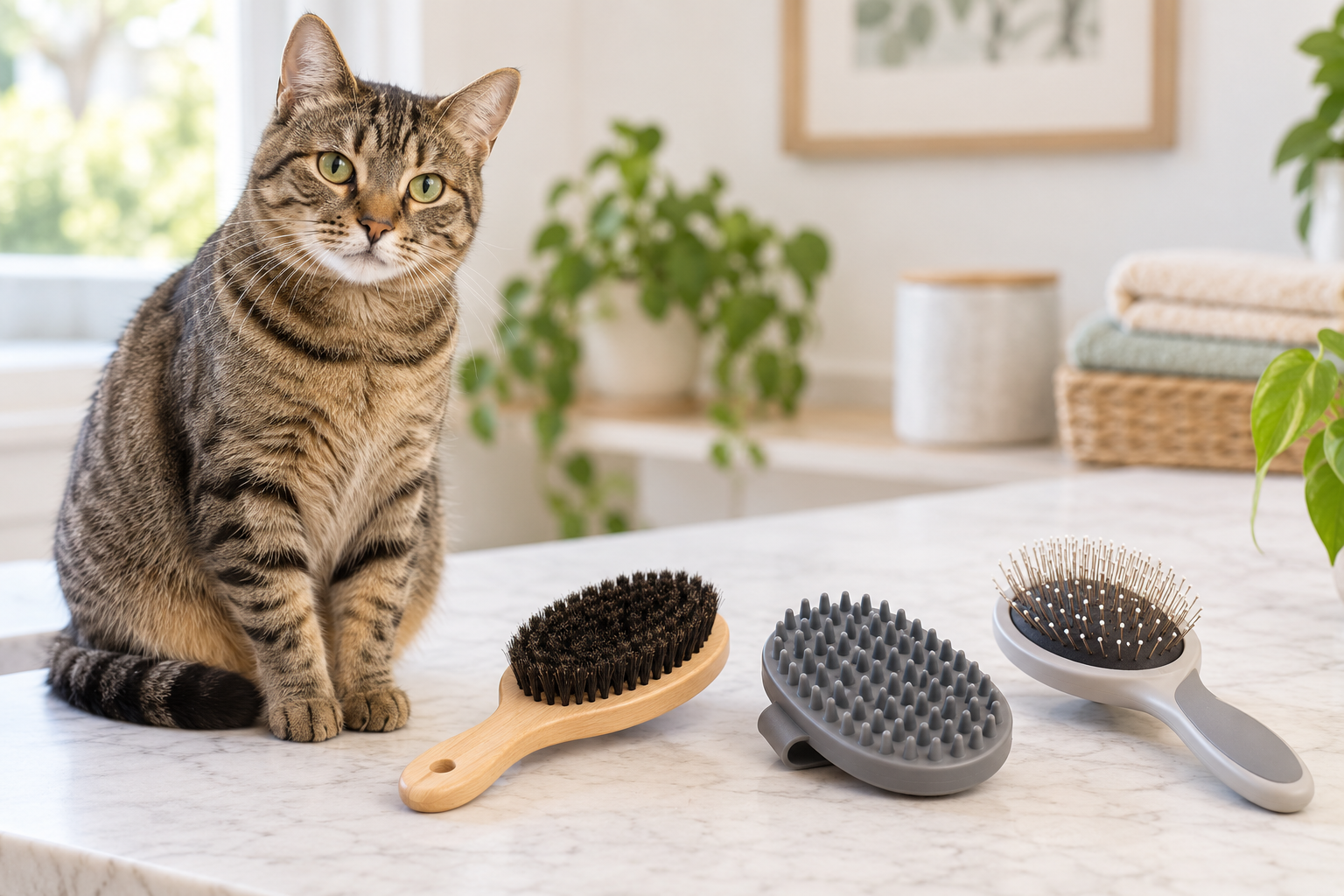
Quick Comparison
Soft bristle brush: a simple option for broad, light passes over a smooth coat, though dense bristles can hold hair and need thorough cleaning. Flexible rubber curry brush: uses soft nubs to gather loose surface hair and can be easy to control, but rubber firmness and grip vary. Shallow rounded-tip pin brush: gives more defined contact through the coat, but pin length, spacing, tip finish, and pressure control need closer attention.
No format is automatically best for every short-haired cat. Coat density, skin condition, previous handling, and tolerance matter more than the label on the package. A tool should never be used to pull through a mat or scrape repeatedly over one area.
Selection Criteria That Matter
- Current coat guidance: confirm that the maker lists cats and the relevant short-coat type; do not infer suitability from appearance alone.
- Contact surface: inspect bristle ends, rubber nubs, or pin tips for rough seams, sharp edges, bent parts, or missing protective tips.
- Working area: a compact head can be easier around shoulders and legs; a broad head covers the back quickly but may be awkward on a small cat.
- Grip and control: choose a handle or palm strap you can hold lightly without squeezing, twisting, or increasing pressure.
- Hair release: compare how trapped fur is removed and whether the mechanism adds crevices that are difficult to clean.
- Cleaning and drying: follow the current care label. A washable claim does not always mean soaking, dishwashing, or use while wet.
- Storage and inspection: keep the clean, dry brush beyond pet access and replace it when pins bend, rubber cracks, bristles loosen, or edges become rough.
- Price and clutter: one well-matched brush is usually more useful than a kit of overlapping tools.
Choose by the Cat’s Response
Start with the format most similar to touch the cat already accepts. A cat comfortable with a broad hand motion may prefer a soft brush or palm-held rubber tool. A cat that dislikes broad contact may tolerate a smaller handled head better. Preference can also vary by body area, so accepting a brush along the back does not mean the belly, tail, legs, or face should be brushed.
Do not use purring alone as proof of comfort. Watch posture, ears, tail, skin twitching, turning toward the brush, attempts to leave, hiding, swatting, or biting. Let the cat move away and end the session when signals change.
Keep the Routine Short and Manageable
Let the cat inspect the dry brush, then use a few light passes in the direction the coat lies. Avoid pressing down, repeatedly brushing the same patch, or pinning the cat in place. Check the tool and the skin during the session, remove collected hair away from the cat, and clean the brush according to its instructions before dry storage.
Grooming frequency is individual and can change with the coat and season. This guide does not prescribe a schedule. If the cat’s coat changes suddenly, ask a veterinarian rather than compensating with more frequent or forceful brushing.
Who Should Skip At-Home Brushing for Now?
Pause if the cat cannot be handled without marked distress, or if the coat has tight mats that a routine brush cannot move through gently. Skip any tool whose listed coat guidance does not match the cat, whose contact surface is damaged, or whose size makes controlled contact difficult. A willing cat with a smooth short coat may also need less equipment than a product bundle suggests.
Do not brush over sores, swelling, unexplained hair loss, parasites, painful areas, or irritated skin. Sudden grooming sensitivity, coat changes, persistent scratching, or pain calls for a licensed veterinarian. For mat removal or a cat who cannot tolerate necessary routine care, ask a qualified cat-experienced groomer or veterinarian rather than forcing the process.
Related Grooming and Cleanup Guides
For other coat types and deeper-tool questions, use the routine deshedding brush guide. Compare wearable contact in the beginner grooming glove guide, or organize clean, dry tools with a small-bathroom grooming supply organizer. Hair already on upholstery belongs in the surface hair-remover guide, not under a pet grooming brush.
Bottom Line
Start with a soft bristle brush for light broad contact, a flexible rubber curry brush for controlled surface-hair pickup, or a shallow rounded-tip pin brush when more defined contact is appropriate. The best fit is the one whose current coat guidance, contact surface, hand control, cleaning routine, and size suit a willing individual cat. Stop when grooming reveals a health, matting, or handling problem.