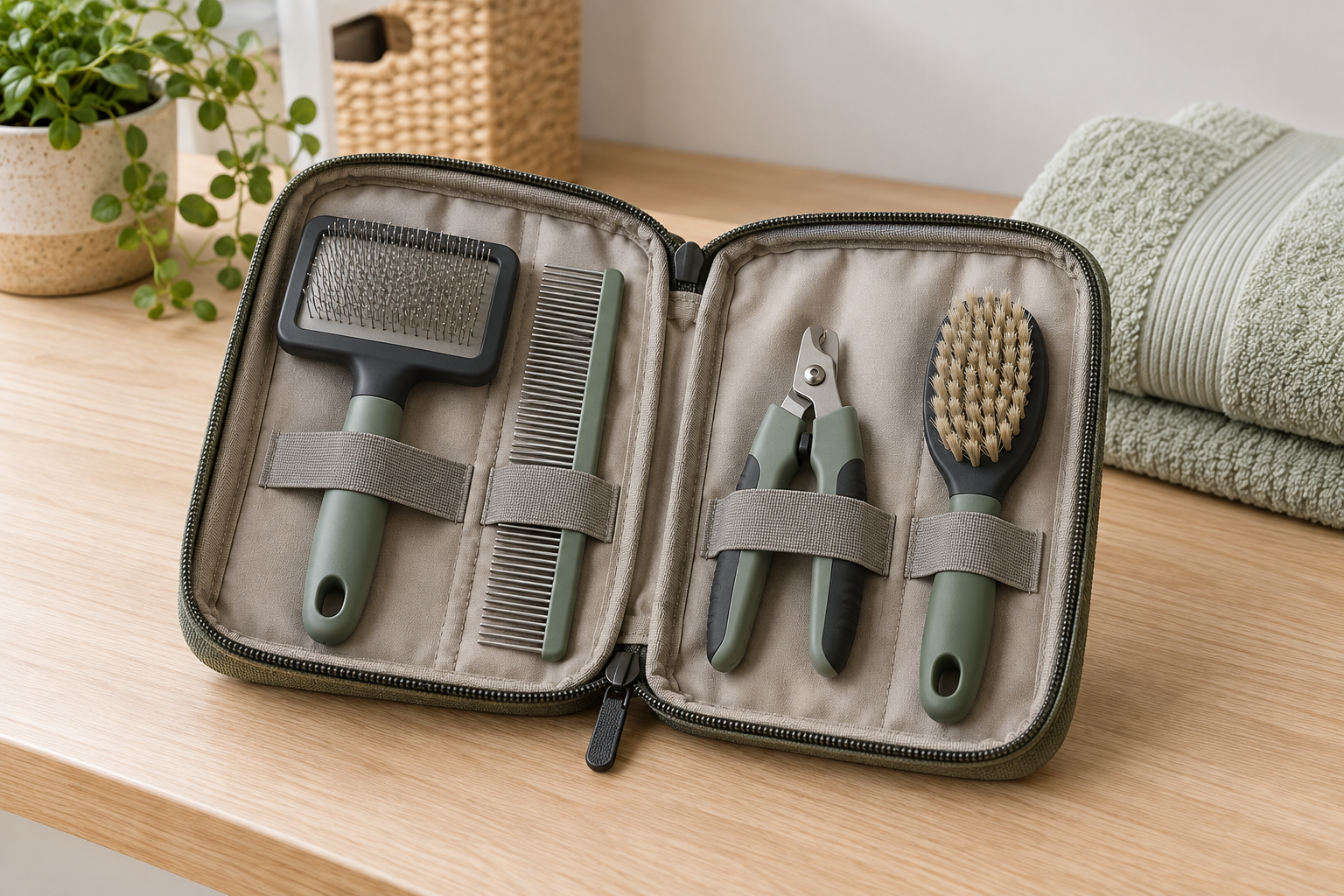
This is a storage decision, not grooming instruction or a health solution. Keep blades covered, nail tools closed, electrical tools unplugged, and all sharp, medicated, chemical, or small items secured according to their directions and inaccessible to pets and children. Ask a veterinarian or professional groomer about pain, skin changes, wounds, severe matting, or any routine that feels unsafe.
Quick Decision: Buy, Repurpose, or Skip
Buy a dedicated pouch when three to six compatible dry tools move together and fitted loops or dividers would stop them shifting. Repurpose a washable pouch when your current bag fits the measured set, closes without pressure, and is easy to clean. Choose a caddy when bottles, towels, or bulky brushes make the kit too deep. Use a drawer when the routine stays in one room. Skip when the pouch would mainly store backups or conceal damp tools.
The Six-Part Worth-It Test
- Actual inventory: Can you name the small set that travels together?
- Measured fit: Do the longest handle, widest head, and guarded tools fit inside the usable dimensions?
- Useful separation: Are loops or dividers positioned for your tools rather than decorative sample layouts?
- Clean reset: Can loose hair be removed and the lining cleaned and dried as directed?
- Real portability: Does the kit leave its usual room often enough to need a portable case?
- Secure parking: Can the closed pouch be stored somewhere pets and children cannot access it?
Measure Closed Depth, Not Just Length
Product photos often show an open case with tools lying flat. Measure the handle-to-head length of each brush, the width and thickness of bulky heads, and the guarded profile of nail-care tools. Then compare the usable interior and the depth available after both halves fold together. A tool may fit on one open panel yet press into another tool or bow the zipper when closed.
Check whether elastic loops are wide enough without gripping fragile parts, and whether the zipper path stays clear of bristles, cloths, and loose cords. Do not force a closure or infer protection from a soft exterior. Follow each tool maker's storage directions.
Pouch, Caddy, or Drawer?
A zippered pouch contains a small flat set and packs neatly, but soft sides may offer little structure. A handled caddy suits bulkier items and quick room-to-room access, while a drawer avoids carrying altogether and can work better for a fixed routine. A pouch is not automatically safer simply because it closes; the whole case still needs inaccessible storage.
For a broader portability decision, read is a pet grooming caddy worth it? If the choice is fixed versus portable storage, compare a drawer and countertop grooming organizer. The small-bathroom grooming organizer guide maps larger storage formats.
Only Pack Fully Dry Tools
A closed fabric pouch is storage, not a drying system. Remove loose hair where appropriate, follow each item's cleaning directions, and let washable tools dry before packing. Do not close damp towels around metal combs or nail tools, and do not assume a water-resistant exterior means the lining can hold wet equipment.
Look for stated lining and washing instructions rather than relying on terms such as “easy clean.” If the lining cannot be removed, check whether seams and corners are reachable. Leave products in their original labeled containers and keep anything requiring special storage out of a general pouch.
Guards, Zippers, and Pet Access
Closed nail clippers and covered blades should sit so pressure from brushes or the zipper cannot open, bend, or expose them. Avoid putting loose replacement blades, medication, concentrated products, cords, or unlabeled substances in the pouch. A zipper pull is not a child-resistant or pet-resistant closure.
Skip the category if a pet chews bags, pulls zipper tabs, or can reach the proposed storage place. Choose secure closed storage instead. Also skip when the real problem is discomfort, fear, or handling difficulty; an organizer cannot make an unsafe grooming routine appropriate.
Bottom Line
A zippered pet grooming tool pouch is worth it for a measured, fully dry, compact set that genuinely travels and benefits from separation. Repurpose a washable household pouch when it passes the same fit, cleaning, and storage tests. Choose a caddy for bulk, a drawer for a fixed routine, and secure the whole kit after every use.
To decide which organizer format fits the complete routine, continue to the pet grooming supply organizer guide. For the tools themselves, the beginner nail-care tool guide explains selection boundaries and when professional help makes more sense.