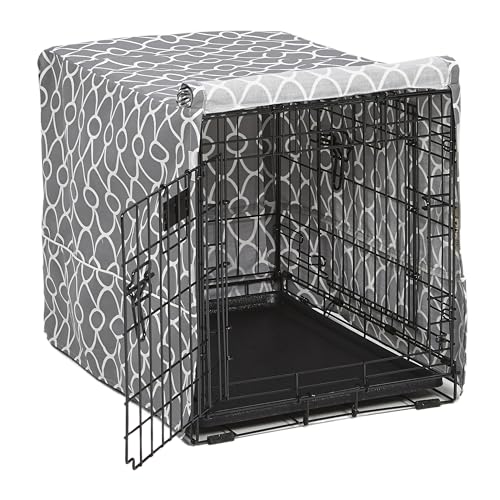
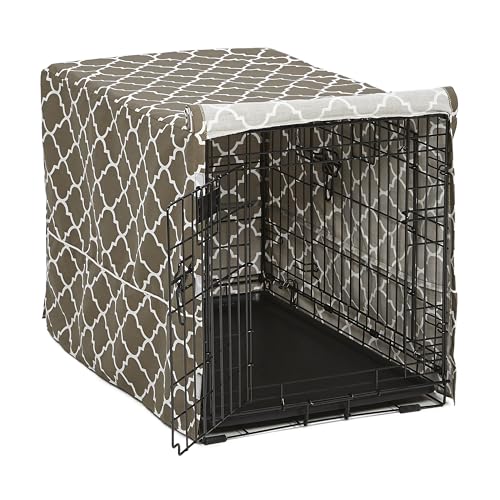
 MidWest 30-inch crate cover
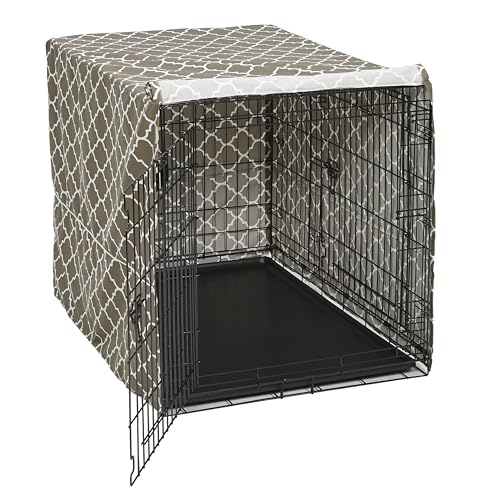 MidWest 42-inch crate cover
This is a product-selection framework, not a hands-on test and not veterinary or training advice. A cover can make a wire crate look tidier and let an owner adjust visual exposure during a familiar rest routine. It does not treat anxiety, stop barking, make confinement appropriate, or guarantee that a pet will settle. Distress, repeated escape attempts, self-injury, sudden behavior changes, or difficulty tolerating the crate call for help from a veterinarian or qualified trainer—not a darker cover. If you have not decided whether to add fabric at all, first compare a crate cover with an uncovered quiet-room setup.
Best Overall Fit: A Washable Cover Made for the Crate
A fitted cover made for a particular crate series is the most predictable option. Its seams, corners, and panels are more likely to line up with the frame than a generic rectangle, and less loose fabric should hang within reach. Start with the crate maker’s compatible cover when one exists, then compare alternatives only after recording the assembled crate’s exterior length, width, and height.
Exact fit matters because loose fabric can bunch near a latch, drag on the floor, or become reachable through the wire. A cover that is too tight can strain seams and make panels awkward to roll. Product labels such as “30-inch” describe only one dimension, so treat them as a starting point rather than proof of compatibility.
Best for Two-Door Crates: Independently Opening Panels
If you use both an end door and a side door, look for separate roll-up or hook-and-loop panels over each opening. A one-door cover may technically fit the frame while blocking the side access that makes the crate work in your room. Check whether each panel can stay secured when raised and whether fasteners remain outside the pet’s reach.
Independent panels also let you uncover one side without stripping off the entire cover. That is useful for ordinary airflow and room visibility, but it is not a behavior prescription. Watch how the individual pet responds and keep the setup open enough for comfortable ventilation.
Best for Frequent Laundry: Simple Fabric With Clear Care Instructions
Choose a machine-washable cover only if the current care label also fits your drying routine. Large covers can take meaningful washer space, and coatings or printed fabrics may have different heat limits. A spare sheet is not automatically a good substitute: it can hang loosely, block more airflow, and be easier for a pet to pull through the wire.
For muddy homes or shedding pets, smoother woven fabric is generally easier to shake out and vacuum than deep texture. Inspect stitching, closures, and fabric after washing. Retire a cover with torn seams, loose fasteners, or edges the pet can reach and chew.
Selection Criteria That Matter
- All three crate dimensions: Measure exterior length, width, and height with the crate fully assembled.
- Door layout: Match the cover’s openings to every end and side door used in the room.
- Ventilation: Leave airflow around uncovered panels and never press a covered crate against a heat source or block the room’s air movement.
- Fabric reach: The pet should not be able to pull folds, straps, or closures through the wire.
- Panel security: Raised panels should remain rolled or fastened without dangling into a doorway.
- Cleaning: Confirm machine-wash, water temperature, and drying instructions on the current label.
- Room clearance: Keep the crate and cover away from heaters, fireplaces, direct hot sun, candles, cords, and appliance vents.
- Observation: A cover should not prevent you from checking the pet, water setup, bedding, and room temperature.
Comparison Framework
Fitted multi-panel covers are the best starting point for common wire crates when measurements and doors align. Universal adjustable covers can work for unusual frames, but extra straps and folds require closer inspection. Heavy outdoor-style covers are usually unnecessary indoors and can make heat and airflow harder to judge. Loose blankets or sheets are the lowest-commitment option, but they create the most variable fit and fabric access.
Compare the product in that order: compatibility first, usable doors second, airflow and fabric reach third, then appearance. Color and print are easy to evaluate; a mismatch around a door or a reachable loose edge is harder to live with.
Who Should Skip a Crate Cover
Skip a fabric cover if the pet pulls cloth through crate bars, chews or swallows fabric, becomes hotter than expected, pants in a comfortable room, or appears more distressed when views are reduced. Also skip it when the only available placement is beside a heater, strong direct sun, a cord, or another household hazard.
Do not buy a cover to manage persistent barking, panic, destructive escape behavior, toileting changes, pain, or a newly difficult crate routine. Those signs need a welfare-first review with a veterinarian or qualified trainer. The cover is a home-setup accessory, not treatment and not a substitute for suitable crate use.
A Low-Drama Setup and Care Routine
Fit the empty, assembled crate first. Open every door, test each roll-up panel, and make sure latches remain visible and easy to operate. Place the crate with space around covered sides, then check that no loose fabric, fastener, cord, or tag can be reached through the wire. Introduce the changed setup while you are present and able to observe.
Keep bedding equally practical. Our crate mat guide explains measured floor fit, washability, and chewing limits, while the broader small-space pet bed guide helps when a resting spot outside the crate is the better fit. Launder the cover according to its label and recheck its shape, seams, and closures before refitting it.
The Bottom Line
For most ordinary indoor setups, start with a washable fitted cover designed for the exact crate series, with separate panels for the doors you use. Measure all three dimensions, preserve ventilation, keep fabric out of reach, and choose the simplest care routine you can maintain.
An uncovered crate is the better choice whenever fabric access, heat, reduced visibility, or distress is a concern. A good crate cover is simply a tidy, adjustable layer for a pet already comfortable with an appropriate crate routine.
If the crate is empty and going out of use, compare washable dust-cover formats for crate storage instead. Storage covers solve a different maintenance problem and should not be used around a pet.