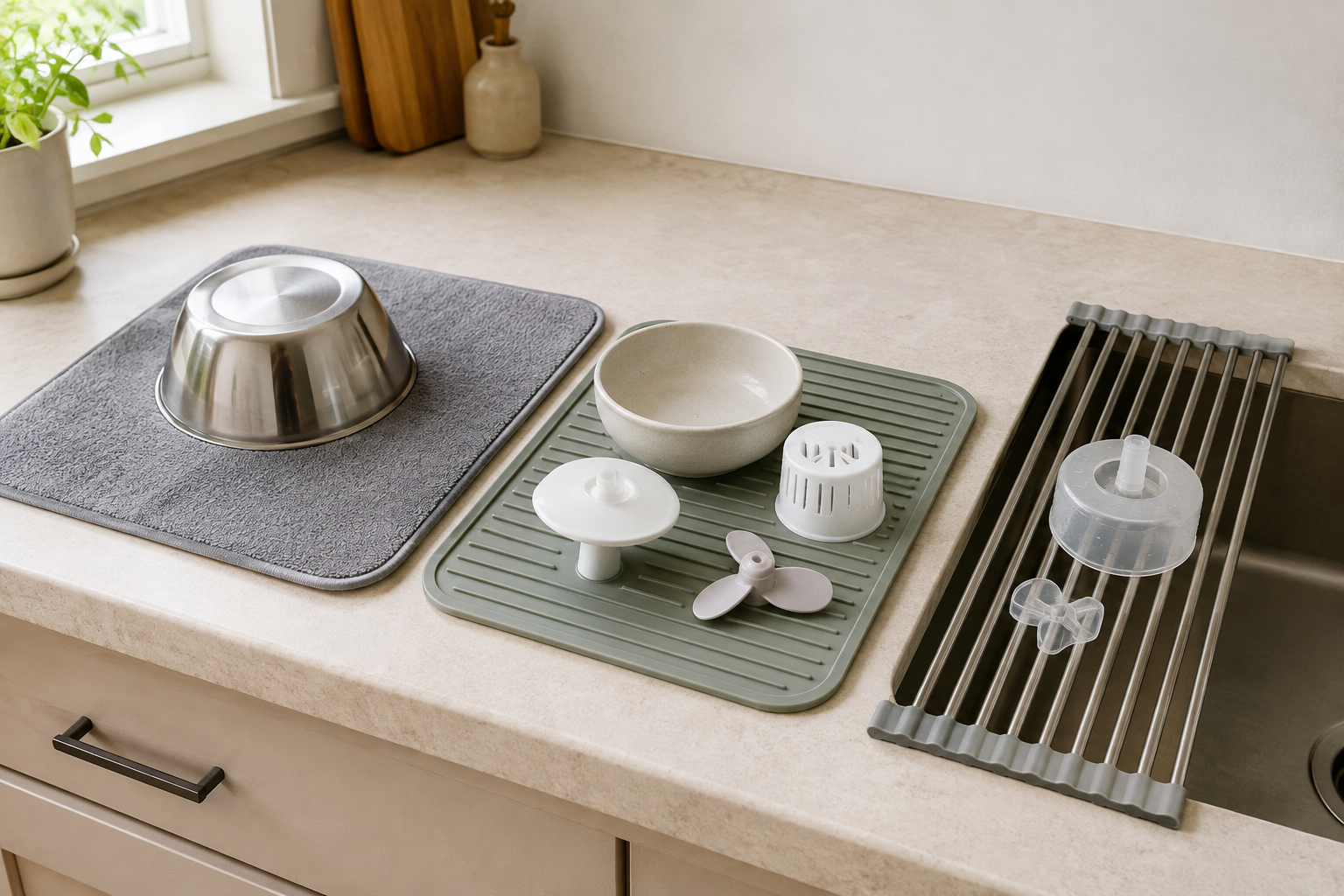
A drying mat organizes the post-wash step; it does not sterilize equipment, improve water quality, or replace the cleaning schedule and directions supplied with a bowl or fountain. Wash hands, use products as directed, and contact a licensed veterinarian about persistent appetite, drinking, or health changes.
Quick Picks by Routine
Choose absorbent fabric when a small number of broad pieces drain on an open counter and you can wash and dry the mat completely. Choose ribbed silicone when you prefer visible drips, wipeable material, and a defined area for several components. Choose a roll-up rack when counter space is tight, the rack spans the sink securely, and every piece is larger than the gaps. Skip a dedicated mat when a clean rack you already own fits the pieces and its care routine.
Measure the Whole Wash Load
- Largest piece: Measure the widest bowl, reservoir, or lid in a stable drying position.
- Full footprint: Arrange all routinely removed pieces without stacking surfaces that need exposure.
- Counter limits: Leave room around faucets, outlets, food preparation, and cabinet doors.
- Small-part control: Compare rack gaps and ridges with the smallest removable component.
- Storage: Measure the folded, rolled, or hanging mat as well as its working size.
Absorbent Mat: Simple Surface, Extra Laundry
A fabric pad offers a broad landing area without raised ridges that can tip tiny pieces. Absorbed water is less visible, so check the underside and counter, follow the wash label, and let both equipment and mat dry as directed. Skip fabric if seams, backing, or thick pile trap debris that your routine cannot reach.
Ribbed Silicone: Contained Parts, Grooves to Clean
Raised ribs can hold bowls above visible drips and keep pieces inside a defined footprint. Measure usable area inside any rim. Deep grooves and corners need their own cleaning and drying step. Verify heat and dishwasher claims on the current product.
Roll-Up Rack: Saves Counter Space, Requires Exact Fit
An over-sink rack can free the adjacent counter and let drips fall into the basin. It only works when the stated span suits the sink ledges and the bars support every part without rocking. Place small components on a compatible tray or mat instead of across unsafe gaps.
Cleaning, Drying, and Replacement Checks
Clean the surface according to its label, including the underside, ridges, seams, bars, and end caps. Let it dry fully before storage. Inspect for torn fabric, peeling backing, splits, sharp edges, loose rods, residue that no longer cleans away, or a shape that no longer sits securely. Replace based on condition and maker guidance, not an invented calendar.
Who Should Skip These Mats?
Skip a new mat if existing dish-drying equipment already gives pet items a workable space, the counter cannot be kept clear, or the product would sit where a pet can chew or pull it down. Skip it if fountain pieces need a special orientation stated by the manufacturer that the mat cannot support.
Build a Better Feeding-Care Routine
For cleaning, compare brush formats for pet fountain parts. If you are choosing the fountain, use the easy-clean fountain guide. New pet owners can put this in context with the practical starter-supplies guide.
Bottom Line
Choose absorbent fabric for a simple washable landing area, ribbed silicone for visible drips and component organization, or a roll-up rack to borrow measured sink space. The best fit holds the entire wash load securely, works with the manufacturer's care directions, and is easy to clean, dry, and store.