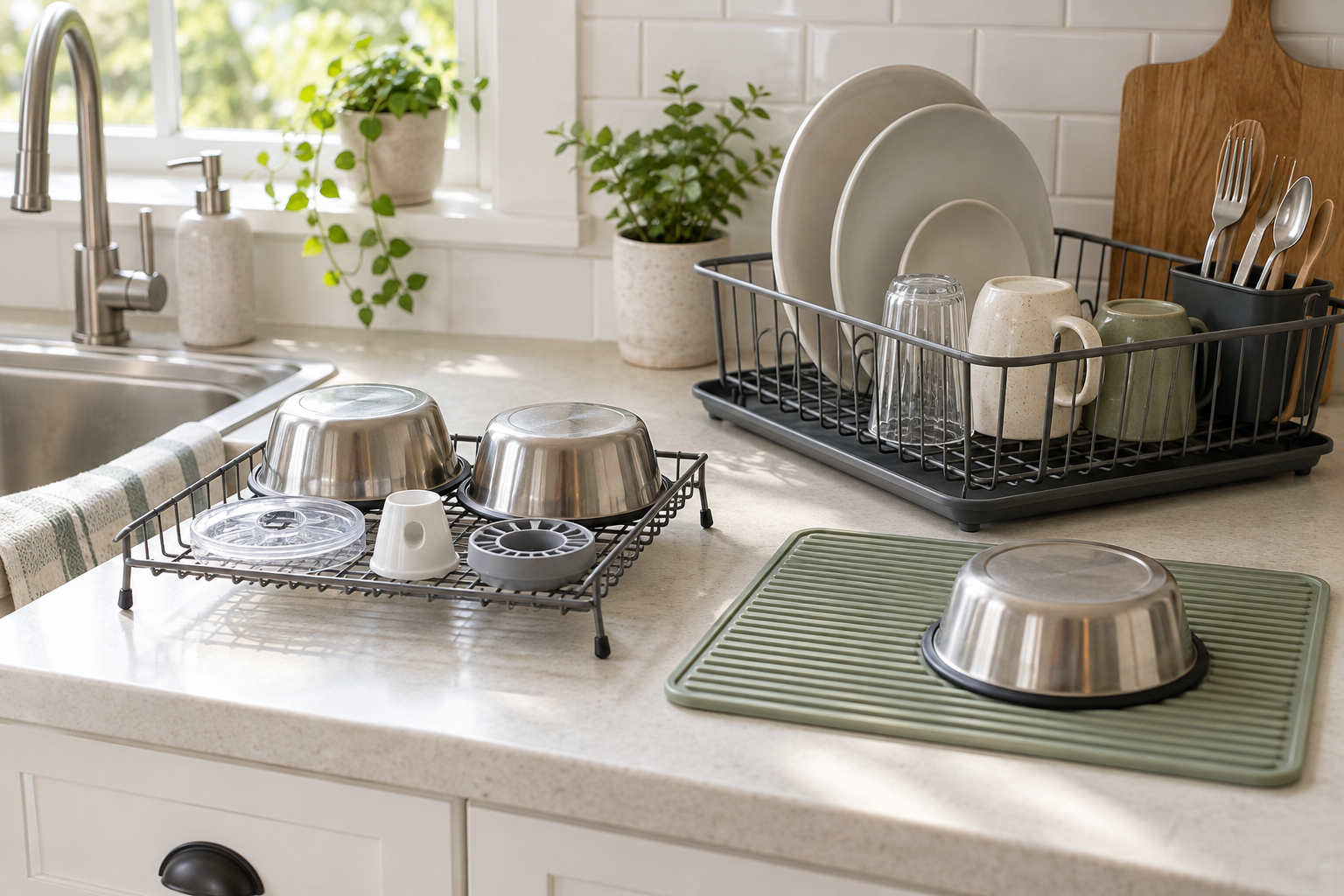
This is a counter-organization choice, not a health or sanitation solution. Wash each bowl or removable fountain part according to its maker's directions, keep electrical components away from water, and ask a veterinarian about drinking, eating, or health changes rather than treating new drying hardware as the answer.
Quick Decision: Buy, Repurpose, Use a Mat, or Skip
Buy a compact rack when several compatible rigid pieces repeatedly compete for support and the rack fits the measured counter and drainage path. Repurpose the household rack when it has enough suitable space and separation for your preference. Use a mat when broad pieces rest securely and a low-profile surface is easier to wash and store. Skip when the usual load is one bowl, the rack cannot support small parts, or the counter must stay clear.
The Six-Part Worth-It Test
- Usual load: What actually needs to dry after one normal wash—not the maximum collection in the cupboard?
- Measured fit: Do the widest bowl, tallest piece, and smallest removable part fit the usable rack area?
- Stable support: Are bar gaps and dividers appropriate for each item without precarious balancing?
- Drainage: Where will drips go, and can you wipe beneath the rack without moving half the kitchen?
- Rack cleanup: Can the rack and tray be disassembled, washed, and fully dried as directed?
- Counter value: Does the repeated convenience justify permanent space or another item to store?
Measure the Drying Load and Counter
Measure the outside diameter and depth of the largest bowl, then note the shapes of lids, reservoirs, spouts, or other removable washable pieces. Compare those measurements with the rack's usable interior rather than its overall silhouette. Wide feet, raised rims, utensil cups, and sloped trays can reduce practical space.
Measure the entire counter footprint, including any tray overhang and the clearance required to remove it. Keep the setup away from the counter edge, cords, outlets, hot surfaces, food-preparation traffic, and places where a pet can reach or knock pieces down.
Bar Spacing Matters More Than Bowl Count
A listing may show room for several plates while offering poor support for a curved bowl or a small fountain insert. Check the actual bar spacing and rack geometry against your pieces. Small components should rest securely on a suitable surface or in an appropriate basket; do not balance them where they can drop into the sink or onto the floor.
A broad mat may suit bowls but leave water beneath flat lids. A raised rack can expose more surfaces to air, yet that does not establish a drying time or hygiene result. Arrange parts as their maker directs and verify that water is not trapped in seams or recesses before reassembly.
Drain Tray, Sink Drainage, or Mat?
A removable tray can contain drips, but it adds a surface that needs regular emptying and cleaning. A rack that directs water toward the sink requires the right counter orientation and a drain piece that reaches without pooling at its edge. An absorbent or ribbed mat is simpler to store, though the mat itself needs an appropriate washing and drying routine.
The pet-bowl drying mat guide compares absorbent fabric, ribbed silicone, and roll-up sink formats. Choose among them by footprint, small-part support, drainage, care, and storage—not by unsupported claims about cleanliness.
When the Household Dish Rack Is Enough
Existing equipment wins when it safely supports the ordinary load, has space available at the right time, and can be cleaned according to its directions. Some households also prefer separate drying areas for organization; that preference can justify a small rack, but it is not evidence that one setup is universally safer.
Before buying, try one week with a defined section of the existing rack or a clean mat. Note whether pieces tip, crowd household dishes, block the sink, or remain in the way after they are ready to put away. A repeated problem is more useful evidence than an imagined future routine.
Skip Criteria and Care Boundaries
Skip a dedicated rack when the maker does not provide usable dimensions or care information, when its coating or materials are unsuitable for the planned washing routine, or when small parts can fall through. Also skip when it would sit within a pet's reach, narrow a busy counter, interfere with food preparation, or require awkward drainage.
Inspect the rack, feet, coating, joints, and tray during routine cleaning. Stop using it if damaged parts make support unstable, and follow the maker's replacement guidance. A rack organizes drying; it does not replace washing directions, filter replacement, fountain maintenance, or veterinary help for changes in eating or drinking.
Bottom Line
A pet bowl drying rack is worth it when a measured group of bowls and washable parts creates a recurring support or counter-organization problem that existing equipment cannot solve neatly. Start with the household rack or a mat, and buy dedicated hardware only when its usable spacing, drainage, cleaning, and storage fit the real routine.
For the broader feeding setup, use the starter pet supplies guide. If a fountain creates most of the small parts, compare fountain cleaning brush kits while following the fountain maker's instructions.