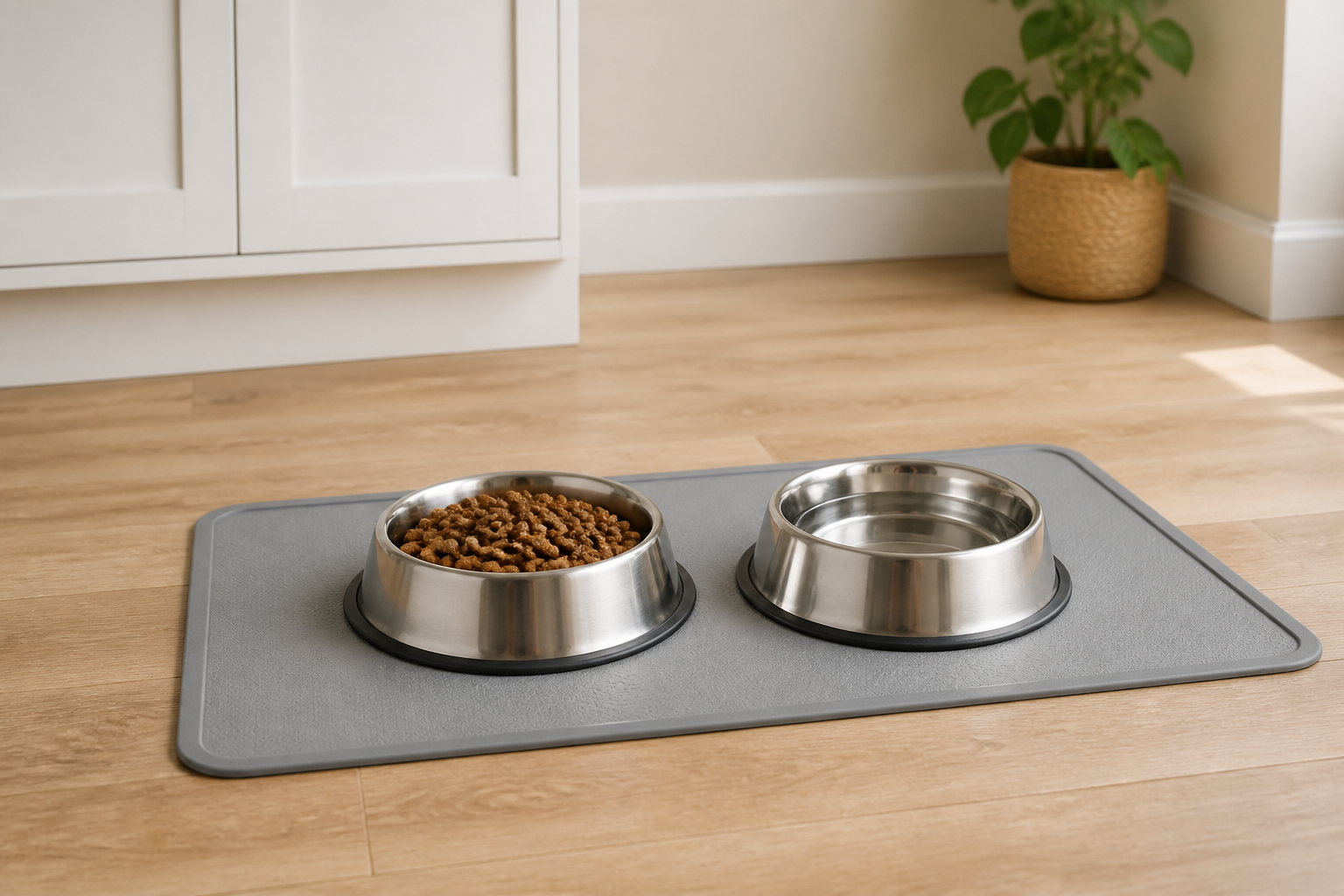
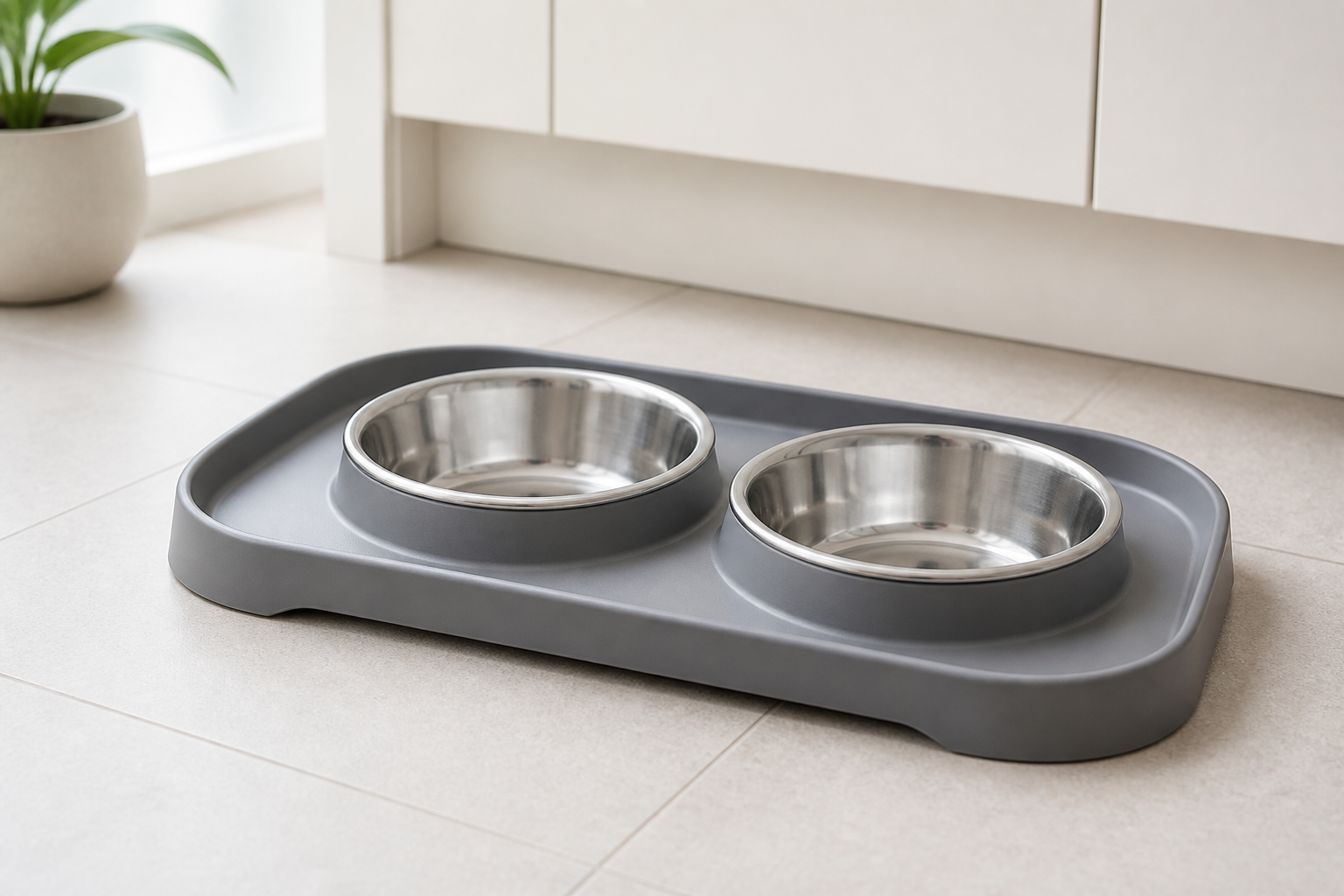
 Catch-tray bowl sets
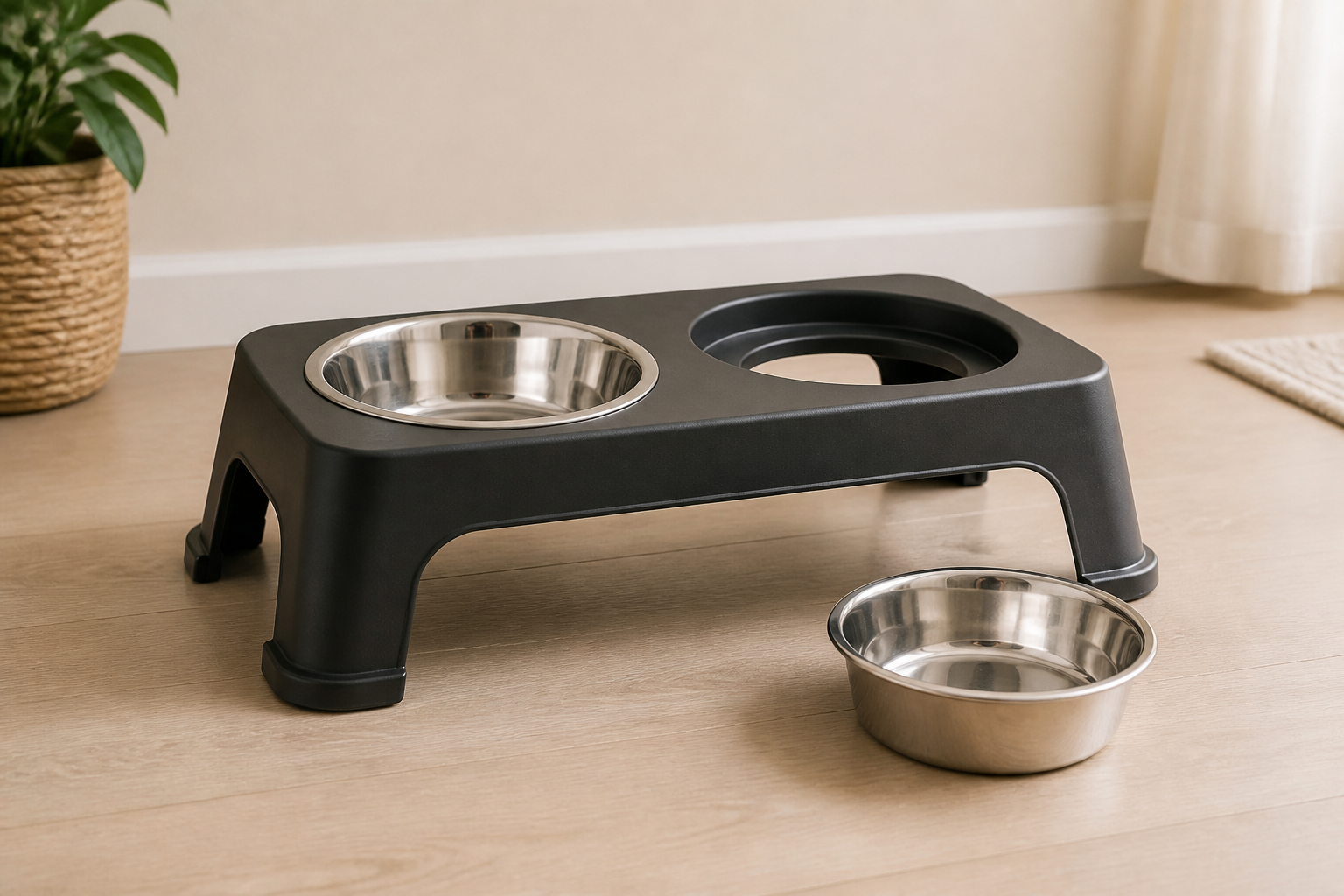 Low stands with removable inserts
A coordinated bowl set is a convenience purchase, not a nutrition or health solution. If a new pet refuses food or water, coughs during meals, vomits repeatedly, appears painful, or suddenly changes eating or drinking habits, contact a veterinarian rather than trying to solve the change with a different bowl.
Choose the architecture before the finish
Separate bowls offer the easiest replacement path. You can move water away from food, swap one bowl for a different size, or wash one while the other stays available. The tradeoff is that you must choose a mat or tray separately, and lightweight bowls may slide unless their bases grip the floor.
A molded tray set keeps two bowls in a defined footprint and can catch ordinary crumbs or drips. Check whether each insert lifts out without fighting the tray, whether liquid can collect in hidden seams, and whether the tray fits in the sink. Connected sets are less flexible if one opening or bowl size turns out to be wrong.
A low stand creates one organized station and may be easier to move as a unit. Height should be treated as a fit measurement, not a health benefit. Avoid unsupported claims about posture, digestion, joints, or bloat, and ask a veterinarian for guidance if your pet has a medical or mobility concern.
Quick comparison framework
- Separate bowls: Choose for maximum placement and replacement flexibility, especially while learning a new pet's routine.
- Catch-tray set: Choose when minor splash and crumb containment matters more than independent placement.
- Low stand: Consider only after checking the complete height, opening diameter, bowl depth, stability, and pet access.
- Special-purpose bowl: Use a separate guide when splashing, fast eating, shallow face clearance, or another defined problem is the real decision.
Selection criteria that matter
- Usable capacity: Check volume and interior dimensions for each bowl. A food-and-water pair does not need two identical capacities.
- Material: Smooth stainless steel is durable and usually straightforward to clean, but verify the listed grade and care directions. Inspect ceramic for chips or cracks; replace scratched or damaged plastic.
- Rim and bowl shape: Compare width, depth, wall angle, and lip. Face shape, ears, feeding style, and pet preference may make a broad shallow bowl more practical than a deep one.
- Stable footprint: Measure the full base, tray, or stand—not only the bowl diameter. Look for feet or grips that suit the actual floor surface.
- Removable parts: Inserts should lift out for washing without leaving inaccessible seams where food and water collect.
- Cleaning routine: Confirm which parts are dishwasher-safe, which need hand washing, and whether the entire tray or stand fits the sink.
- Replacement flexibility: Check whether standard bowls fit the openings or whether replacement inserts are clearly identified.
- Pet access: Watch ordinary eating and drinking without forcing a new position. A pet should be able to approach and leave the station comfortably.
Match the set to the actual starter problem
If the goal is simply to have food and water ready on day one, two stable removable bowls and a washable mat keep the setup adaptable. Choose a tray set when small spills are predictable and the combined footprint fits your floor and sink. A stand should solve a measured placement or organization need rather than serving as an automatic upgrade.
For frequent puddles, compare no-spill bowl varieties for messy drinkers. For material and washability, use the stainless steel versus ceramic bowl comparison. A cat that appears uncomfortable around a deep dish may need the separate shallow cat bowl framework.
Do not overbuy the bundle
Coordinated colors, storage lids, scoops, stands, mats, and placemats can make a set look complete without improving the daily routine. List the included pieces, then ask whether you would choose each one separately. A cheap extra is not useful if it is the wrong size, difficult to wash, or destined for a drawer.
Keep food-choice and portion questions separate from bowl shopping. Follow the food label and your veterinarian's guidance. A measuring scoop may be convenient, but it does not determine the right food or amount for an individual pet.
Who should skip a coordinated bowl set
Skip a connected set if food and water need to be in different rooms, if two pets require separate stations, or if you already know the bowls need different shapes or capacities. Skip a stand when its height is not clearly appropriate, the base rocks, or the pet avoids it. Skip any set with vague dimensions, unclear materials, inaccessible seams, non-removable bowls, or no usable cleaning instructions.
Also skip a general starter set when a veterinarian has given individual feeding instructions or when a pet has a medical, mobility, dental, swallowing, or recovery need. Ask the veterinarian what setup is appropriate before buying.
Plan the whole feeding station
Place the bowls on a stable, easy-clean surface away from busy doorways and cords. Leave room to lift every part for daily wiping. The low-mess feeding station guide covers mat size, placement, food storage, and cleanup; the new-pet essentials pillar helps keep this purchase in proportion with comfort, cleanup, travel, and enrichment needs.
The bottom line
Two separate removable bowls are the most adaptable first category for many new-pet homes. A catch-tray set is useful when modest spill containment matters, and a low stand can organize a fixed station after careful measurement. Compare capacity, materials, full footprint, cleaning, replacement parts, and observed pet access—and choose a special-purpose guide when the real problem is splashing, feeding pace, or unusual bowl shape.