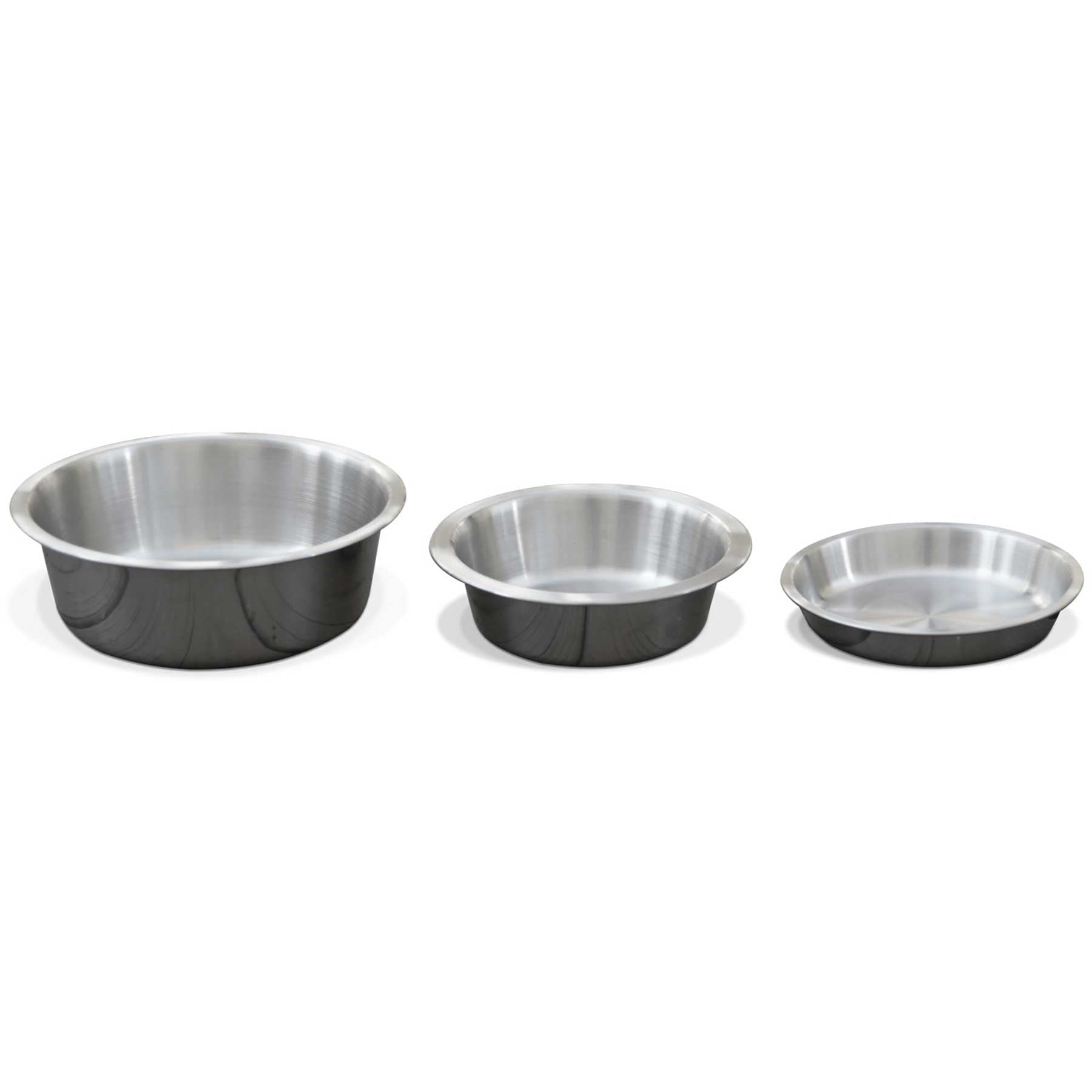
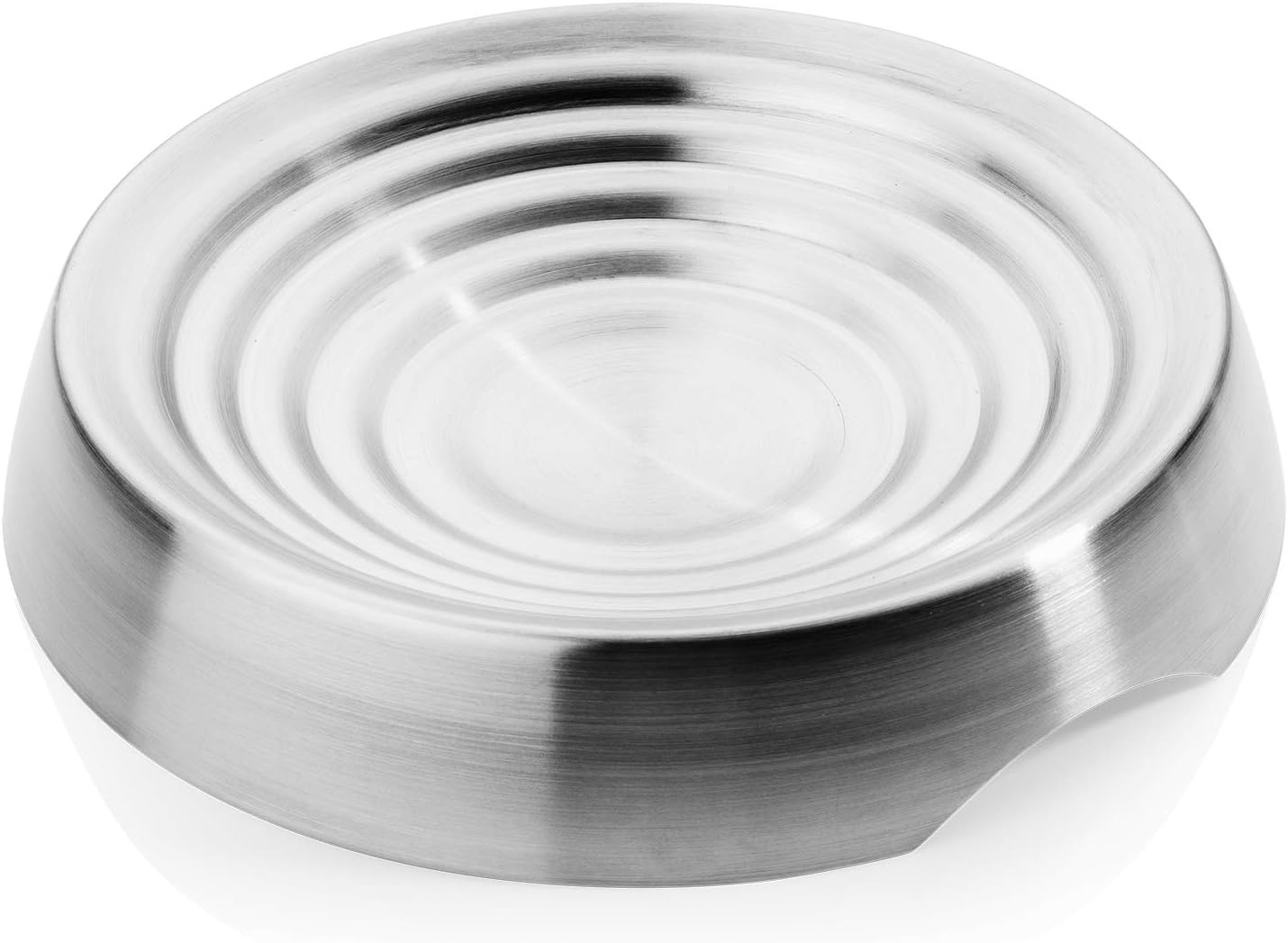
 CatGuru stainless steel shallow cat bowl
 Y YHY ceramic shallow cat food bowl
This is a buying framework, not a hands-on test or veterinary feeding guide. “Whisker fatigue” is commonly used in product marketing, but bowl preference alone cannot diagnose discomfort or explain a change in appetite. Use your cat’s repeated behavior to compare dish shapes, and contact a licensed veterinarian when eating changes suddenly or seems painful.
The Quick Pick
Best simple shallow insert: PetFusion 13-ounce stainless steel bowl
The PetFusion bowl is a useful baseline because the manufacturer identifies its 13-ounce version as shallow, with an extended outer rim for lifting and dishwasher-safe care. Stainless steel keeps the eating surface easy to inspect, while the low profile gives a cat more face clearance than a narrow, deep dish.
Its tradeoff is stability: a light insert can move on a smooth floor. If sliding is the main problem, place it on a correctly sized nonslip feeding mat rather than assuming a heavier decorative bowl will be easier to clean.
Selection Criteria That Matter
- Interior width: Measure the usable eating surface, not the widest outside edge. A broad interior lets food spread into a thinner layer.
- Rim height: A low rim improves face clearance but contains less scattered kibble or pushed wet food.
- Capacity: Make sure the portion fits without piling food against the sides. Capacity labels do not reveal the bowl’s usable geometry.
- Material: Stainless steel is light and easy to inspect. Glazed ceramic adds weight but can chip. Plastic is light but should be replaced when scratched or damaged.
- Base grip: Compare an attached nonslip base with a separate washable mat. Any seam, ring, or foot adds a place that needs cleaning and drying.
- Cleaning: Check the current manufacturer instructions for the complete bowl, including any removable base. Smooth curves are easier to wipe than tight corners.
- Food spread: Very flat plates can push wet food toward the edge. A slight lip often balances clearance with containment.
- Feeding-space fit: Measure shelf depth, mat size, wall clearance, and room to lift the dish without spilling it.
Broad Plate, Low-Rim Bowl, Tilted Dish, or Raised Stand?
A broad plate offers the most open access and is easy to inspect, but food can leave the surface. It suits tidy eaters and owners who already use a washable mat.
A low-rim bowl is the most balanced everyday shape. It contains ordinary portions while reducing the depth a cat must reach into. This is the variety to try first when you are unsure.
A tilted dish gathers food toward one side, but the angle can also crowd food against a rim. Judge it by your cat’s actual posture and the ease of washing its stand or base.
A raised stand solves a height and feeding-station decision, not whisker clearance by itself. Do not assume elevation offers a health benefit. If mobility or a medical condition affects eating, ask a veterinarian about the individual setup.
What to Observe at Mealtime
Compare the shallow bowl with the cat’s current dish for several ordinary meals without changing food at the same time. Notice whether food remains around the perimeter, whether the bowl slides, and whether cleanup becomes easier. A preference is useful information even when its cause is uncertain.
Wash food dishes after use and refresh water dishes routinely. Replace a bowl with sharp chips, cracks, deep scratches, corrosion, a loose base, or residue you cannot remove. Keep food and water placement calm and accessible, especially in multi-pet homes where another animal may interrupt the cat.
Who Should Skip This Pick?
Skip a lightweight insert if your cat pushes dishes across the room and you do not want to use a mat. Skip an extra-flat plate if food regularly leaves the edge. A modest low rim or heavier ceramic dish may fit those routines better.
Do not treat a new bowl as the solution for appetite loss, weight change, dropping food, chewing on one side, vomiting, difficulty swallowing, mouth sensitivity, or a sudden change in eating or drinking. Those signs warrant a licensed veterinarian. Bowl geometry is a convenience and preference decision, not a health treatment.
Build the Rest of the Feeding Setup
Use our low-mess pet feeding station guide to plan mat size, placement, food storage, and daily cleanup. If material and washing are the main priorities, compare the broader stainless steel pet bowl guide. Owners dealing with splashing rather than face clearance should use the no-spill bowl comparison instead.
The Bottom Line
Start with a broad, low-rim dish that fits the portion and feeding space. The PetFusion 13-ounce shallow stainless bowl is a sensible first comparison because its geometry is straightforward and the bowl can be lifted and washed without a complicated base.
Keep the claim modest: a shallow bowl may suit your cat’s observed preference, but it does not diagnose whisker discomfort. The best choice is the one your cat uses comfortably and you can wash, dry, inspect, and replace without fuss.