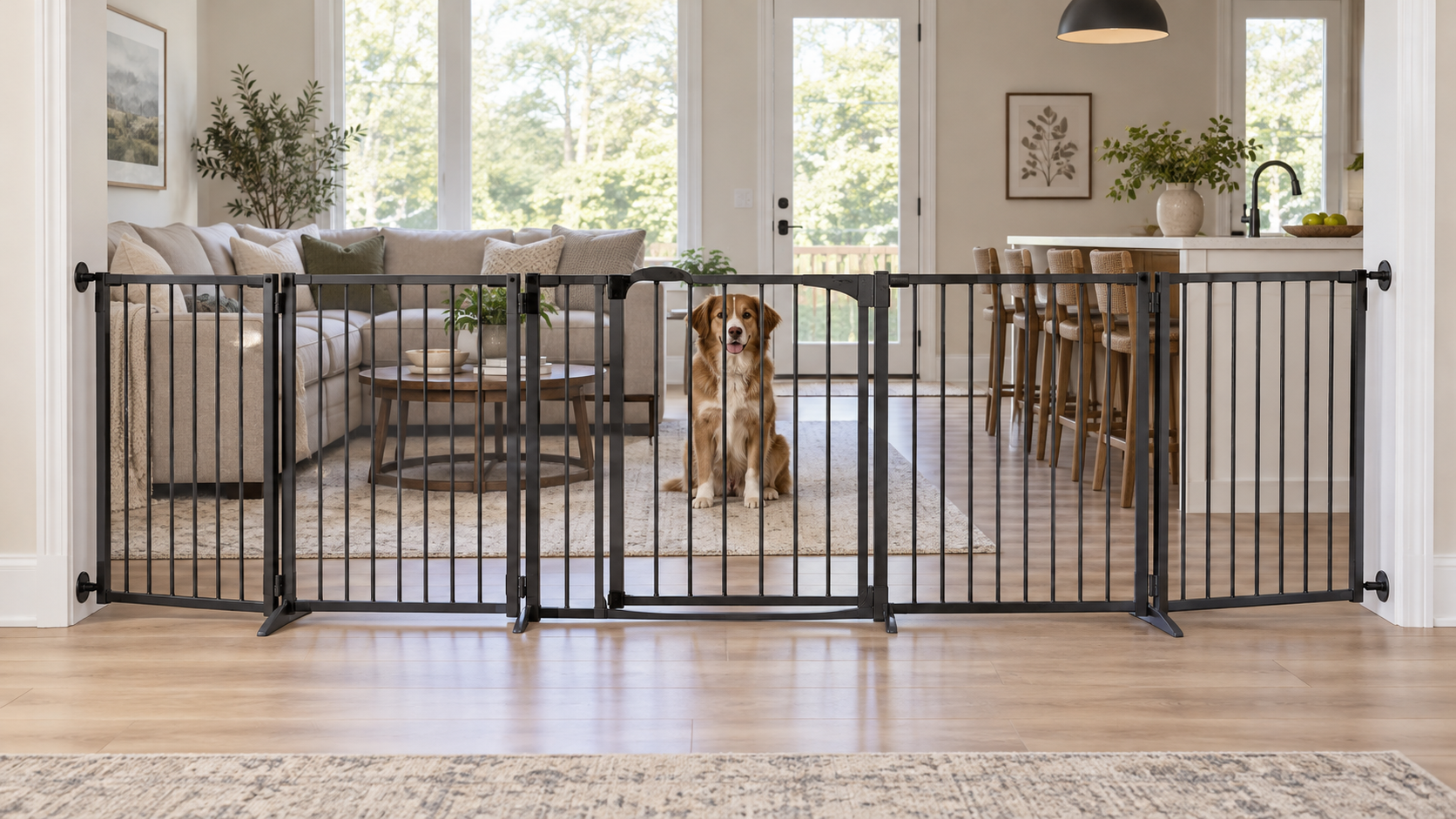
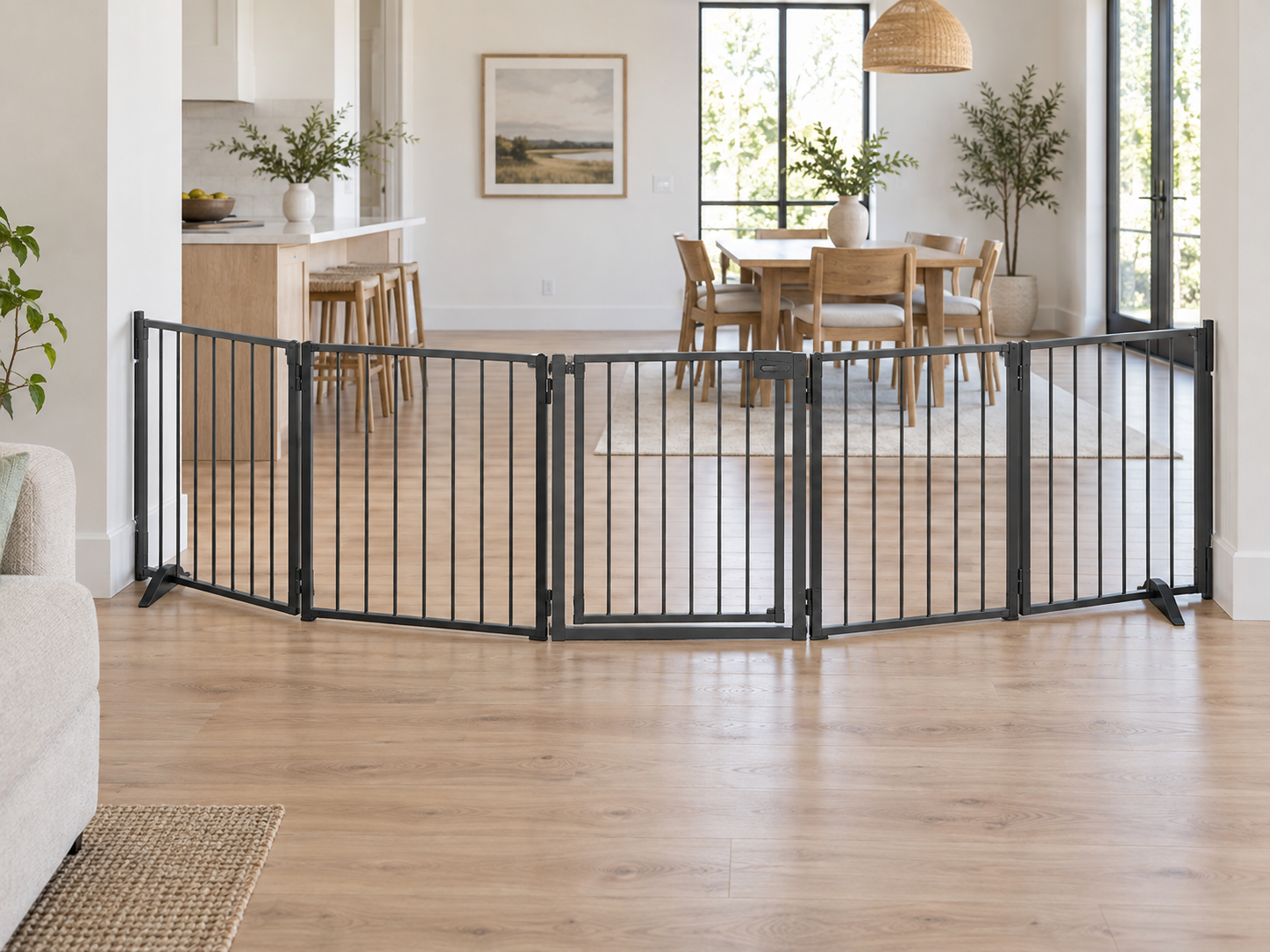
 Configurable panel gate
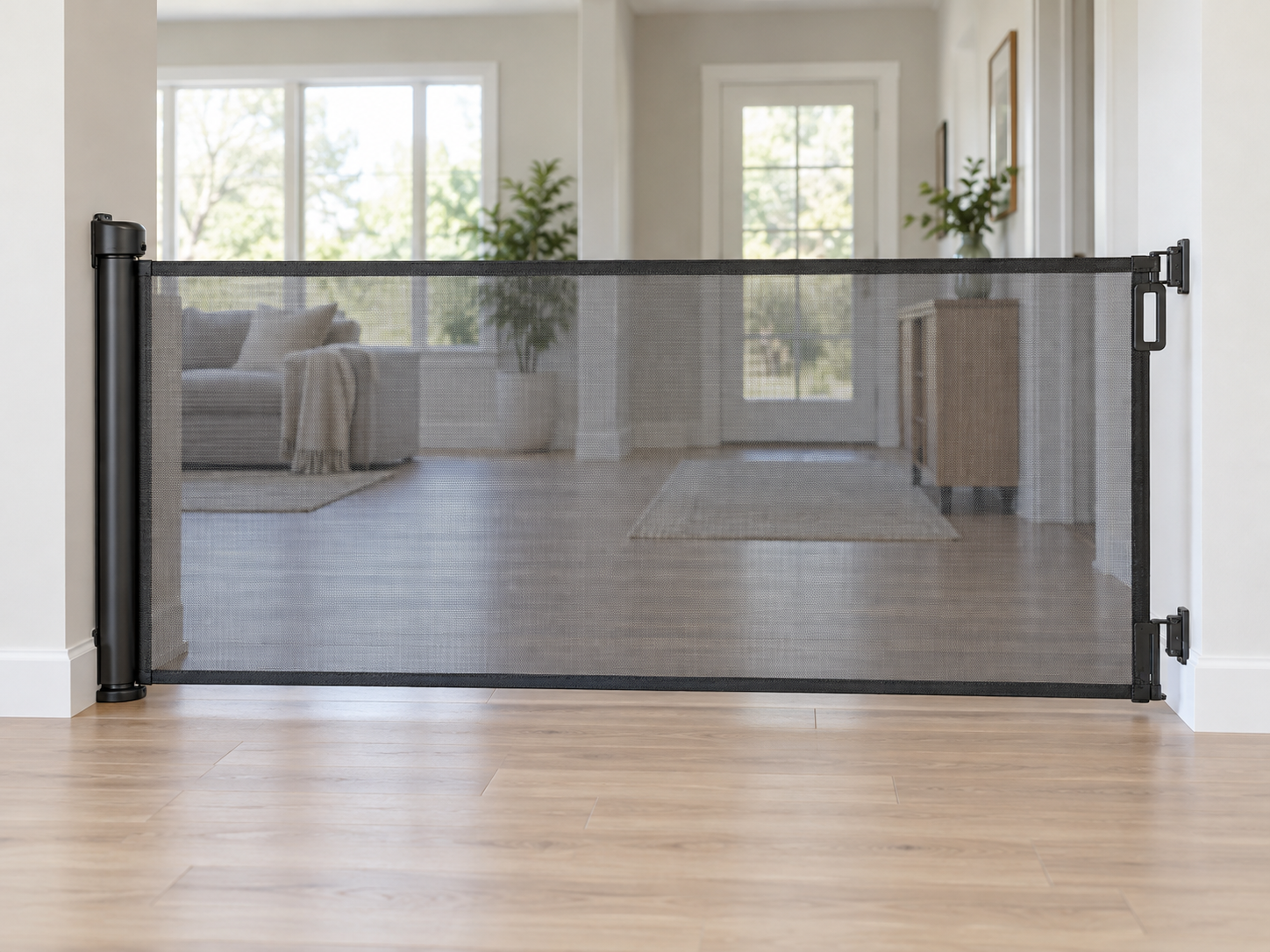 Extra-wide retractable gate
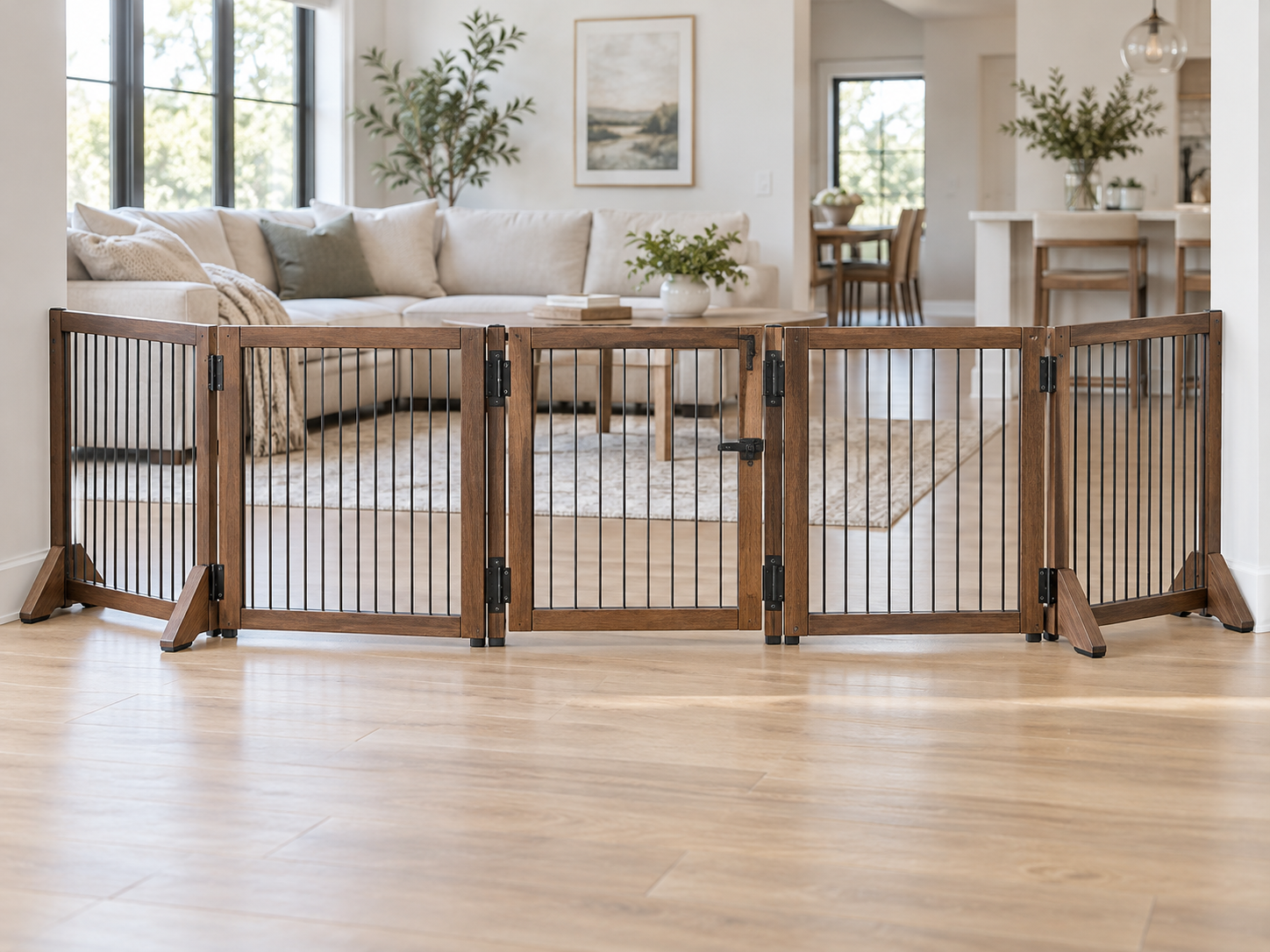 Wide freestanding gate
This guide is a shopping framework, not a hands-on test and not a containment guarantee. “Extra wide” has no useful meaning until you compare the listing's supported configuration with your measurements. A gate can help manage an ordinary room boundary, but it is not a behavior treatment, a child gate, a crash barrier, or a substitute for supervision.
Quick comparison
- Configurable panel gate: the most adaptable choice for angled or irregular transitions when the maker documents the required panel arrangement and mounting.
- Retractable gate: useful when a clear walkway matters after opening, but only where the walls, width, bottom gap, and placement match the maker's instructions.
- Freestanding gate: avoids wall hardware and can move between rooms, but its floor footprint and resistance to pushing deserve careful scrutiny.
- Fixed straight-span gate: can make sense for a conventional wide opening when an exact extension system and suitable mounting surfaces are available.
Measure the whole setup, not one straight line
Record the opening width at floor level and at the planned top of the gate because trim, baseboards, columns, and uneven walls can change the usable span. For a panel gate, sketch the proposed angles and measure the real path along the panels. Do not assume a listed total panel length equals the straight opening it can cover.
Mark the gate's base depth and door swing on the floor with removable tape. Check whether the setup blocks an exterior door, cabinet, appliance, vent, outlet, feeding area, water access, litter route, or normal escape path for people. Include the width of the walk-through door in your plan; a gate can span the room yet still create an awkward daily bottleneck.
Selection criteria that matter
- Supported span: use the current maker's minimum, maximum, and allowed extension or panel configuration—not a marketplace headline alone.
- Mounting surface: confirm whether the hardware requires studs, solid wood, masonry anchors, or another specified surface. Do not improvise around trim or fragile finishes.
- Configured geometry: panel count and hinge angles affect both coverage and stability. Confirm whether a straight, zigzag, or angled layout is permitted.
- Height and gaps: compare overall height, bar spacing, side gaps, and bottom clearance with the individual pet, without treating any measurement as escape-proof.
- Walk-through access: look at usable door width, latch position, swing direction, threshold bar, and whether the door can stay out of the busiest path.
- Floor footprint: feet and angled end panels may extend well beyond the visible barrier. Check tripping, wheelchair, walker, vacuum, and robot-vacuum clearance.
- Cleaning and storage: compare wipe-down instructions, floor contact, hair-catching joints, folded dimensions, and whether panels detach only as the maker permits.
- Inspection: hinges, latches, anchors, feet, mesh, and panel joints should be easy to see and recheck after moving or cleaning the gate.
Tradeoffs by format
Panel gates trade compactness for flexibility. They can follow an angled opening or wrap around part of a room, but they use more floor and require careful joint, foot, and wall-mount planning. They are a poor fit when the required shape conflicts with the documented setup.
Retractable gates trade rigid bars for a smaller open footprint. They can clear the walkway when retracted, but fabric or mesh, lower gaps, tension, and mounting rules may not suit every pet or opening. Follow the maker's placement restrictions and never assume stair suitability.
Freestanding gates trade installation for movement. They can suit renters and changing layouts, but they depend on an adequate base and a pet that does not push, climb, chew, or repeatedly challenge the boundary.
Who should skip a wide gate for now?
Skip the purchase when you cannot confirm a supported configuration for the exact opening, the available mounting surface is unsuitable, the base would obstruct a required path, or the only way to span the room is with unapproved extensions or improvised hardware. Also skip a freestanding format when ordinary contact can shift it.
A gate alone is not a good plan for a pet who panics when separated, repeatedly climbs or crashes into barriers, guards spaces, chews the gate, or becomes distressed around other pets. Ask a certified trainer or qualified behavior professional for those concerns. Sudden mobility or behavior changes warrant veterinary guidance.
Setup and ongoing inspection
Install the gate exactly as directed, then inspect it before the pet enters the area. Check anchors, feet, hinges, panel joints, latch closure, bar or mesh gaps, bottom clearance, and the full human traffic route. Introduce the boundary during a calm, supervised period and watch for pawing, pushing, chewing, climbing, snag points, or stress.
Recheck the setup after moving furniture, opening adjacent doors, cleaning floors, folding the gate, or changing its panel angles. Stop using it if hardware loosens, mesh tears, a foot shifts, the latch no longer closes predictably, or the pet's response changes.
Related guides
For a conventional doorway, compare pet-gate formats for small spaces or use the pet-gate worth-it test before shopping. If the room needs a self-contained zone instead of a doorway boundary, see pet gate versus exercise pen. The broader new-pet setup guide helps keep access to rest, water, feeding, and cleanup supplies in the plan.
Bottom line
A configurable panel gate is the most flexible starting point for an irregular wide opening; a retractable gate earns consideration when the open walkway matters; and a freestanding gate may fit calm pets and rental constraints. None is automatically best. Choose the format whose documented span, mounting, geometry, access, and inspection routine fit the measured room without improvisation.