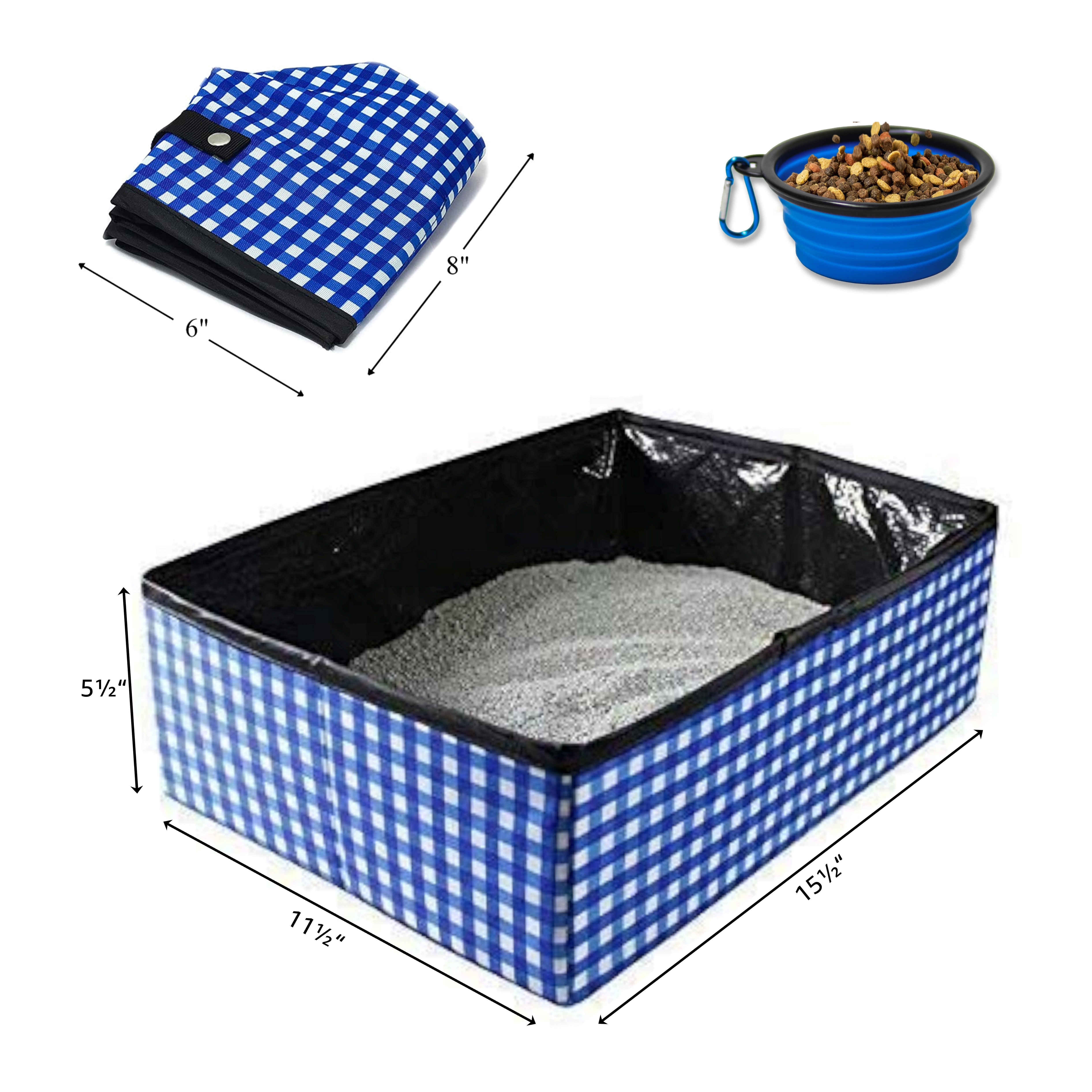
This guide compares manufacturer-stated features and useful product formats; it is not based on hands-on testing. A travel box is a convenience item, not a guarantee that a cat will eliminate normally away from home. Keep the litter type and routine as familiar as practical, and do not expect a new box to solve travel distress or litter avoidance.
Best Reusable Starting Point: Pet Fit For Life Portable Cat Litter Box
The manufacturer describes this nylon box as approximately 15 by 11 by 5 inches when open and about 8 by 5 by 2 inches when folded, with a smooth inner liner and a snap strap for storage. Those published measurements make it easier to compare the box with your cat's normal posture, your vehicle storage, and the clear floor area at a hotel or family home.
The main tradeoff is size. A box that packs neatly may still be too short or narrow for a larger cat, and five-inch walls may not contain enthusiastic digging. Treat the maker's approximate litter capacity as a packing reference, not a fill requirement. Use only enough familiar litter for comfortable digging while keeping the box stable and easy to carry when empty.
Best Format for Simple End-of-Trip Cleanup: A Disposable Pan
A disposable litter pan can suit a one- or two-night visit when you do not want to transport a used fabric box home. Look for documented open dimensions, a base that stays flat, walls high enough for your cat's normal digging, and material that will remain sound for the full stay.
Disposable does not mean maintenance-free. Put it on a stable, washable surface, scoop it normally, and prevent access by dogs or children. Skip cardboard or pulp styles if spills, a damp bathroom floor, or your cat's scratching could weaken the base. Follow local waste rules rather than flushing litter or the pan.
Best Format for Keeping Supplies Together: A Lidded Travel Case
Some fabric boxes zip or close into a case for storage. That can help organize a clean scoop, waste bags, and a small sealed supply of familiar litter before departure. Compare the box's dimensions while open, not just the attractive packed shape, and verify whether the maker intends the closed case to carry litter or only clean supplies.
A lid adds seams, zippers, and folds that need cleaning and complete drying. It also does not make a used box odor-proof or spill-proof. Empty and clean the box according to its instructions before packing it away, and carry used litter in a separate sealed waste container.
Selection Criteria That Matter
- Open dimensions: Your cat should be able to enter, turn, dig, and settle into a normal posture. Compare with the usable interior of the regular home box.
- Entry and wall height: A lower edge can ease entry, while taller walls can contain more scatter. Neither feature helps if the overall box is too cramped.
- Packed dimensions: Decide where the clean, empty box will ride without blocking the carrier, ventilation, doors, or other essential supplies.
- Base stability: Flexible sides should open fully and the base should sit flat on a firm surface. Do not balance a box on a car seat or use it while a vehicle is moving.
- Lining and seams: Treat “waterproof” or “leakproof” as product-specific claims. Inspect corners, coating, seams, and folds before each trip.
- Cleaning: Follow the current care label. Wipe-clean fabric still needs careful cleaning and complete drying before folded storage.
- Familiar litter: Pack the litter your cat already uses when practical. A trip is a poor time to introduce a strongly scented or unfamiliar texture.
- Placement: Choose a quiet, accessible floor area away from food and water, closing doors, curious pets, and heavy foot traffic.
A Quick Comparison Framework
- Choose a foldable reusable box when compact storage and repeat trips matter most.
- Choose a disposable pan when the stay is brief and carrying a cleaned box home is not practical.
- Choose a lidded travel case when clean supply organization matters, after checking what the maker permits you to carry inside.
- Choose a full-size rigid pan when your cat needs more turning room or digs hard enough to collapse flexible walls.
- Choose no trip yet when your cat is ill, injured, eliminating abnormally, or too distressed for travel without professional guidance.
Who Should Skip a Portable Litter Box
Skip a compact fabric box if your cat cannot turn comfortably, chews fabric or coatings, scratches through flexible liners, or refuses unstable surfaces. A regular rigid litter pan may take more luggage space but can be the more sensible choice for a larger cat, a longer stay, or a cat strongly attached to its usual box shape.
Do not treat travel accidents, straining, repeated box visits, crying, blood, diarrhea, vomiting, or sudden litter avoidance as a product-fit problem. Contact a licensed veterinarian promptly about urinary signs or other sudden elimination changes. Ask your veterinarian about whether travel is appropriate for a cat with a current health concern.
Set Up the Travel Box Before Departure
Open the clean box at home and check that the base lies flat, the walls stay upright, and no seams or coatings are damaged. Place it in a quiet familiar area with the usual litter so your cat can inspect it without pressure. Do not force the cat into the box or remove the normal box simply to compel a trial.
At the destination, set the box on a stable floor before releasing the cat into the room. Keep doors and windows secure, maintain ordinary scooping, and preserve access to food, water, resting space, and hiding options. During the drive, the cat should remain in an appropriate secured carrier; never rely on an open litter box as a travel restraint.
For the rest of the trip setup, use the pet outing kit guide and the car-ride cleanup kit. If you are choosing transport equipment, compare hard-sided and soft-sided pet carriers.
The Bottom Line
The Pet Fit For Life portable litter box is the strongest reusable starting comparison here because its maker provides useful open and folded measurements plus clear material and care details. It is best considered for a cat that fits those dimensions and accepts a flexible box—not as a universal pick.
Measure first, keep the litter routine familiar, place the box on a stable floor, and have a rigid-pan fallback when compactness would compromise your cat's space or comfort.