Still deciding whether to replace only the base? Start with the tray-versus-whole-crate inspection guide.
A tray is a removable crate-base component, not bedding, a housetraining tool, or a solution for chewing, distress, pain, or repeated accidents. Replace only the tray when the crate frame, doors, latches, and other structural parts remain suitable and undamaged.
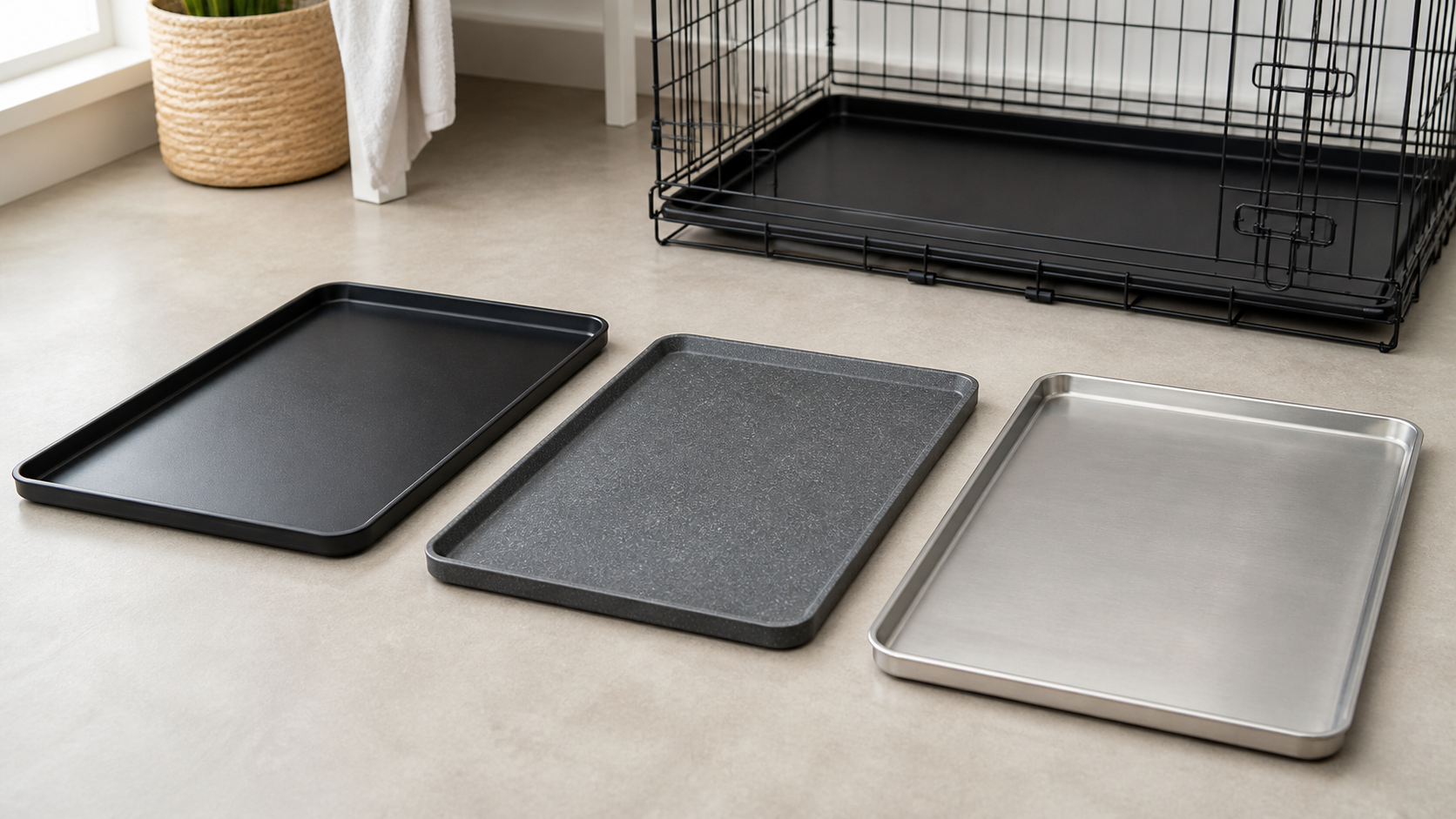
Quick Comparison: Match Material to the Routine
Molded plastic: light and familiar
Molded plastic is easy to lift for routine wiping and may match the original tray style. Compare the molded corners and rim carefully. A tray that is slightly too wide, too long, or too tall at the lip may bind in the crate opening even when its nominal crate size sounds correct.
Composite-style: firmer without metal
Composite-style replacements vary, so read the maker's material and care description instead of assuming a standard formulation. Compare weight and flex with the old tray, and check whether the edges stay fully inside the crate base during ordinary use.
Metal: heavier and construction-dependent
Metal can be a practical washable surface for some setups, but it adds weight and may sound different when a dog moves. Look for clearly documented smooth, finished edge construction and exact compatibility. Metal is not automatically chew-proof, rust-proof, quieter, or safer.
Measure the Crate Opening and Old Tray
Remove the old tray and measure its maximum outside length and width, including any rim. Note whether the corners are square or rounded and measure the lip at its tallest point. Then measure the crate's clear insertion opening and the rails or stops that support the tray.
Use the product listing's actual tray dimensions and compatibility notes. Do not rely only on a crate's advertised length or a generic small, medium, or large label. If the original tray fit correctly, its model number or the crate maker's replacement-parts guidance is the best starting reference.
Selection Criteria That Matter
- Outside dimensions: Match length, width, corner radius, and lip to the insertion path and supporting rails.
- Maker compatibility: Prefer a documented model match; “universal” language still needs measured confirmation.
- Material and flex: Compare documented construction and how much movement is appropriate for the supported span.
- Edge finish: Reject cracks, burrs, sharp points, rough folds, or damaged rims before installation.
- Removal clearance: Confirm the tray can slide out without forcing the door frame, latch, or surrounding furniture.
- Cleaning: Follow the maker's instructions and favor a surface without inaccessible channels when frequent wiping is expected.
- Weight and handling: Make sure the person cleaning the crate can remove and carry the empty tray comfortably.
- Floor contact: Check whether the installed tray stays on its intended supports rather than rubbing the floor or shifting beyond the frame.
Cleaning, Drying, and Damage Checks
Remove loose hair and debris, then clean the tray according to its label. Rinse away permitted cleaner residue and let the tray dry before reinstalling bedding. Avoid assuming that a household cleaner is compatible with every plastic, composite, coating, or metal surface.
During cleaning, inspect the corners, lip, center, and underside. Retire a tray with cracks, sharp edges, deep warping, loose coating, or damage that prevents stable placement. Also inspect the crate itself; a new tray should not be used to hide a bent base, broken wire, damaged latch, or other structural problem.
Who Should Skip a Replacement Tray
Skip a separate replacement if the original tray is merely dirty and can still be cleaned as directed, or if the crate manufacturer says the candidate tray is incompatible. Replacing the whole crate may be the more appropriate path when the frame, door, latch, supports, or finish is damaged.
Do not treat a tougher tray as a fix for persistent chewing, escape attempts, panic, pain, or repeated elimination. Those situations call for understanding the cause. Ask a licensed veterinarian about possible medical concerns and a qualified behavior professional about distress or destructive behavior.
The Bottom Line
Start with exact fit: outside dimensions, corner shape, lip height, insertion clearance, and documented model compatibility. Then choose between lightweight molded plastic, a firmer composite-style option, and carefully finished metal according to cleaning, weight, noise, and handling needs.
For the rest of the setup, compare crate mats for easy cleaning and crate covers for quiet home setups. Neither accessory corrects a damaged crate or replaces professional help for a dog showing distress.