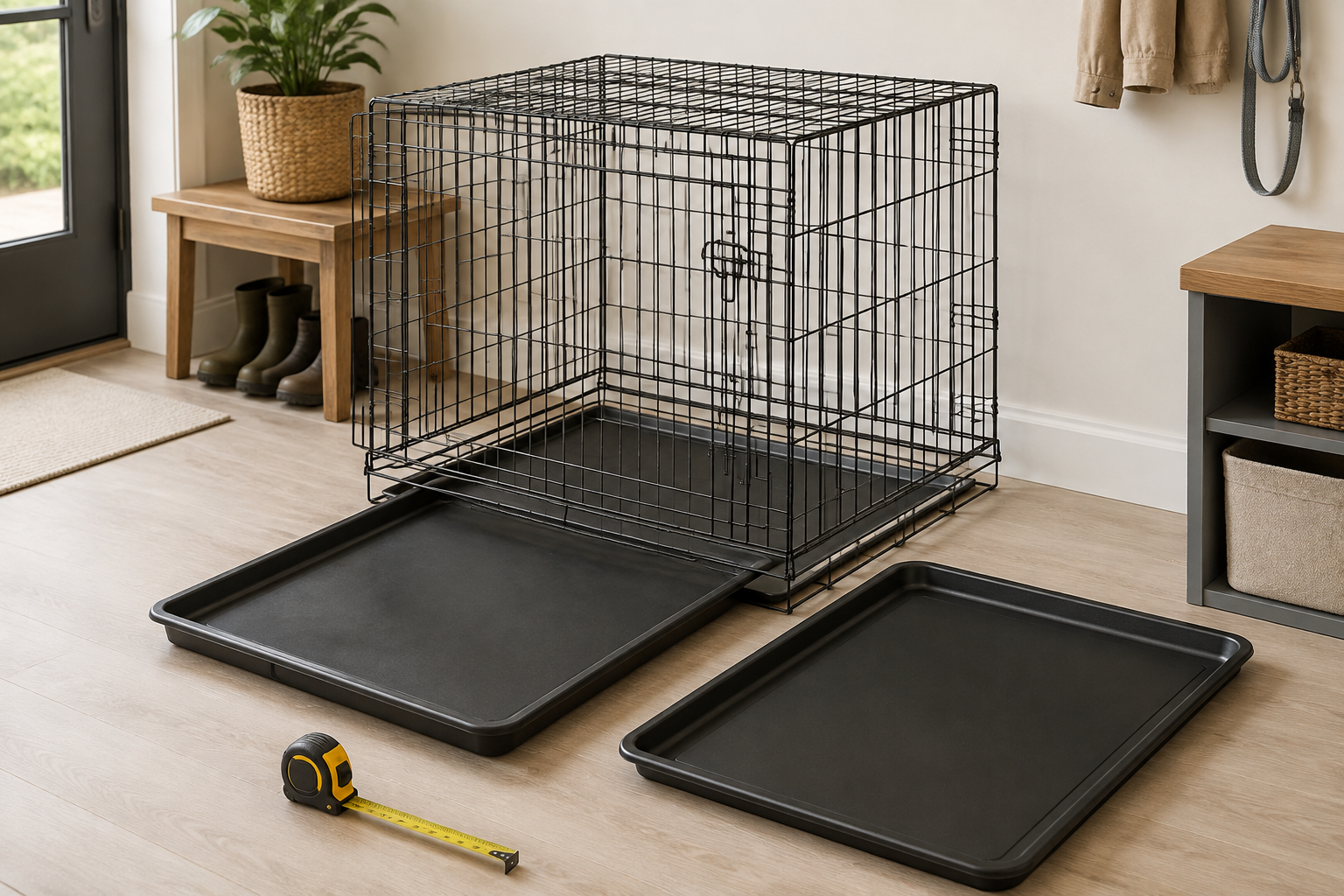
A replacement tray is a maintenance component, not a fix for crate distress, chewing, repeated accidents, pain, or a crate that no longer fits. If a dog suddenly avoids the crate, has repeated elimination changes, seems painful, or shows another health concern, contact a licensed veterinarian. A qualified trainer can help with crate-use concerns that are not medical.
Quick Decision: Replace the Tray, Replace the Crate, Delay, or Stop
Replace the tray when the base alone is damaged, the crate is otherwise sound and appropriately sized, and compatibility is clear. Replace the crate when frame, door, latch, joints, supports, or overall fit are also unsuitable. Delay when staining is cosmetic and the tray remains smooth, stable, and maintainable under its care directions. Stop and reassess when there are sharp edges, broken supports, severe distortion, or uncertain closure condition.
Inspect the Whole Crate First
- Frame and joints: Look for bends, corrosion, broken welds, exposed ends, or unusual movement.
- Doors and latches: Operate every closure and compare its condition with maker instructions.
- Base supports: Confirm tray rails, stops, and retaining features are undamaged.
- Current fit: Recheck whether the crate still gives the dog appropriate usable room.
- Tray condition: Inspect both sides for cracks, sharp areas, deep warping, or damaged corners.
Do not cover a sharp or structurally questionable tray with bedding and continue as usual. Remove access while you check manufacturer guidance or replace the relevant equipment.
Exact Fit Matters More Than the Size Label
Crates sold under the same nominal length can use different insertion openings, corners, lips, stops, or rail layouts. Record the manufacturer, model identifier, and part number when available. Measure the old tray's exterior length and width, corner profile, lip height, and the clear opening through which it slides.
Compare those measurements with current listing and maker documentation. Interior floor area alone is not enough: a tray can match the footprint but fail to pass a door, rail, or retaining stop.
When Tray-Only Replacement Earns Its Cost
The clearest case is an otherwise serviceable crate whose removable base has developed damage, persistent warping, or a surface condition that no longer works with its stated cleaning directions. A correctly matched component avoids discarding a sound frame.
Include delivery dimensions, return terms, material care, weight, and the work of confirming compatibility. A cheap tray that cannot be confidently matched is not good value.
When the Whole Crate Deserves Attention
Tray-only replacement is the wrong scope when multiple components are worn or questionable. A bent frame, unreliable latch, damaged weld, missing base support, unsuitable size, or severe corrosion calls for a broader decision. For a crate used in a vehicle or specialized context, follow maker and travel-provider guidance; this page makes no crash-protection or containment claim.
Cleaning and Material Tradeoffs
Follow the tray maker's current cleaning directions and check compatibility before applying any cleaner. Dry components before reassembly and inspect edges and shape during routine cleaning. Material names alone do not establish flex, noise, weight, stain response, or usable life. Keep cleaners away from pets and never mix products unless labels explicitly direct it.
Who Should Skip a Replacement Tray?
Skip tray-only replacement when compatibility is a guess, the full crate has defects, the dog has outgrown the usable space, a pet repeatedly chews accessible tray edges, or the setup is being used to address a medical or behavior problem. Also skip it when replacement and delivery approach the cost of an appropriate complete crate and the old frame has limited utility.
Complete the Crate Setup Carefully
If tray replacement passes this test, use the replacement crate tray comparison to examine material and edge tradeoffs. Then decide whether a crate mat fits the dog and laundry routine; bedding should not conceal damage or reduce usable fit.
Bottom Line
A replacement crate tray is worth buying when one exact compatible component restores an otherwise sound, appropriately sized crate to an easy-to-maintain setup. Inspect the whole crate first, measure the actual tray path, and replace more than the tray when the frame, closures, supports, or fit are part of the problem.