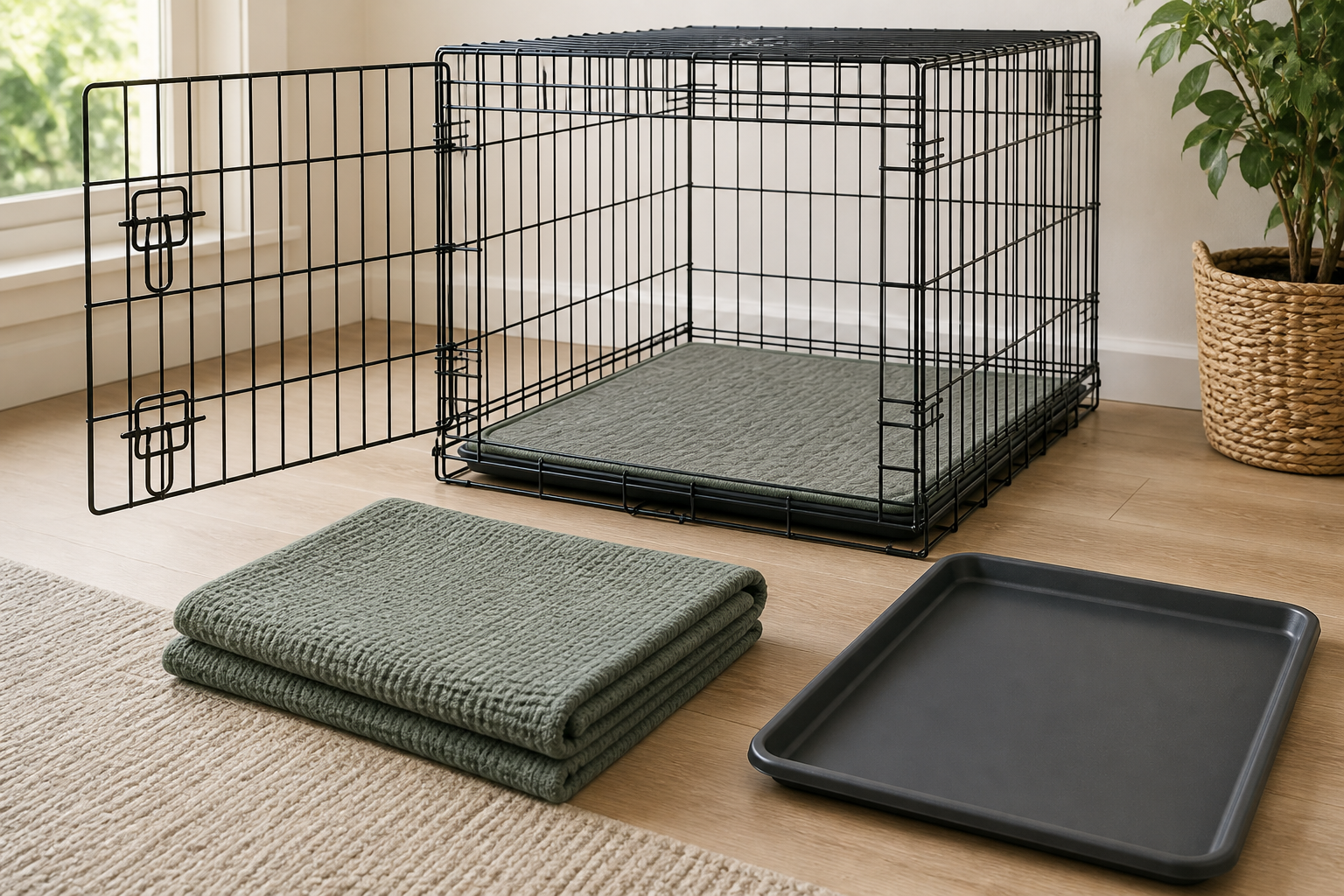
 Check the MidWest Quiet Time crate mat example
This is a purchase-decision guide, not hands-on testing, crate training, or veterinary advice. A mat is a removable setup convenience. It cannot treat pain, prevent distress, correct unexpected soiling, or make an unsuitable or damaged crate appropriate.
Quick Decision: Buy, Skip, Delay, or Repurpose
Buy a crate mat when the crate is used regularly, you know its clear interior dimensions, a thin layer matches your pet's observed resting preference, and the whole mat or removable cover fits your laundry routine.
Skip it when your pet pulls at, shreds, or swallows bedding; the mat crowds the door or resting area; or the existing tray is already practical and approved for the setup.
Delay until you can confirm dimensions, thickness, materials, complete wash and dry directions, and whether zippers, seams, backing, or fill stay out of reach.
Repurpose a washable blanket or towel when crate use is occasional and a thin fold stays flat during a short supervised trial. Stop if it bunches, slides, snags, or becomes a chewing target.
The Six-Part Worth-It Test
- Exact fit: Does the mat match the clear tray width and depth, including rounded corners and door hardware?
- Usable room: Can your pet still enter, stand, turn, and rest naturally without extra material crowding the space?
- Laundry: Can every washable part fit your machine and dry fully before the crate is needed again?
- Material access: Are seams, foam, fill, backing, and closures likely to remain intact under supervision?
- Temperature: Is the mat's thickness sensible for the room and your pet's observed preference without blocking airflow?
- Real improvement: Is it meaningfully easier than cleaning the tray or using a washable layer you already own?
If exact fit, intact materials, or usable room fail, the mat is not worth buying regardless of cost.
Cost and Maintenance Tradeoffs
A simple one-piece mat takes less storage but leaves no spare while it dries. A removable-cover design adds parts and usually more seams or closures to inspect. Thick fill creates a larger laundry job; very thin fabric may wrinkle or shift. Read the maker's instructions for the complete item rather than assuming the cover, backing, and insert share the same care method.
Descriptions such as water-resistant or waterproof should be interpreted only as the manufacturer defines them. They do not eliminate seam checks, cleaning, drying, or prompt attention to a wet tray.
Measure the Crate Without Guessing
- Remove existing bedding and measure the flat usable tray area, not the crate's outside dimensions or marketing size.
- Note rounded corners, tray lips, frame bars, hinges, latches, and the path of each door.
- Compare those measurements with the mat's current listed length, width, and thickness.
- Place the mat in the empty crate and operate every door to confirm that nothing catches or folds.
- Try a brief supervised setup and remove the mat if it shifts, curls, gets chewed, or makes normal movement awkward.
When a Blanket, Fuller Bed, or Bare Tray Fits Better
A washable blanket can be the lower-cost choice for infrequent crate use when it stays thin and flat. A fuller bed may match a pet that consistently uses a cushioned edge, but only when the measured sleep surface and door clearance remain adequate. The crate mat versus dog bed guide compares those two bedding formats directly.
A bare tray may be the simpler temporary setup when the crate maker permits it and loose material cannot be used safely. Keep the tray clean, dry, intact, and correctly seated. Do not improvise clips, pins, ties, adhesives, or loose fasteners within reach.
Who Should Skip a Crate Mat for Now
Skip soft bedding if your pet persistently tears, mouths, digs under, or eats fabric, foam, binding, or backing. Remove any damaged material. Also skip a new accessory when the crate has broken wires, sharp edges, a cracked tray, unreliable latches, or other damage; inspect or replace the crate itself first.
Contact a licensed veterinarian for sudden reluctance to lie down, pain, stiffness, injury, repeated unexpected soiling, illness, or a major change in resting behavior. Ask a qualified trainer or behavior professional about persistent crate distress. Buying a different mat is not a substitute for individual help.
Red Flags Before Buying
- No exact dimensions, material details, thickness, or complete wash and dry directions.
- Universal-fit wording without a measured shape and usable crate-floor comparison.
- Exposed foam, loose fill, reachable zippers, unfinished edges, or attachments that invite chewing.
- A profile thick enough to crowd a low door or reduce the natural resting area.
- Claims that a mat treats anxiety, prevents injury, corrects behavior, or provides medical benefits.
Bottom Line
A crate mat is worth it when it fits precisely, stays intact, launders realistically, and improves on the tray or washable layers already available. It is easy to skip when crate use is rare, clearance is tight, or soft material creates a chewing concern.
For the wider setup, compare crate covers for calm home placement without blocking ventilation, or use the comfort and home setup hub for bedding and room-layout decisions.