Quick Answer
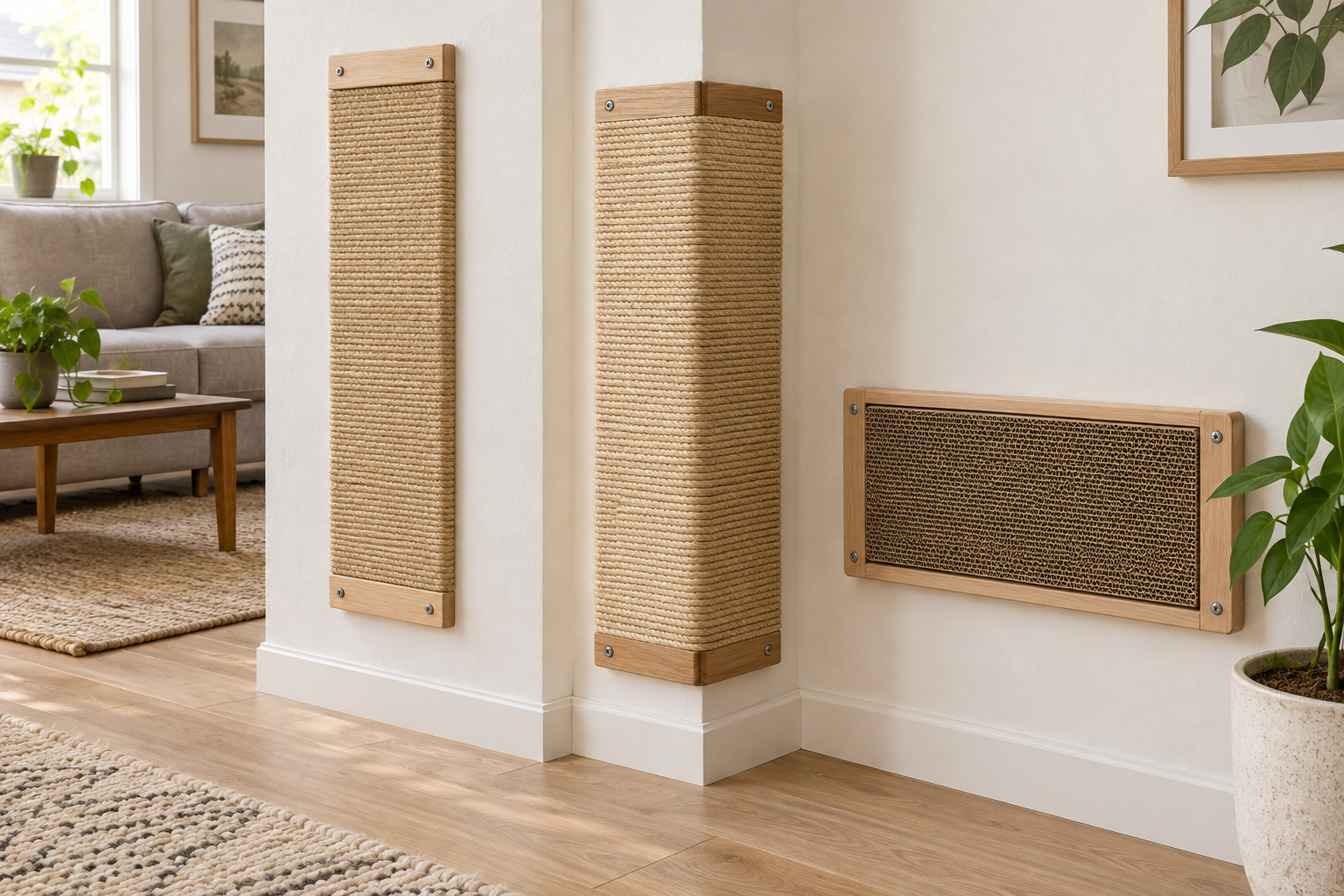
Choose a flat sisal panel when you have a measured wall section, your cat likes upright scratching, and the listed installation method suits that wall. Choose a corner wrap only when the corner shape and both mounting faces match the product. Choose a refillable frame when replaceable scratch material matters more than a single-piece design and compatible inserts are realistically available.
A mounted scratcher can free floor space, but it trades away portability and asks more of the wall. It does not guarantee that a cat will stop scratching furniture, and it should not be treated as behavior modification.
Which Wall-Mounted Scratcher Format Fits?
Flat panel: simple shape, careful placement
A rectangular panel is the easiest format to measure. Compare the usable scratch surface—not just the outer frame—with the height and reach your cat already uses. Leave clear space around the panel so your cat can approach and stretch without bumping furniture, trim, cords, or another pet's resource area.
Corner wrap: useful only for a compatible corner
A corner format can cover two faces without adding a floor base. The tradeoff is installation fit: corner angle, trim, wall texture, fastener position, and scratcher width all matter. Do not assume a flexible-looking product fits every inside or outside corner.
Replaceable-insert frame: plan for refills
A mounted frame can reduce the need to replace the entire holder when the scratch surface wears. Confirm the insert is secured as directed, can be replaced without damaging the wall, and has a dependable size or part route. Cardboard-style inserts may shed more visible debris than woven sisal.
Measure the Setup Before Buying
- Wall surface: identify the wall material, trim, texture, studs or approved anchors, and any rental restrictions. Follow the product and fastener instructions.
- Installed height: observe where your cat naturally reaches on an existing appropriate scratch surface. Use the maker's orientation and mounting limits.
- Usable scratch area: frames, caps, hardware, and borders can reduce the area available to claws.
- Approach space: keep the route clear of doors, walking paths, cords, heaters, shelves, and fragile objects.
- Thickness and clearance: measure how far the installed product projects from the wall and whether it interferes with furniture or traffic.
- Removal plan: consider patching, paint, adhesive residue, spare holes, and whether the product can move if your first location is ignored.
Material, Replacement, and Cleanup Tradeoffs
Sisal fabric or rope offers a fibrous upright surface, but construction and wear vary. Check for loosening fibers, exposed hardware, sharp edges, and movement during routine inspection. Corrugated cardboard is usually easy to replace but can scatter flakes; a nearby vacuum or debris mat may make upkeep simpler. Carpet-like surfaces can retain fur and debris and may resemble household carpet, so decide whether that texture fits the routine you want to support.
Compare the cost and availability of inserts, the steps needed to remove them, whether the holder can be wiped without soaking the scratch material, and where dusty replacement work will happen. Replace or stop using any setup that becomes loose, damaged, sharp, or unstable.
Installation and Supervision Boundaries
Use only the hardware, wall types, orientations, and installation steps supported by the product maker. If you cannot identify the wall construction, avoid wiring or plumbing, or make the attachment secure, ask a qualified installer. Adhesive attachment can damage finishes or release unexpectedly; never infer compatibility from a listing photo alone.
Watch the first uses and inspect the mount regularly. A wall scratcher is not a climbing shelf, pet barrier, or load-bearing perch unless the exact product is designed and installed for that separate use. Keep loose fibers, detached parts, and damaged cardboard away from cats who chew or swallow non-food material.
Who Should Skip a Wall-Mounted Scratcher?
Skip this format if drilling is prohibited, the wall condition is uncertain, the only location blocks a walkway, your cat scratches horizontally, or you need to move the scratching outlet frequently. A stable freestanding post or floor pad may be the better fit when the wall cannot support the listed installation or your cat has not shown a clear vertical preference.
Pause the product decision if scratching changes suddenly or appears alongside pain, limping, skin changes, hiding, appetite changes, aggression, or another concerning sign. Contact a licensed veterinarian for health concerns and a qualified behavior professional for persistent behavior issues; a scratcher is not a substitute for care.
Continue the Cat Scratcher Decision
For the broader choice between freestanding vertical, horizontal, angled, and wall formats, start with our cat scratching-post guide for small spaces. Compare sisal and cardboard scratcher tradeoffs, use the horizontal scratch-pad guide if your cat scratches low, or consider a debris mat for hard floors.
Bottom Line
A wall-mounted cat scratcher is most useful when it matches an observed upright scratching preference, a compatible measured wall, and an installation you can maintain. Choose the format by surface, usable area, height, replacement plan, and cleanup—not by the promise of saving floor space alone.