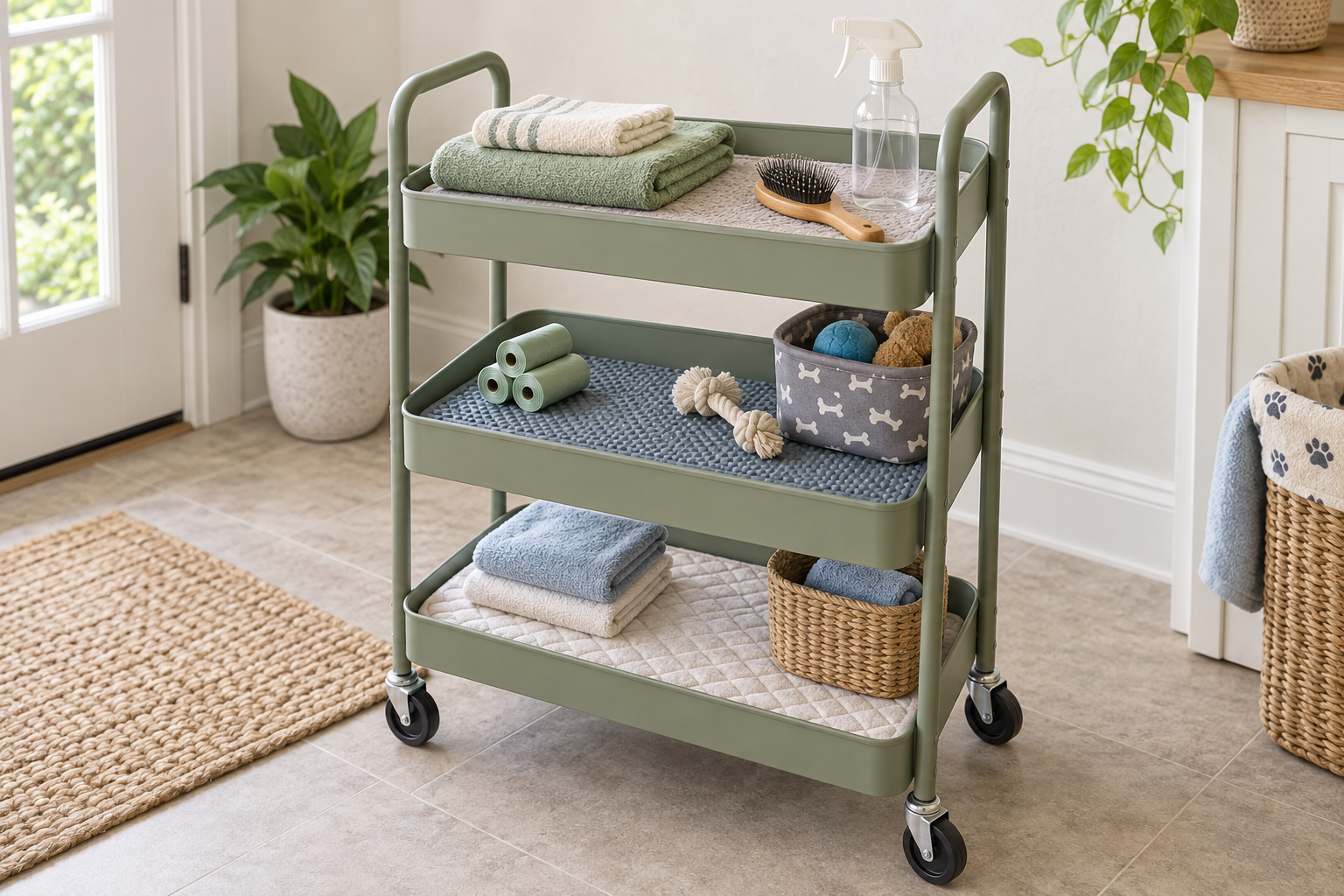
Quick Comparison
Fitted fabric: finished edges and simple removal, but only when the listed shape closely matches the shelf. Trim-to-fit: adaptable dimensions, but cut edges and curling need inspection. Absorbent washable: useful for minor routine drips, but it needs prompt laundering and complete drying. Choose none: when the bare shelf already wipes clean easily.
Measure the Cart Before Shopping
Empty one shelf and measure the flat interior width and depth—not the cart's outside dimensions. Note rounded corners, raised lips, divider posts, handles, seams, drain openings, and any taper from top to bottom. Measure every tier because shelves that look identical may not have the same usable area.
Choose a pad that lies fully inside the shelf without bunching over the lip or touching the wheels. Load the cart according to its maker directions and keep weight balanced. A liner does not increase the cart's load rating, contain a large spill, or make unsuitable supplies safe to store.
Selection Criteria That Matter
- Usable dimensions: compare the pad with the flat shelf interior and account for rounded corners.
- Thickness: confirm that bins, tools, and containers remain stable and below any shelf edge.
- Backing and surface fit: use current maker guidance for both the pad and cart finish; skip adhesive products unless the cart maker permits them.
- Edge behavior: favor flat edges that do not curl, snag, or obstruct shelf access.
- Care method: verify machine-wash, hand-wash, and drying claims instead of assuming from the material.
- Caster clearance: check that nothing hangs near wheels, brakes, or moving joints.
- Safe storage: keep medicines, concentrated cleaners, sharp tools, choking hazards, and anything unsafe to chew in secure storage outside pet and child reach.
Format Tradeoffs
Fitted washable fabric
Finished edges can stay tidy and make removal straightforward, but an almost-right size may buckle against the shelf lip. Measure the finished pad rather than relying only on a cart-size label.
Non-adhesive trim-to-fit liner
This format can follow an uncommon shelf outline. The tradeoff is careful cutting and more frequent edge checks. Follow maker cutting and care directions; retire pieces that split, curl, or shed.
Thin absorbent washable pad
An absorbent layer can simplify small routine drips, but it is not a tray and should not hide pooled liquid. Remove a wet pad promptly, wipe and dry the shelf, then launder and fully dry the pad as directed.
Cleaning and Cart Checks
Remove supplies before lifting the pad. Shake loose debris where appropriate, wash by the current directions, and wipe the bare shelf. Let both surfaces dry fully before reloading. Periodically inspect shelf edges, handles, fasteners, casters, brakes, and the pad itself; stop using a damaged cart or liner until the relevant maker guidance is followed.
Do not use a shelf pad as containment for medication, pet food, leaking chemicals, or grooming liquids. Store those items according to their labels in appropriate secure locations.
Who Should Skip a Cart Shelf Pad?
Skip it if the bare shelf cleans quickly, the liner would cover drainage or hardware, or you cannot dry it between uses. Skip trim-to-fit material if clean stable edges are difficult to achieve, absorbent pads for recurring leaks, and any format that shifts under the actual loaded containers.
Related Guides
Use the pet-supply cart decision guide if wheels and floor space are still the main question. Compare narrow cart formats for small bathrooms if you have not bought the cart yet, or consider a rigid versus soft-sided caddy when portability matters more than shelves. Return to the new-pet essentials guide for the broader setup.
Bottom Line
The best cart shelf pad fits the measured interior, stays flat under the real supplies, follows a manageable wash-and-dry routine, and leaves the shelf lip, hardware, and casters clear. If the cart already wipes clean without fuss, the simplest choice is to skip the extra layer.