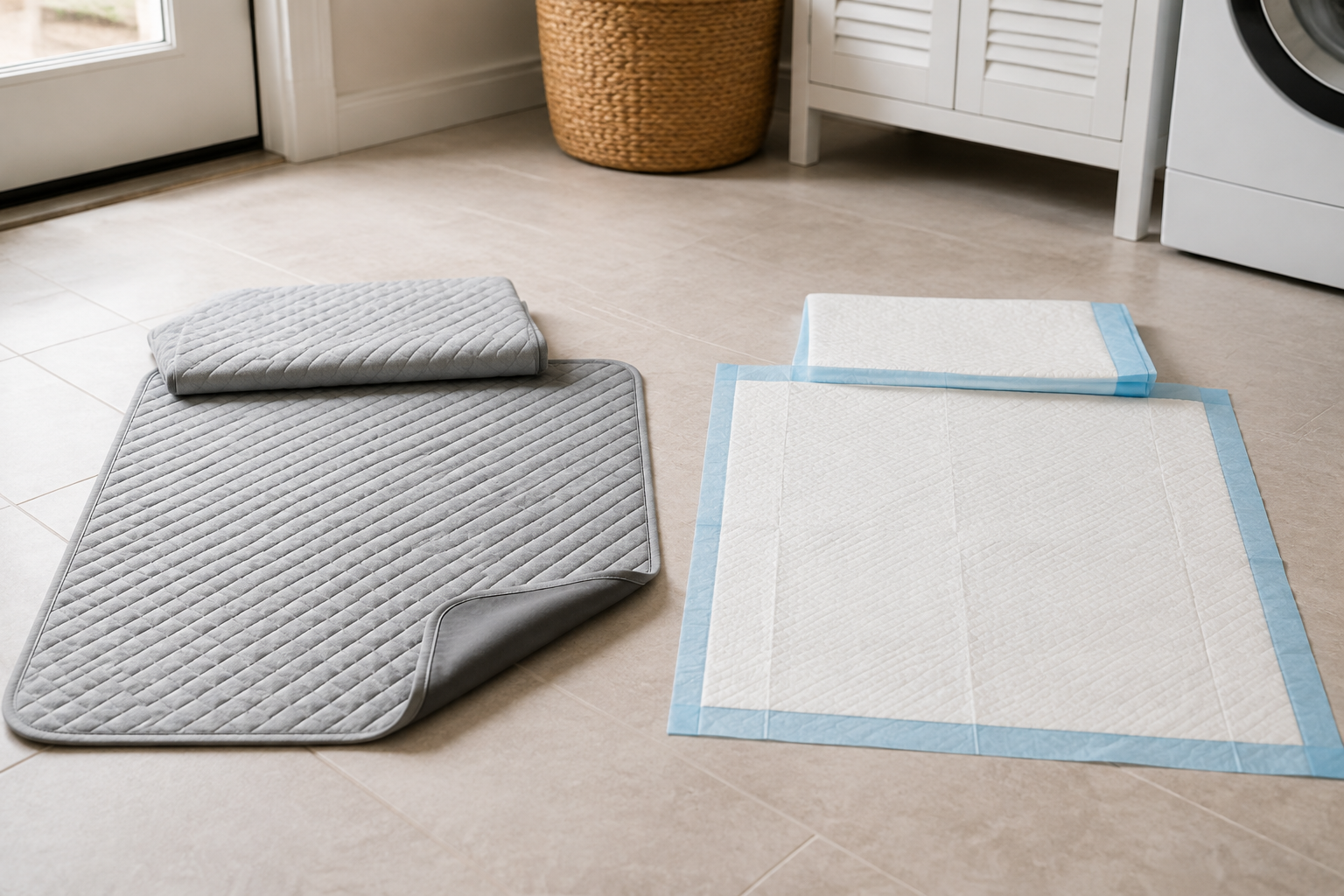
This comparison is about surface protection and cleanup. It is not a housetraining plan or a substitute for veterinary care. A pad can simplify a known routine, but it cannot diagnose or treat why a dog is urinating or defecating indoors.
Quick Comparison
Choose washable pads when the need repeats, you can promptly wash and fully dry them as directed, and several pads can rotate without leaving the area unprotected.
Choose disposable pads when use is genuinely occasional, laundry is impractical, or clean compact spares are useful for a short trip or temporary setup.
Skip both as a default solution when accidents are new, frequent, painful-looking, or unexplained. Contact a licensed veterinarian about sudden changes, straining, blood, unusual thirst, weakness, vomiting, diarrhea, or other signs of illness. A qualified trainer can help with persistent routine or housetraining questions after medical concerns are addressed.
Option A: Washable Pee Pads
A washable pad combines an absorbent fabric face with a water-resistant or waterproof backing. Its thicker construction can stay flatter and provide repeatable coverage, but it also creates a laundry, drying, and used-pad storage task.
Who washable pads fit
- Households protecting the same measured floor area repeatedly.
- Owners with enough washer capacity, drying space, and clean spares for rotation.
- Dogs that do not chew, dig at, or swallow fabric and backing.
- Setups where the pad can be lifted often so the floor underneath can be checked and cleaned.
Washable-pad tradeoffs
Higher initial cost does not guarantee savings because water, detergent, energy, time, and replacement all matter. A large thick pad may be awkward to wash or slow to dry. Seams, backing, and edges need regular damage checks, and a damp used pad needs a pet-inaccessible holding place before washing.
Option B: Disposable Pee Pads
A disposable pad is thinner, light to store, and replaced instead of laundered. That can reduce handling between uses, but it creates recurring purchases and trash and may move or bunch more easily in the chosen space.
Who disposable pads fit
- Owners dealing with rare, short-term, or travel-related floor-protection needs.
- Homes without reliable access to suitable washing and drying.
- Routines where carrying several flat clean spares is more practical than transporting a used washable pad.
- People who have a secure place to store packs and dispose of used pads away from pets.
Disposable-pad tradeoffs
Pack dimensions can obscure the usable absorbent area, so compare the inner surface as well as the outer edge. Adhesive tabs, borders, and backing vary. Thin pads may slide, curl, or be easier for a dog to shred. No disposable format should be treated as leak-proof without checking the floor beneath it.
Setup and Maintenance Checks
- Measure full use: Allow room for the dog to stand, turn, and keep all paws on the protected area.
- Inspect the backing: Verify the maker's wording and lift either format regularly to check for trapped moisture.
- Plan spares: Washable pads need a laundry rotation; disposables need dry, pet-inaccessible pack storage.
- Control movement: Avoid curled edges, bunching, blocked doors, and slippery placement. Do not improvise adhesives on flooring without checking surface guidance.
- Handle promptly: Follow wash, dry, or disposal instructions and wash hands after handling a used pad.
- Check for damage: Remove any pad that a dog tears or chews; swallowed material can require prompt veterinary advice.
Cost, Storage, and Waste
Compare cost over the period you realistically expect to use pads. For washable pads, include the number needed for rotation and the household's laundry burden. For disposables, include replacement frequency, pack storage, and trash volume. Avoid assuming a break-even date: frequency, pad life, local utility costs, and disposal arrangements vary too much.
Storage can decide the format before price does. Washable pads take more space when clean and need a contained location while used. Disposable packs need a dry shelf and shrink with use, but owners must keep enough on hand for the intended routine.
When to Skip Each Format
Skip washable pads if laundering will be delayed, they cannot dry fully, fabric attracts destructive chewing, or their size does not fit the washer and protected area.
Skip disposable pads if a repeating need creates unmanageable purchasing or trash, the thin format will not remain flat, or the dog reliably shreds exposed edges.
Skip a permanent pad setup when it obscures a new change in elimination, replaces appropriate outdoor opportunities, or postpones professional guidance. Products manage surfaces; they do not resolve medical or behavior causes.
Bottom Line
Washable pads suit a frequent, stable routine with dependable laundry and drying. Disposable pads suit occasional, temporary, or travel use when replacement is simpler than washing. Measure the area, confirm the construction and instructions, plan clean and used-pad storage, and choose the format that creates the least fragile routine.
For the broader product path, browse the cleanup and odor-control guides. If reuse is the likely choice, continue with the washable pee pad buying guide; for other floor zones, compare washable mats for food, litter, and crate areas.