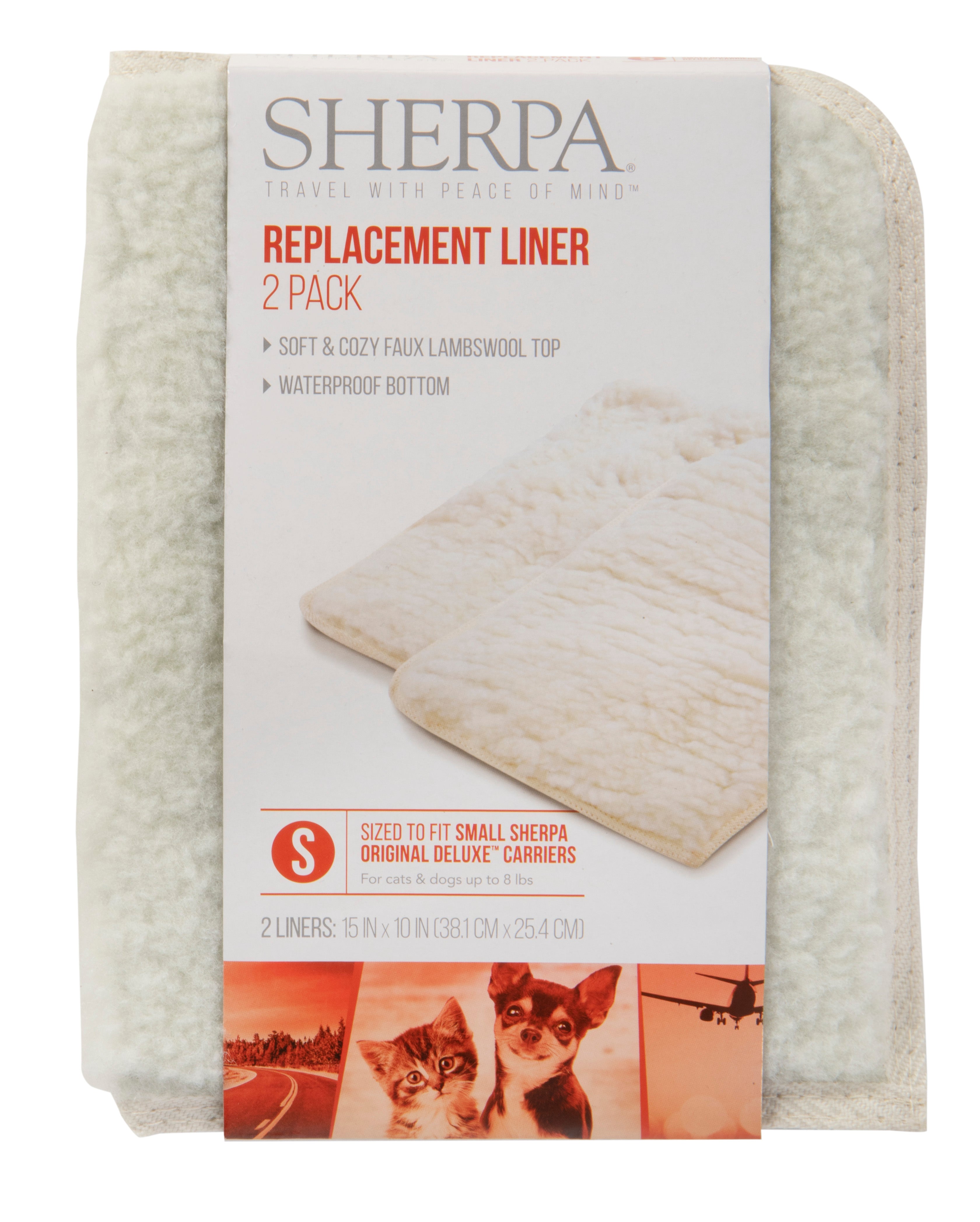
 Get the Sherpa two-pack replacement liners here
This comparison uses product formats and stated care criteria, not hands-on testing. Carrier pads are cleanup accessories for ordinary short trips. They do not make a damaged, undersized, or poorly ventilated carrier appropriate, and they do not treat distress, vomiting, diarrhea, pain, or elimination changes.
Quick Comparison
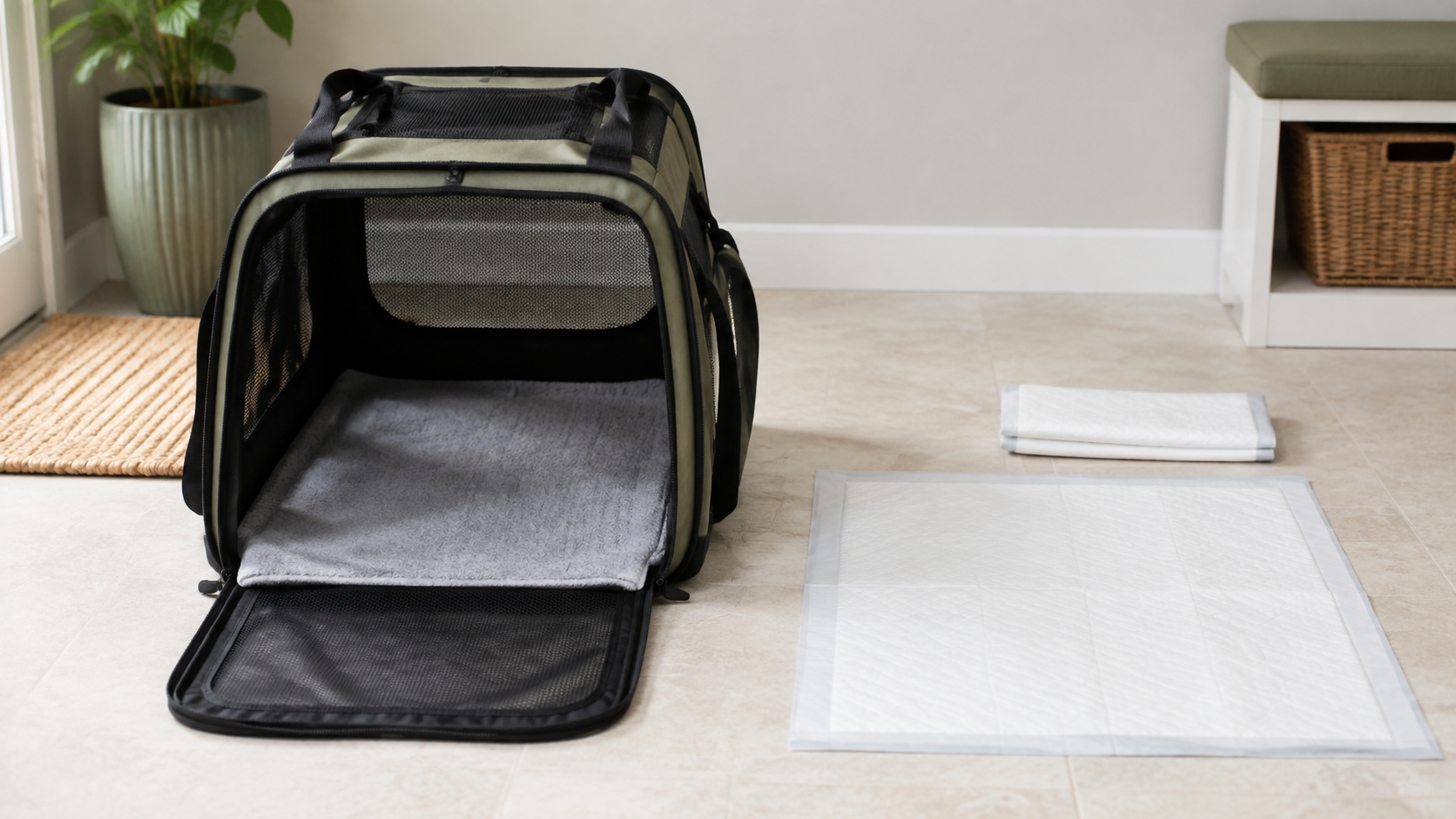
- Choose a washable liner for recurring routine trips when you can match the floor exactly, wash it promptly, dry it fully, and keep a spare if turnaround is tight.
- Choose a disposable pad for an occasional backup when the listed size fits flat, disposal is convenient, and your pet does not chew, shred, or bunch loose material.
- Use a clean towel you already own when trips are rare and a thin fold remains flat and clear of the door.
- Skip loose floor layers when they reduce usable space, slide into a closure, cover ventilation, or become a chewing target.
Washable Liner: Lower Waste, More Turnaround Work
A washable liner suits repeated use because the same fitted layer can return to the carrier after cleaning. It also creates a laundry task after a messy trip. Check whether the entire liner is washable, whether an insert must be removed, and whether the current care directions fit your washer and drying space. Store and reinstall it only when every layer is fully dry.
A two-pack can keep one clean liner ready while the other is washed, but it costs more and needs storage. Plush surfaces can collect fur, litter, and debris; seams, binding, backing, and attachments need inspection after every wash. Replace the liner when it no longer lies flat or when fabric, filling, seams, or backing are damaged.
Disposable Pad: Fast Removal, More Packed Spares and Waste
A single-use pad can make one-trip cleanup more direct: remove it without folding the mess across the carrier, then discard it according to the maker's directions. That convenience depends on carrying correctly sized spares and having a suitable disposal plan away from the pet.
Disposable pads can shift, wrinkle, or expose absorbent filling when torn. Do not assume a large pad is safer because it offers more coverage; folded or curled edges can enter a door track or invite chewing. Avoid improvised tape, clips, pins, or fasteners within reach. A pad that cannot lie flat is the wrong fit.
Measure the Carrier Floor, Not the Product Label
- Remove the current base layer and measure the clear interior floor at its narrowest usable length and width.
- Account for rounded corners, raised lips, frame bars, wheel wells, hook-and-loop tabs, and door tracks.
- Compare those measurements with the product's current dimensions; small, medium, and universal are not reliable fit standards.
- Install the layer in the empty carrier and close every door. Confirm that it stays clear of latches and ventilation and does not reduce necessary standing or turning room.
- Use a short, calm, supervised home check. Remove the layer if it curls, shifts, bunches, or attracts chewing.
Compare the Full Cleanup Routine
For a washable liner, count removal, debris cleanup, washing, drying, inspection, and storage—not only the wash cycle. For a disposable pad, count packing clean spares, isolating a used pad, wiping the carrier base, and disposal. Whichever route you choose, clean the carrier separately according to its maker's instructions and let it dry before storage.
Claims such as absorbent, waterproof, water-resistant, leakproof, or nonslip are product-specific. Read the current description and care directions rather than treating those words as guarantees. Seams, edges, fit, wear, and the amount of liquid all affect real-world cleanup.
Pet Behavior and Supervision Matter More Than Convenience
Skip fabric and disposable layers your pet tears, mouths, swallows, digs under, or pushes into a door. Inspect the setup before every trip and after any movement inside the carrier. Do not leave spare pads or used liners where a pet can reach them.
A sudden change in elimination, repeated vomiting or diarrhea, pain, breathing difficulty, severe distress, or illness-related transport needs calls for a licensed veterinarian. The right carrier-floor layer can simplify cleanup, but it is not a health solution or a substitute for transport instructions from a professional who knows the pet.
Who Should Skip Both?
Skip both when the bare removable carrier base is already easy to clean, trips are extremely rare, or no layer can fit without reducing usable space. Also stop accessorizing and inspect the carrier itself when mesh is torn, plastic is cracked, zippers or latches are unreliable, edges are sharp, or the base flexes. The pet carrier upgrade guide covers that decision.
Bottom Line
A washable carrier liner is the stronger repeat-use choice when exact fit and laundry turnaround are dependable. A disposable carrier pad is the more practical occasional backup when it fits flat, can be changed promptly, and stays intact. Measure the clear floor, preserve ventilation and closures, and choose based on the whole cleanup routine rather than an unsupported protection claim.
For reusable varieties and compatibility checks, continue to the carrier liner buying guide. For the wider trip routine, use the walking, travel, and outing gear hub or build a practical pet outing kit.