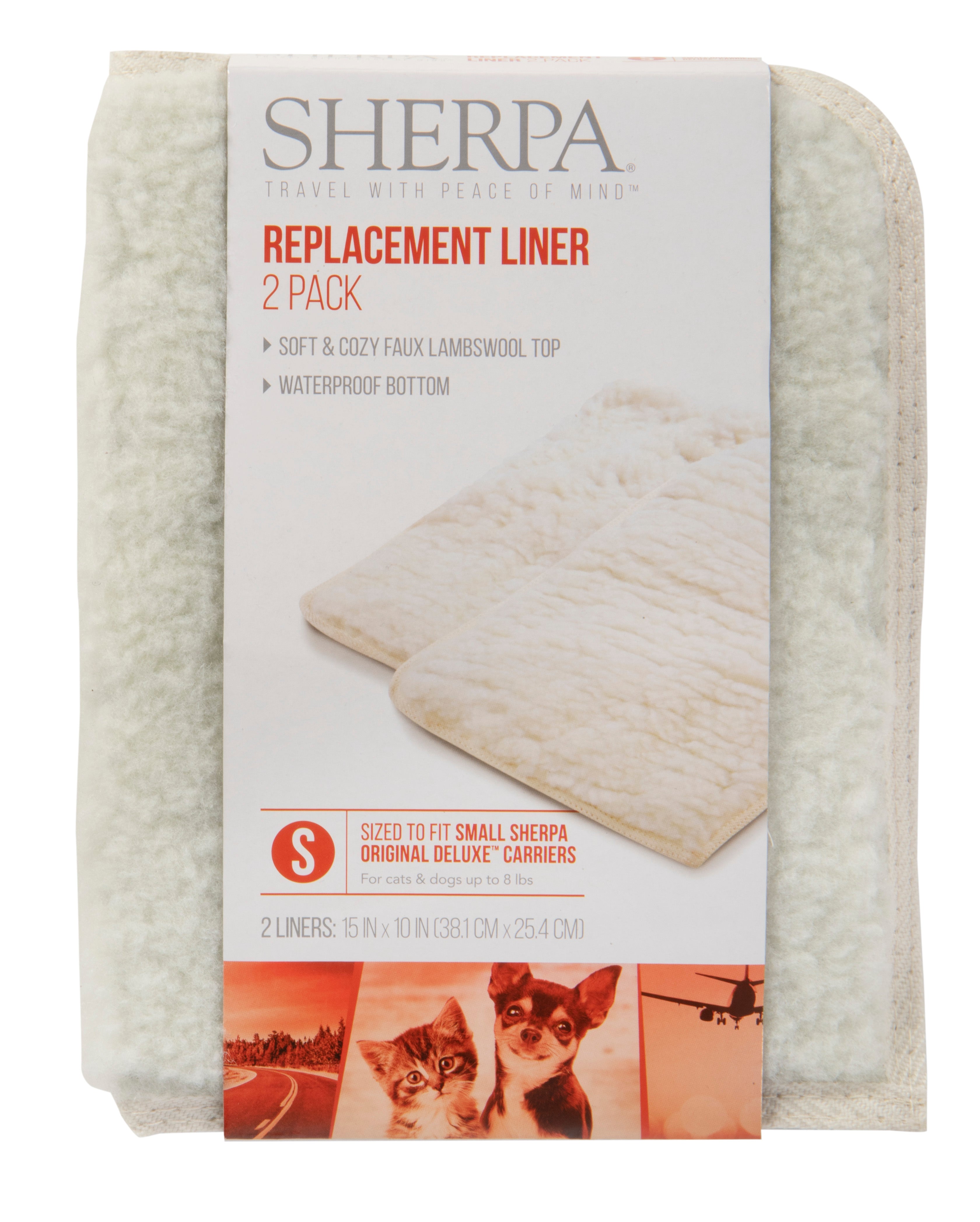
 Get the Sherpa two-pack replacement liners here
This is a purchase-decision guide, not a hands-on review or medical transport advice. A liner is a convenience accessory for ordinary short trips. It cannot correct a damaged or poorly fitted carrier, treat travel distress, or replace guidance from a licensed veterinarian.
Quick Decision: Buy, Skip, Delay, Repurpose, or Ask for Help
Buy a washable liner when the carrier is used regularly, its interior floor can be measured precisely, and washing a fitted removable layer is easier than cleaning the carrier base after routine debris or minor messes.
Skip it when the carrier is rarely used, its base is already removable and easy to clean, or any extra thickness compromises usable interior space.
Delay until you know the exact carrier model, clear floor dimensions, wash instructions, drying time, and how the liner behaves during a short supervised practice carry.
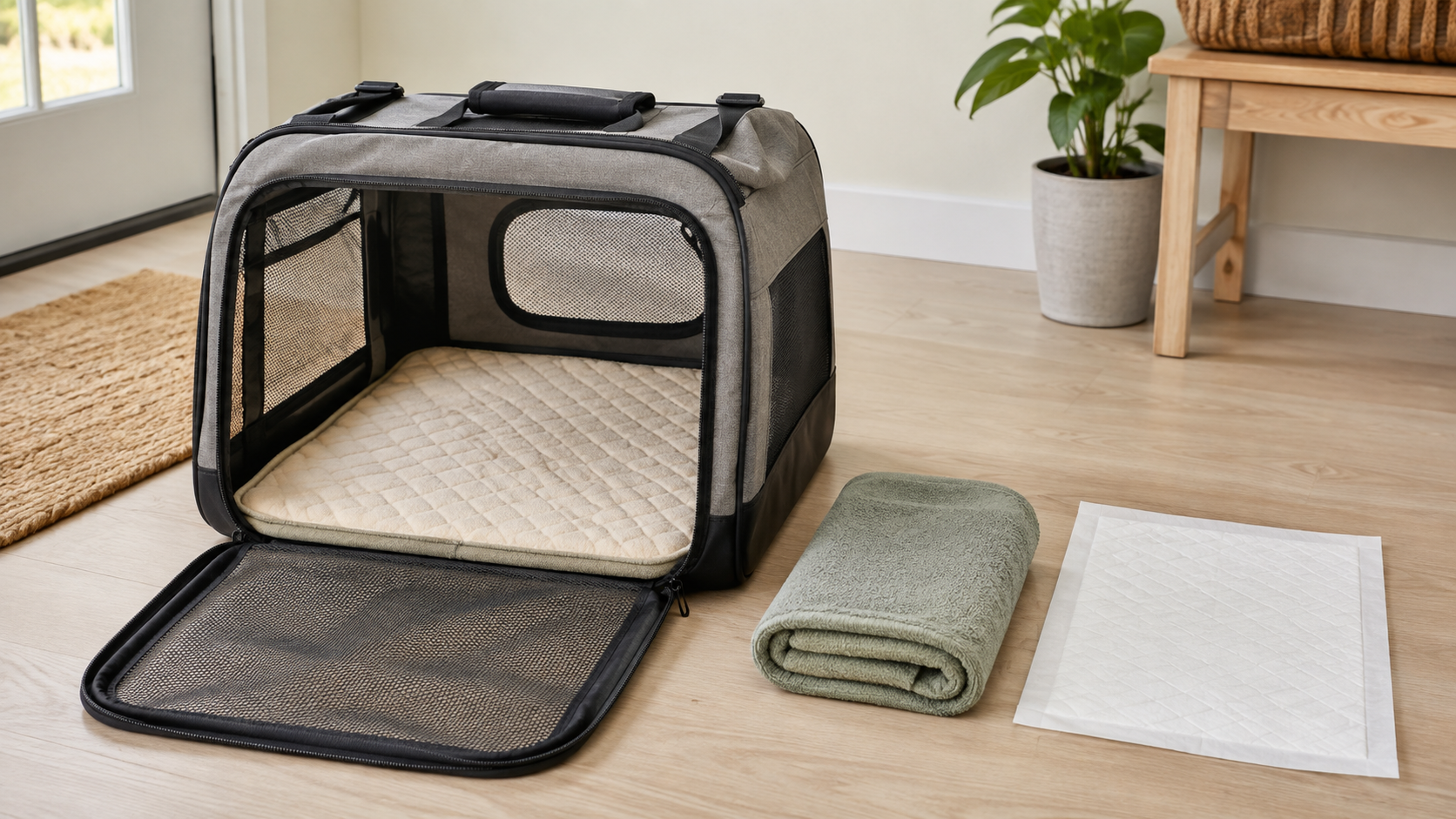
Repurpose a clean towel for occasional use when it can be folded into a thin, flat layer that does not bunch, slide into the door, or become a chewing target. If a disposable backup is the other serious option, use the washable liner versus disposable carrier pad comparison to check cleanup timing, packed spares, laundry, and waste.
Ask a veterinarian about vomiting, diarrhea, repeated elimination changes, pain, breathing difficulty, severe distress, or illness-related transport needs. A more absorbent liner is not the answer to a medical change.
The Six-Part Worth-It Test
- Trip frequency: Will you use and wash it often enough to justify dedicated storage?
- Exact fit: Does its listed length and width match the clear floor, including curved corners and hardware?
- Interior space: Can your pet still rest in a natural position without the liner blocking openings or reducing needed height?
- Laundry fit: Do the current care directions work with your washer, drying space, and turnaround between trips?
- Pet behavior: Does your pet leave fabric, binding, backing, and filling intact during supervised use?
- Real improvement: Is it easier than washing the carrier base or using a towel you already own?
If the liner fails exact fit, interior space, or chewing checks, it is not worth buying even if it is inexpensive.
Cost, Setup, and Maintenance Tradeoffs
A one-piece washable liner creates repeat laundry; a two-pack costs and stores more but can keep a clean spare available while one dries. Plush surfaces may feel substantial but can collect fur, litter, or debris. Smooth quilted surfaces may be easier to inspect, yet backing, binding, and seams still need checking after every wash.
Manufacturer care directions matter. Confirm whether the whole liner is washable, whether any insert must be removed, and how it should dry. Store it only when fully dry. Claims such as “waterproof” or “water-resistant” apply only as the maker describes them and do not eliminate inspection of seams or backing.
Measure and Test Without Guesswork
- Remove the existing base pad and measure the clear, flat interior length and width rather than the carrier's outside dimensions.
- Note rounded corners, wheel wells, frame bars, door tracks, hook-and-loop tabs, and any raised edges.
- Compare those measurements with the liner's current listed dimensions; size words such as small and medium are not universal.
- Install the liner in the empty carrier, close every door, and confirm that ventilation, latches, and the supported base remain unobstructed.
- Use a short, calm, supervised home trial. Remove the liner if it shifts, curls, gets chewed, or interferes with a natural resting position.
Who Should Skip a Dedicated Liner
Skip loose bedding when your pet tears, mouths, eats, digs under, or bunches fabric or absorbent material. Skip thick pads in a low carrier, and do not improvise ties, clips, pins, or adhesive where a pet can reach them.
A new liner also makes little sense when the carrier itself has cracked plastic, torn mesh, separating zippers, unreliable latches, loose anchors, sharp edges, or a flexing base. Use the carrier upgrade decision guide to inspect the full carrier before accessorizing it.
When a Towel or Disposable Pad Makes More Sense
A towel can be the better first move for an infrequent trip because it is already washable and easy to replace. Keep the layer thin, test whether it slides, and stop using it if your pet pulls at the loops or edges.
A correctly sized disposable absorbent pad may simplify one-trip cleanup, but it creates waste and can slide or bunch. It is unsuitable for a pet that shreds or swallows loose material. Keep it entirely inside the carrier and clear of doors, ventilation, and reachable fasteners.
Red Flags Before Buying
- No exact dimensions, compatible carrier models, material details, or complete care directions.
- A thick profile that would reduce usable height or interfere with a top or front door.
- Loose filling, exposed foam, unfinished seams, reachable zippers, or attachment pieces that invite chewing.
- Universal-fit language without a measured shape or dimensions.
- Claims that the liner prevents illness, stops distress, guarantees safe travel, or replaces veterinary planning.
Bottom Line
A washable carrier liner is worth it when recurring use, exact fit, straightforward laundry, and a pet that leaves the material intact make it more practical than cleaning the bare carrier or repurposing a towel. It remains a convenience item, not a health or transport solution.
Measure first, preserve doors and ventilation, test the empty setup, and follow both makers' instructions. For the broader outing setup, use the walking, travel, and outing gear hub and the grab-and-go pet outing kit.