This guide compares stated features and practical liner formats; it is not based on hands-on testing. If you have not decided whether the category earns its space, start with the washable carrier liner worth-it guide. If you are choosing between repeated laundry and single-use cleanup, compare a washable liner with a disposable carrier pad. A carrier liner is a cleanup and comfort accessory. It does not treat travel distress, make an ill pet safe to transport without guidance, or turn an unsuitable carrier into a safe one. Follow the carrier and liner makers' instructions.
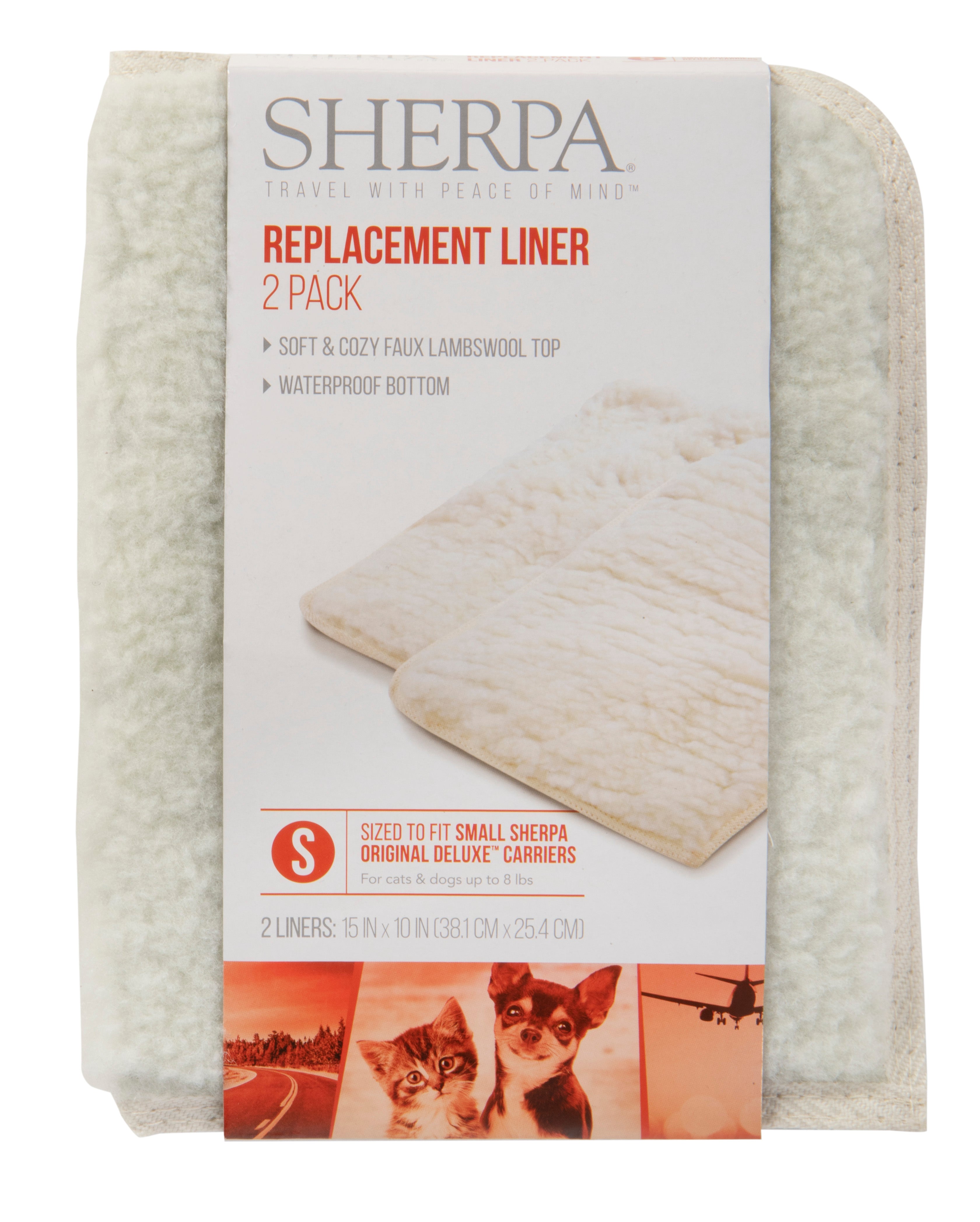
Best for a Compatible Sherpa Carrier: Sherpa Replacement Liners
A brand-matched replacement liner removes much of the guesswork when its listed dimensions match the exact carrier model. The Sherpa two-pack is useful because the spare can keep the carrier ready while one liner is in the laundry. Its low-profile format should interfere less with usable height than a thick bed, although you still need to check the assembled fit.
Compatibility is the main tradeoff. “Small,” “medium,” and “large” are not universal measurements, and a liner made for one carrier family may curl, slide, or leave gaps in another. Check the current product size against the clear, flat interior floor. Do not rely only on your pet's weight or the size word in the listing.
Best Flexible Format for Other Carriers: A Thin Washable Mat
A simple rectangular mat can work in hard- or soft-sided carriers when an exact replacement liner is unavailable. Look for a flat profile, finished edges, a nonslip or backed underside described by the maker, and washing instructions that fit your routine. A removable cover adds seams and a closure to inspect; a one-piece mat can be simpler for frequent laundry.
Measure around interior wheel wells, frame bars, door tracks, and curved corners. The mat should not cover ventilation, stop a door from latching, or rise so high that your pet loses comfortable standing and turning room. If it shifts during a short practice carry, choose a better fit rather than improvising straps or fasteners that could become a snag or chewing hazard.
Best One-Trip Backup: A Disposable Absorbent Pad
A correctly sized disposable pad can simplify cleanup after an occasional accident, but it is not a good default for a pet that shreds, mouths, or bunches loose material. Use only a product the maker labels for the intended purpose, keep it fully inside the carrier, and make sure it cannot obstruct a latch or opening.
Disposable pads create more waste and can slide more easily than fitted washable liners. They also provide little structure or cushioning. For recurring accidents, sudden elimination changes, vomiting, diarrhea, pain, or illness, the next step is veterinary guidance—not a more absorbent carrier setup.
Selection Criteria That Matter
- Interior floor fit: Measure usable length and width at the base, including rounded corners and hardware. The liner should lie flat.
- Usable carrier height: Thick bedding reduces standing and turning space. Recheck your pet's fit with the liner installed.
- Backing: Treat “waterproof” or “water-resistant” as manufacturer-specific claims, not a guarantee. Inspect backing and seams after every wash.
- Attachment: Prefer a compatible built-in attachment when specified by the carrier maker. Do not add loose clips, ties, pins, or adhesive where a pet can reach them.
- Washing and drying: Follow the current care label. A second liner is useful only if both can be dried fully before storage or reuse.
- Surface texture: Plush fabric may collect more litter, fur, or debris; smooth quilted fabric may be easier to inspect but can feel less grippy.
- Edges and closures: Check binding, seams, zippers, and backing for fraying, exposed filling, or chew damage before every trip.
- Pet behavior: Remove loose bedding if your pet chews or eats fabric, foam, absorbent filling, or backing material.
A Quick Comparison Framework
- Choose an exact replacement liner when compatibility is documented for your carrier model.
- Choose a thin washable mat when you can match dimensions precisely and want a reusable option across routine trips.
- Choose a two-pack when the carrier must remain ready while laundry dries.
- Choose a disposable pad only as a supervised, correctly fitted backup for a pet that leaves it intact.
- Choose no loose liner when it creates bunching, chewing, snagging, overheating, or door-clearance problems.
Who Should Skip a Carrier Liner
Skip loose or padded liners if your pet tears, eats, or burrows under them, or if any liner reduces the room needed to stand, turn, and settle. Also skip a thick liner when it blocks a top door, narrows ventilation, hides damage, or makes the carrier base unstable.
A liner is not the answer to severe fear, escape attempts, aggression, motion sickness, pain, breathing difficulty, or repeated accidents. Ask a licensed veterinarian about illness, injury, medication, or sudden travel-related changes. A qualified trainer or behavior professional can help with persistent carrier distress, but the plan should be tailored to the individual pet.
Set Up and Clean the Liner Without Guesswork
Test the empty carrier first: install the liner, close every door, lift the carrier, and confirm the base stays flat. Then allow a calm, supervised inspection at home. Never force a pet into a carrier for a fit test. After travel, remove debris, follow the liner's washing instructions, clean the carrier separately as its maker directs, and dry both completely before reassembly.
For the broader transport decision, use the pet carrier buying guide. If you are deciding between shell styles, compare hard-sided and soft-sided carriers. Keep trip cleanup supplies separate with the short-trip pet cleanup kit.
The Bottom Line
The Sherpa replacement liner two-pack is the strongest starting comparison for an owner with a compatible Sherpa carrier because it offers size-specific replacement options and a spare for the laundry cycle. For another carrier, a precisely measured thin washable mat is usually more practical than a thick generic bed.
Measure the actual carrier floor, preserve usable height and ventilation, follow the care label, and inspect the full liner after every wash. The right liner makes routine cleanup easier without creating a new fit, chewing, or transport problem.