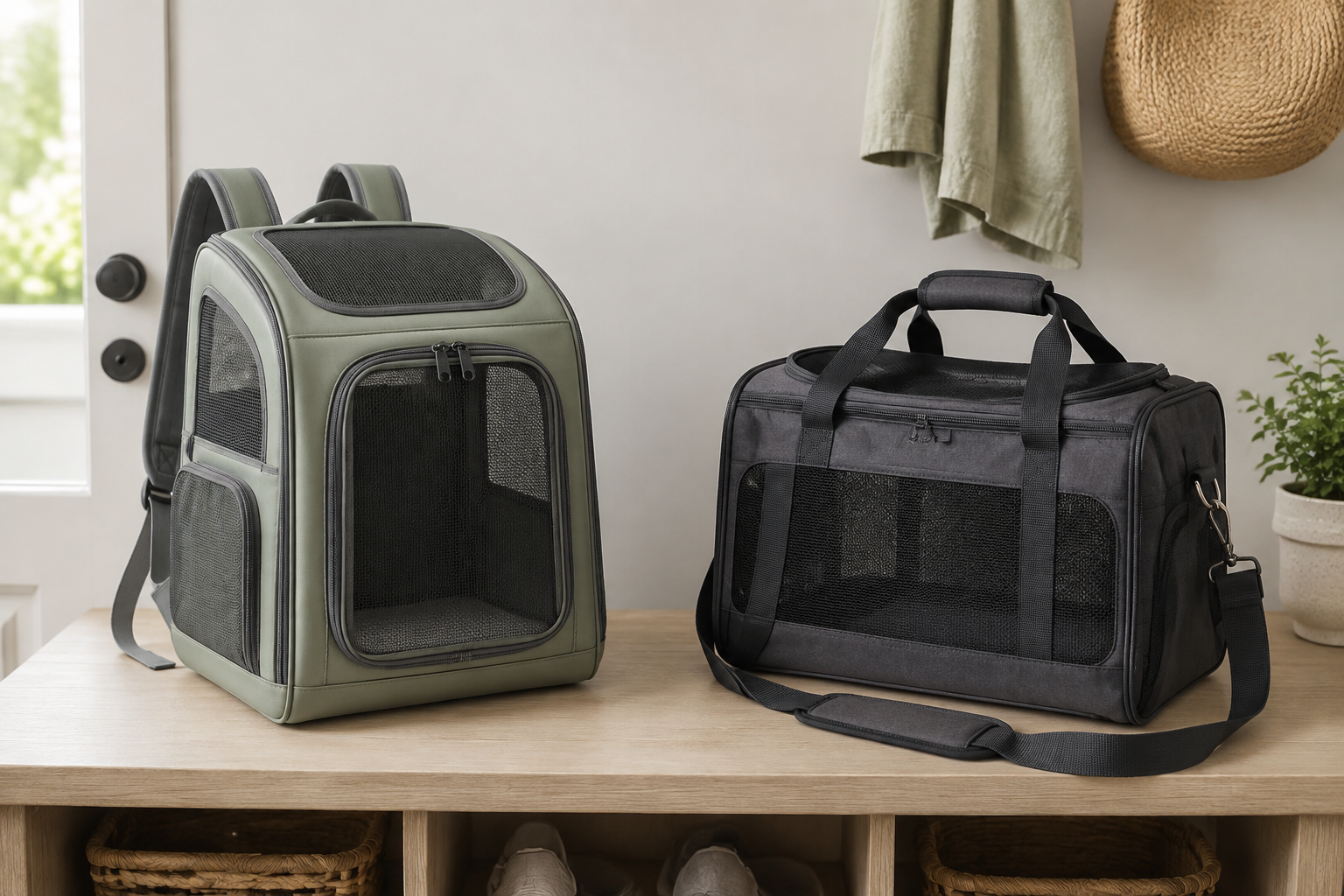
Both are transport and containment tools, not guarantees of comfort, escape prevention, or safe use in every setting. Do not infer airline acceptance, vehicle crash protection, or hot-weather suitability from a carrier's shape or marketing label. Follow the exact maker instructions and any current destination or transit rules.
Quick comparison
- Load position: a backpack centers the load behind you; a shoulder carrier hangs at one side and may need a hand for stability.
- Pet access: shoulder carriers often keep an opening within easy reach; backpacks usually need to be removed and placed securely before opening.
- Wearer fit: two adjustable backpack straps can spread weight, while a shoulder strap makes short lifts simple but may create an uneven load.
- Set-down routine: a rectangular shoulder carrier is often straightforward to place beside a chair; a backpack needs a stable base and enough clearance to stand as intended.
- Storage: either may fold, but folding only helps if the walls and base return to the intended structure before use.
A convertible model is a third variety, not an automatic compromise winner. Check that unused straps tuck away from chewing and snagging, that every approved carrying position keeps the base supported, and that added hardware does not make the empty carrier too heavy for your route.
Measure the pet and the usable interior
Use the manufacturer's measuring method and compare your pet with the carrier's interior length, width, and height. Exterior dimensions can include pockets, padding, curved roofs, and frames that do not become pet space. A listed weight limit matters for seams, zippers, base, and straps, but it does not prove that the pet has enough room.
Account for the liner and base insert. The pet should not have to remain tightly compressed or forced into a posture that does not fit the maker's directions. If fit is uncertain, use a familiar appropriately sized conventional carrier and ask your veterinarian about transport needs related to pain, breathing, mobility, recovery, or marked distress.
Choose for the route, not the photo
A backpack can be practical for apartment stairs, building doors, and short walking connections because both hands remain available. Before buying, add the empty carrier weight to your pet's weight and consider whether you can put it on, take it off, and set it down without tilting or jolting the carrier. Check that straps adjust to your torso and that loose ends cannot be chewed.
A shoulder carrier can suit a short walk from car to appointment, frequent set-downs, or an owner who wants the carrier within side view. Test whether the strap length keeps the base reasonably level and whether handles allow a controlled two-handed lift. A long shoulder strap can swing, so use a steadying hand and keep the carrier away from doors, railings, and crowded legs.
Ventilation, structure, and access
Compare where mesh panels sit when the carrier is on the body, beside you, and placed down. Clothing, walls, seats, and bags should not block them. Mesh does not make warm conditions safe, and neither format should be left unattended. Monitor the pet and use ordinary weather judgment rather than relying on a fan opening or a marketing phrase.
Inspect the base, seams, zipper tracks, clips, handles, strap anchors, and mesh before every trip. Open the carrier only after setting it on a stable surface in a secure area. Follow the maker's instructions for any internal tether; it is not automatically suitable for every pet and must not create an entanglement or choking hazard.
Cleaning and storage
Removable liners and base covers simplify routine cleanup only when they fit back correctly. Follow the label for hand or machine washing, clean non-removable surfaces as directed, and allow every part to dry fully before closing or folding the carrier. Replace a carrier with damaged mesh, split seams, unreliable closures, deformed support, or worn strap attachments rather than improvising a repair for an occupied trip.
Who should skip each format?
Skip a backpack if the pet does not fit its measured interior, the upright shape is unsuitable, the combined load is hard for you to manage, or you cannot remove and set it down steadily. Skip a shoulder carrier if one-sided carrying is uncomfortable, the bag swings on your route, or the usable base and interior are too narrow.
Skip both when the pet exceeds the stated limit, damages mesh or closures, cannot be transported without marked distress, or needs a different setup because of a medical or mobility concern. A licensed veterinarian can help plan necessary travel when health or distress makes routine transport difficult.
The bottom line
Choose a structured backpack when two free hands and balanced straps make the measured short route easier. Choose a shoulder carrier when quick side access, controlled short lifts, and frequent set-downs matter more. Pet fit, stable support, closure condition, ventilation clearance, owner handling, and cleaning should decide the purchase—not the label alone.