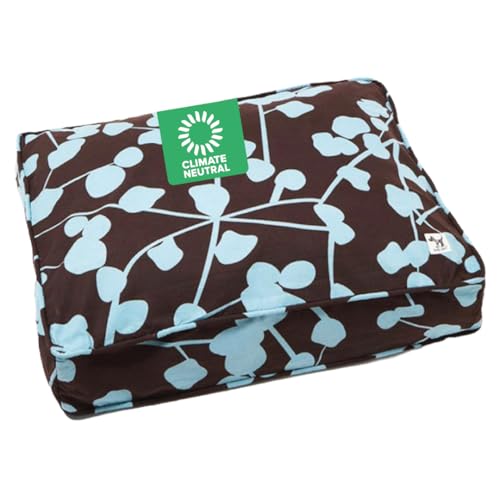
A replacement cover is a maintenance item, not a health solution. If your pet suddenly avoids the bed, seems painful, struggles to rise, develops skin irritation, or has new toileting changes, contact a licensed veterinarian rather than trying to solve the change with fabric or padding.
Best for an Exact Insert: A Brand-Specific Replacement Cover
Start with the bed maker when the label or order history identifies the model and size. A genuine replacement cover is more likely to place the zipper, bolster channels, and corner seams where the original insert expects them. Match the model number as well as the marketed size name; “large” is not a dependable measurement across brands.
This route is less useful when the original cover was already difficult to remove, took too long to dry, or used a fabric your pet snagged. Exact compatibility is valuable only if the original design worked for your household.
Best for an Odd Size: A Measured Duvet-Style Cover
A simple rectangular duvet can work when the insert has no molded bolsters or unusual cutouts. Measure the insert without the old cover: length, width, and depth at the thickest points. Then compare those figures with the seller’s finished cover dimensions instead of relying on a weight range or breed example.
The cover should be close enough to avoid bunching but not so tight that the zipper bows or the foam curls. Rounded, gusseted, and wedge-shaped inserts need a closer shape match than loose fiberfill.
Best for Mess Protection: A Liner-and-Cover System
For drool, damp paws, and routine spills, a separate protective liner beneath a washable outer cover can reduce how often the insert needs attention. Treat “water-resistant” and “waterproof” as different claims, and verify what the manufacturer says can be washed or dried.
A liner can make a bed warmer or noisier and can trap moisture if put back before every layer is dry. It does not make damaged foam sanitary or turn a bed into a solution for repeated accidents.
Best for Frequent Laundry: A Spare Matching Cover
A second cover is useful when the current one fits well but needs air drying. Buying the same compatible cover removes fit guesswork and lets the bed stay available while one cover is in the wash. Label the care instructions somewhere easy to find so different household members do not accidentally use too much heat.
Before buying a spare, inspect the insert. Replacement is the better choice when foam is crumbling, permanently compressed, badly soiled, moldy, or no longer supporting an even resting surface.
Selection Criteria That Matter
- Insert measurements: Record length, width, depth, and corner shape with the old cover removed.
- Compatibility: Match a brand-specific model number when possible; otherwise use finished cover dimensions.
- Closure: A wide zipper makes removal easier. Check whether the pull is covered and inaccessible during normal use.
- Fabric: Compare surface texture, seam strength, hair release, snag risk, and how the fabric feels after washing.
- Care instructions: Confirm wash temperature, detergent limits, drying method, and whether shrinkage is mentioned.
- Liner fit: A protective liner should not bunch, crackle excessively, or prevent the cover from closing naturally.
- Drying time: Choose a spare cover or faster-drying fabric if the bed needs to return to use the same day.
- Chewing and digging: No fabric cover is chew-proof. Remove torn covers and loose zipper pieces promptly.
Quick Comparison Framework
Write down the insert measurements, closure location, cover care method, and washer capacity before opening product listings. Shortlist only covers whose published dimensions accommodate the insert’s shape. Next, compare zipper access, fabric, liner compatibility, and drying instructions.
If two covers fit, prefer the one whose care instructions match your normal laundry routine. A slightly cheaper cover is poor value if it requires hand washing or air-drying space you do not have.
Who Should Skip a Replacement Cover
Replace the whole bed if the insert is breaking down, stays lumpy after reshaping, has contamination you cannot clean according to its instructions, or no longer gives your pet enough room to rest normally. Also skip soft covers for pets that repeatedly tear fabric or swallow filling; prevent access to damaged bedding and seek qualified guidance for sudden destructive behavior.
Do not add improvised foam, loose stuffing, or a thick liner when a veterinarian has recommended a particular resting surface. In that situation, confirm any change with the clinician who knows your pet.
Related Comfort Guides
If the insert also needs replacing, compare washable dog beds for small apartments or use the broader pet-bed measuring and placement guide. Dogs that visibly lean against an edge may be better served by a purpose-built option from the washable bolster bed guide.
The Bottom Line
Choose a brand-specific replacement when the original design worked, a measured duvet for a simple rectangular insert, and a separate liner only when its heat, noise, and care tradeoffs fit the household. Measure the bare insert and read the full care label before buying.
A washable cover is worthwhile when it preserves a clean, functional insert and makes laundry easier. Once the insert is damaged, compressed, or unsanitary, replacing the whole bed is the calmer choice.