Best Washable Pet Stroller Liners for Routine Messes
A useful stroller liner is a removable cleanup layer that fits the cabin without bunching, narrowing usable space, or covering the stroller's intended restraint attachment points. Start with the stroller maker's replacement liner when one exists; otherwise measure the cabin and every required opening before comparing a fitted liner, thin backed pad, or cut-to-fit washable layer.
As an Amazon Associate, The Good Petly earns from qualifying purchases.
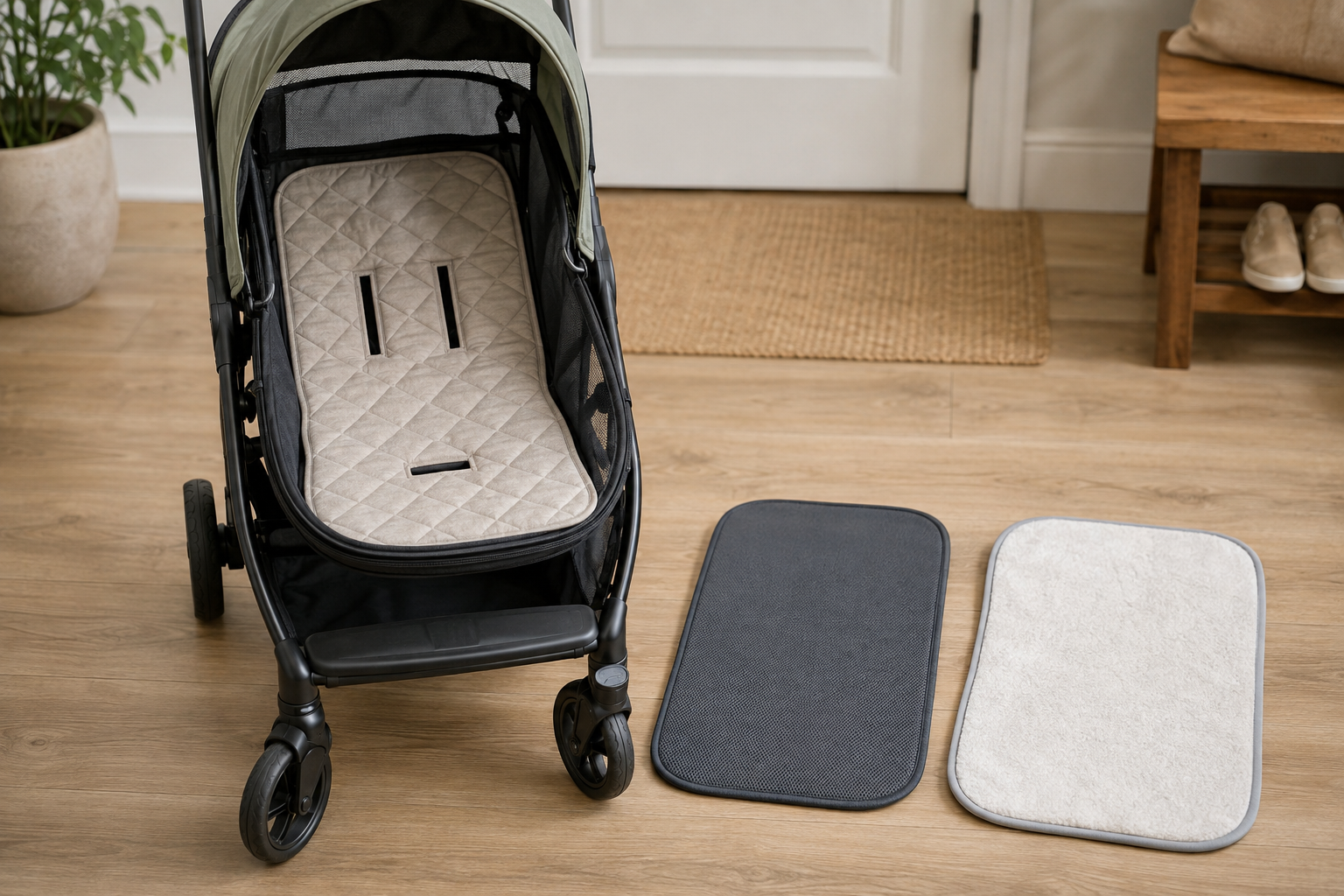
Best starting variety when compatibility is clear
Compare a fitted washable liner first
A liner shaped for the stroller cabin is the simplest starting point when its dimensions, attachment method, and slot layout match the stroller. Confirm compatibility from current maker information; a similar outline is not enough if openings or fasteners land in the wrong place.
Three liner varieties to compare
These are defined product varieties, not named winners. Current listings can vary, so compare their documented dimensions and care directions with the stroller manual and your measured cabin.
Fitted quilted linersCompare when the shape, fasteners, and opening layout are documented for your stroller.
Category routeThin backed washable padsCompare for simple floor coverage when the measured pad stays flat and leaves every required attachment point usable.
Category routeCut-to-fit absorbent layersCompare only when the maker permits trimming and the finished layer will not fray, curl, shift, or hide cabin hardware.
Measure the cabin before shopping
Remove the existing pad only if the stroller instructions allow it, then measure the usable floor length and width at the narrowest points. Note curves, seams, raised edges, fold joints, entry zippers, ventilation panels, and every anchor or opening the stroller is designed to keep accessible. Measure the original pad too; it can be a better template than the cabin outline.
Check available height after adding a liner. A thick layer can reduce usable cabin space or interfere with the canopy and entry even when its footprint fits. Keep the stroller within its stated limits and follow its instructions for internal attachments rather than cutting new holes or improvising restraint hardware.
How the three formats differ
Fitted quilted liner: best when the match is documented
This format can stay tidy because its outline, slots, and attachments are designed around a particular cabin shape. The tradeoff is compatibility: a model name, dimensions, fastener positions, and slot layout should all match. Return or skip a liner that pulls against the cabin, lifts at an edge, or needs an opening altered.
Thin backed pad: best for ordinary floor mess
A low-profile pad can simplify fur, dry dirt, and small spill cleanup without adding much thickness. Compare the underside with the stroller floor and care instructions; “non-slip” wording is not a guarantee. Test the empty stroller on level ground and reject any pad that slides, wrinkles, or migrates toward moving or closing parts.
Cut-to-fit layer: best only for a difficult footprint
A trimmable washable layer may suit an unusual cabin, but it asks more of the owner. Confirm that trimming is permitted, mark openings precisely, and keep finished edges intact. Skip it if cutting exposes absorbent fill, weakens seams, creates loose fibers, or makes attachment points harder to inspect.
Selection criteria that matter
- Compatibility: Prefer the stroller maker's part or a liner with an explicit model and dimension match.
- Opening layout: Keep intended restraint points, fold hardware, zippers, drains, vents, and access panels clear.
- Attachment: Check snaps, hook-and-loop tabs, sleeves, or backing against the stroller instructions. Avoid loose ties and reachable loops.
- Thickness: Preserve enough usable cabin space for the pet's natural positions and the canopy to close as designed.
- Backing: Compare grip with the actual cabin material and inspect it for peeling, cracks, or residue.
- Cleaning: Follow the label for water temperature, detergent, machine settings, and whether the liner can be tumble-dried.
- Drying: Deep quilting and absorbent layers can need more drying time; a second liner is useful only if it also fits correctly.
- Edge behavior: Reject curling, bunching, shifting, loose threads, exposed fill, or damage near an opening.
Match the liner to the mess
For dry fur and grit, a thin easy-to-shake or washable pad may be enough. For damp paws and small water drips, compare documented absorbency with drying time and check beneath the liner after every outing. A liner cannot make the cabin waterproof, protect stroller hardware from saturation, or replace cleaning the stroller itself.
For repeated urine, stool, vomit, blood, or unexplained accidents, cleanup gear is not the whole answer. Follow the stroller and textile cleaning instructions, and contact a licensed veterinarian about new, persistent, painful, or otherwise concerning changes rather than relying on a more absorbent liner.
Who should skip an extra liner?
Skip one when the stroller's original removable pad already washes easily, the maker advises against extra layers, the cabin is too shallow, or no option preserves every intended opening and attachment. A washable towel is not automatically safer: it can slide, bunch, hang over an edge, or become a chewable loose layer.
Also skip a liner the pet scratches, chews, pulls up, or tries to burrow beneath. Never leave a pet unattended in a stroller, and retire damaged textiles with loose thread, exposed fill, failing backing, or hardware the pet can reach.
A practical fit-and-laundry check
- Read the stroller manual and look for an approved replacement liner first.
- Measure the cabin, original pad, openings, attachment points, and remaining height.
- Compare those measurements with current listing details and care instructions.
- Install the clean liner flat in the empty stroller; confirm all closures and intended attachments remain usable.
- After a short supervised introduction, inspect for movement, wrinkles, chewing, dampness, or edge lift.
- Wash as directed, dry completely, and repeat the fit check before reuse.
Continue the stroller setup
If the stroller itself no longer fits the pet, route, or storage space, use our short-errand pet stroller comparison rather than trying to correct the cabin with padding. Pack wipes, a towel, waste bags, and a dry bag with the pet outing cleanup kit, keeping every item away from wheels, brakes, folding joints, and cabin ventilation.
The practical answer
Start with a fitted washable liner when its compatibility and slot layout are clear. Choose a thin backed pad for modest floor coverage when it stays flat, or consider a maker-approved cut-to-fit layer only when its edges and openings can remain secure. The best liner is the one that fits the measured cabin, preserves the stroller's intended operation, survives your realistic laundry routine, and gets inspected every time it is reinstalled.