An inner liner is a convenience layer, not a health solution and not a way to keep using contaminated or deteriorating foam. If a dog has new accidents, skin irritation, pain, trouble rising, or a sudden change in sleep habits, contact a veterinarian rather than relying on a bedding change.
Quick comparison framework
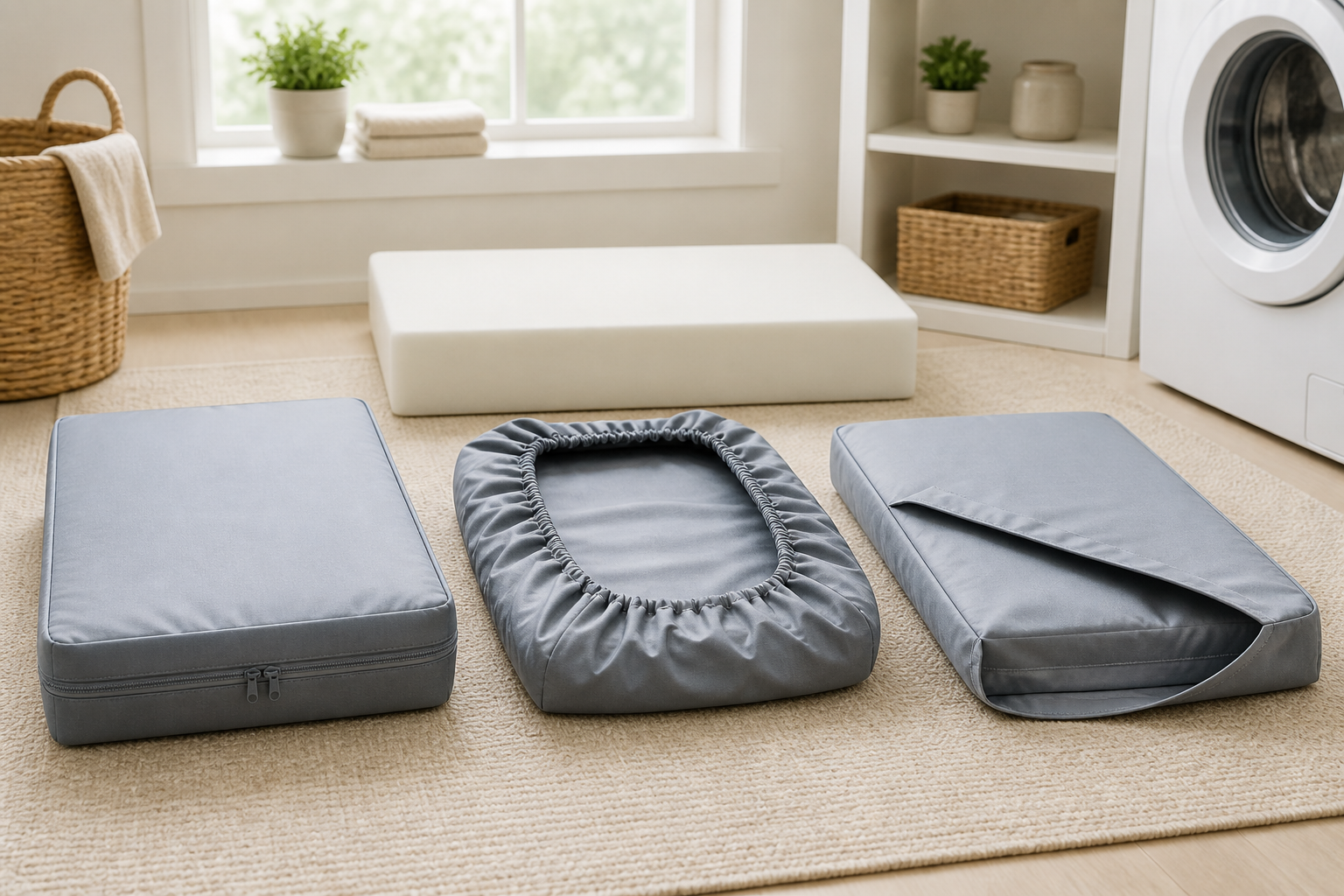
- Zippered encasement: Offers the most complete coverage, but fit, zipper protection, seam construction, noise, and drying time deserve close attention.
- Fitted elastic liner: Is quick to remove and may suit a simple cushion, but the open underside provides less complete coverage.
- Barrier sleeve: Gives a wide opening for flexible inserts, though a flap can shift or leave part of the insert less protected.
- Model-specific protector: Can be the clearest fit when the dog bed maker sells a liner for the exact model and size.
- No liner yet: Pause if the insert is damp, odorous, crumbling, permanently stained, or impossible to clean according to its maker.
Measure the bare insert before comparing liners
Remove the outer cover and measure length, width, and depth at the thickest points. Note whether the corners are square or rounded and whether the insert is one slab, several foam pieces, loose fiberfill, or a shaped bolster assembly. A marketed size such as “large” is not a dependable cross-brand measurement.
Compare your figures with the liner's finished dimensions and stated tolerance. A liner that is too tight may curl foam, strain seams, or make the outer cover difficult to close. One that is too loose can bunch beneath the dog. Model-specific inserts with channels, bolsters, or cutouts usually need a maker-compatible liner rather than a generic rectangle.
Selection criteria that matter
- Documented resistance: Read the maker's exact claim. “Water-resistant,” “waterproof fabric,” and “waterproof construction” do not necessarily describe the seams and closure in the same way.
- Closure coverage: Inspect whether a zipper, elastic edge, or flap leaves part of the insert exposed and whether the closure stays beneath the outer cover.
- Seams: Look for clear construction and care information. Do not assume stitched seams resist liquid simply because the main fabric does.
- Noise and feel: Coated barriers can sound crinkly or change how warm a bed feels. A dog that avoids unfamiliar textures may prefer a quieter woven surface.
- Wash care: Confirm whether the entire liner can be machine washed, which cycle and detergent limits apply, and whether it must air dry.
- Drying: Every layer must be fully dry before reassembly. A spare liner can be useful when drying takes longer than the outer cover.
- Zipper access: Choose a closure the insert can pass through without folding rigid foam sharply. Keep pulls and damaged hardware inaccessible to chewing.
- Inspection: Regularly check coating, seams, elastic, and closures. Replace a liner that cracks, peels, tears, or no longer closes normally.
Waterproof claims need careful reading
A category search can include everything from fully enclosed protectors to fitted pads made with a resistant middle layer. Check whether the current listing describes the fabric alone or the assembled liner, and whether it addresses seams, zippers, and wash durability. This guide does not independently verify those performance claims.
A liner may slow an everyday spill from reaching the insert, but it still needs prompt removal and cleaning according to its label. It should not be used to leave moisture trapped beneath an outer cover. If repeated soiling is the issue, address the cause with a veterinarian or other qualified professional rather than treating the liner as the fix.
Inner liner versus washable outer cover
The inner liner protects the foam or fiber insert; the decorative outer cover provides the normal sleep surface and handles most hair and surface dirt. They solve different jobs. Our replacement dog bed cover guide focuses on exterior fabric, zipper layout, hair release, and routine laundering.
Use both layers only when the insert, liner, and outer cover fit without compression or bunching. Never put a dog directly on a slick barrier if the maker intends it to sit beneath a cover.
Who should skip a dog bed insert liner
Skip the purchase when the insert is already crumbling, moldy, persistently damp, badly contaminated, permanently compressed, or no longer lies flat. A new liner does not restore damaged foam or make an unclean insert suitable for reuse. Replacing the bed is the more practical choice.
Also skip generic liners for shaped bolster systems without verified dimensions, for dogs that chew or swallow bedding materials, or when a veterinarian has specified a particular resting surface. If the current bed is too small or poorly placed, use the pet bed fit and placement guide before adding another layer.
The bottom line
Choose by exact insert fit and documented construction, not the word “waterproof” alone. Zippered encasements provide the broadest coverage, fitted elastic liners trade coverage for quick removal, and flap sleeves can simplify handling flexible inserts. Whichever variety fits, verify its current care label, dry every layer fully, and retire damaged bedding instead of trying to seal it inside a new liner.