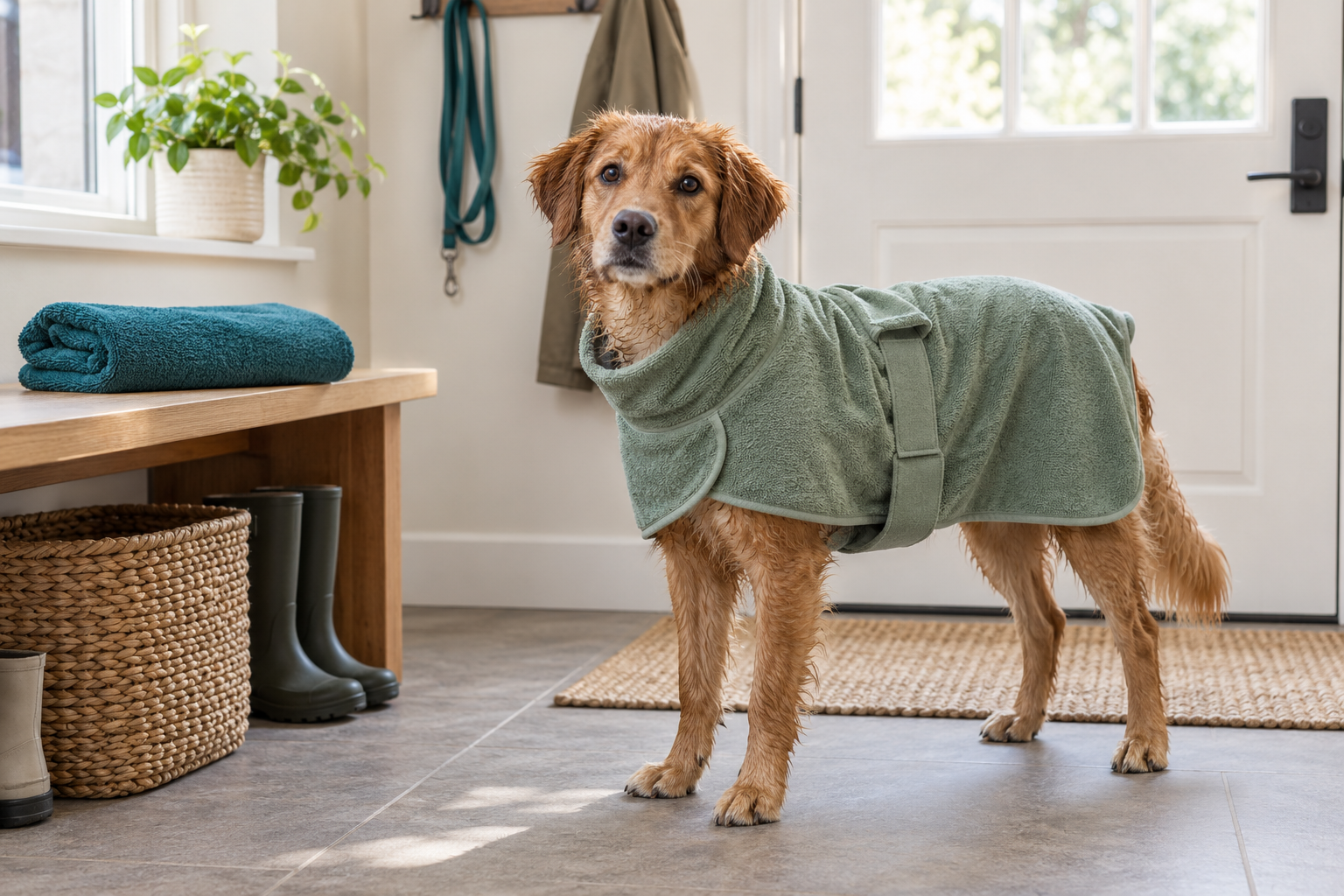
A towel robe is a supervised convenience item, not a health product or a substitute for checking paws, skin, and coat after an outing. It cannot make unsafe weather safe or address shivering, pain, skin irritation, wounds, unusual odor, or a sudden coat change. Contact a veterinarian when those concerns appear.
Quick Decision: Buy, Use Towels, Improve the Setup, Delay, or Skip
- Buy a robe when broadly damp coat cleanup happens several times most weeks, the measured fit is clear, the dog accepts clothing, and you have room to wash and fully dry it.
- Use ordinary towels when cleanup is occasional or mostly limited to paws, belly, legs, and small coat areas.
- Improve the doorway setup when the real friction is finding a towel, containing drips, or hanging damp gear.
- Delay until you can measure the dog using the maker's method and confirm care directions, closure placement, and return terms.
- Skip when the dog resists clothing, chews fabric or fasteners, overheats easily, or already dries comfortably with one towel.
The Seven-Part Worth-It Test
- Frequency: Does full-body dampness happen often enough to justify another item?
- Coverage need: Is the back and torso the problem after you towel paws and lower legs?
- Dog tolerance: Does the dog remain comfortable and move normally in a loose wearable layer?
- Measured fit: Can you match the maker's current neck, chest, girth, and back measurement points?
- Simple fastening: Can the robe go on and come off without crowding the neck, rubbing the legs, or leaving tempting loose straps?
- Laundry capacity: Can you wash, rinse, and completely dry the robe between likely uses?
- Storage: Is there a ventilated place for it that does not mix damp fabric with dry walking gear?
Fit and Setup Matter More Than the Size Name
Do not choose only by breed label or body weight. Follow the current maker's diagram and compare each requested measurement with the actual size chart. Check whether back length is measured from the neck, shoulders, or another point, and whether chest and girth refer to the same location. If the dog falls between sizes, use the maker's guidance rather than assuming tighter or looser is better.
Once fitted, the dog should be able to stand, turn, and walk naturally. Watch the neck opening, front-leg clearance, belly closure, tail area, and any fabric that twists when the dog moves. Remove the robe if movement changes, the dog paws or bites at it, fasteners shift, or the fabric becomes saturated.
When a Towel or Doorway Station Is Better
A large towel gives direct control and can target muddy paws, the underside, and small wet areas without fitting a garment. It is easier to share across differently sized dogs and simpler to remove immediately. For many homes, two rotating towels are more flexible than one wearable robe. Use the microfiber towel versus towel robe comparison when the choice has narrowed to these two formats.
If towels are always in the wrong room or end up on the floor, fix the workflow first. Keep a reachable dry towel, a washable mat, and a ventilated hanging point near the entrance without placing cleaners or unsafe supplies within pet reach. The pet doorway cleanup station guide covers that broader routine.
Cost, Laundry, and Maintenance Tradeoffs
The purchase price is only part of the cost. A robe occupies more washer and drying space than a small paw towel, and a heavily used household may need a backup while the first one dries. Thick fabric can feel substantial but may be bulky to store; lighter fabric packs smaller but should not be assumed to perform the same. Use the maker's actual material and care statements instead of relying on labels such as “quick dry” or “super absorbent.”
Close fasteners as directed before washing, follow the stated wash and dry temperatures, and let the robe dry completely before storage. Inspect seams, edges, loops, and closures. Replace or stop using a robe when torn fabric, loose hardware, stretched openings, or damaged fasteners create a chewing, snagging, or fit problem.
Red Flags and Who Should Skip
Skip listings that lack a usable measurement diagram, clear closure views, material details, or complete wash and dry directions. Be cautious with universal breed sizing and unsupported promises about drying speed, warmth, calming, skin health, odor, or illness prevention. A photo of a dog in a robe does not prove that the cut will fit your dog.
Skip the category for a dog that freezes, struggles, repeatedly scratches at clothing, chews fabric, or cannot be supervised while wearing it. Also skip when wet-coat events are rare, ordinary towels already work, or indoor drying space is scarce. Ask a veterinarian or qualified groomer about painful handling, severe matting, skin changes, wounds, or a drying routine that feels unsafe.
Bottom Line
A dog towel robe is worth it when recurring full-body dampness, calm clothing tolerance, measured fit, and a workable laundry routine all line up. For occasional or targeted cleanup, ordinary towels are cheaper and more flexible. Delay until measurements and care details are clear, and skip when the dog dislikes wearables or the robe would add more washing and storage friction than convenience.
If the category passes this test, continue to the dog towel robe buying guide. For the wider routine, browse the cleanup and odor-control guide hub.