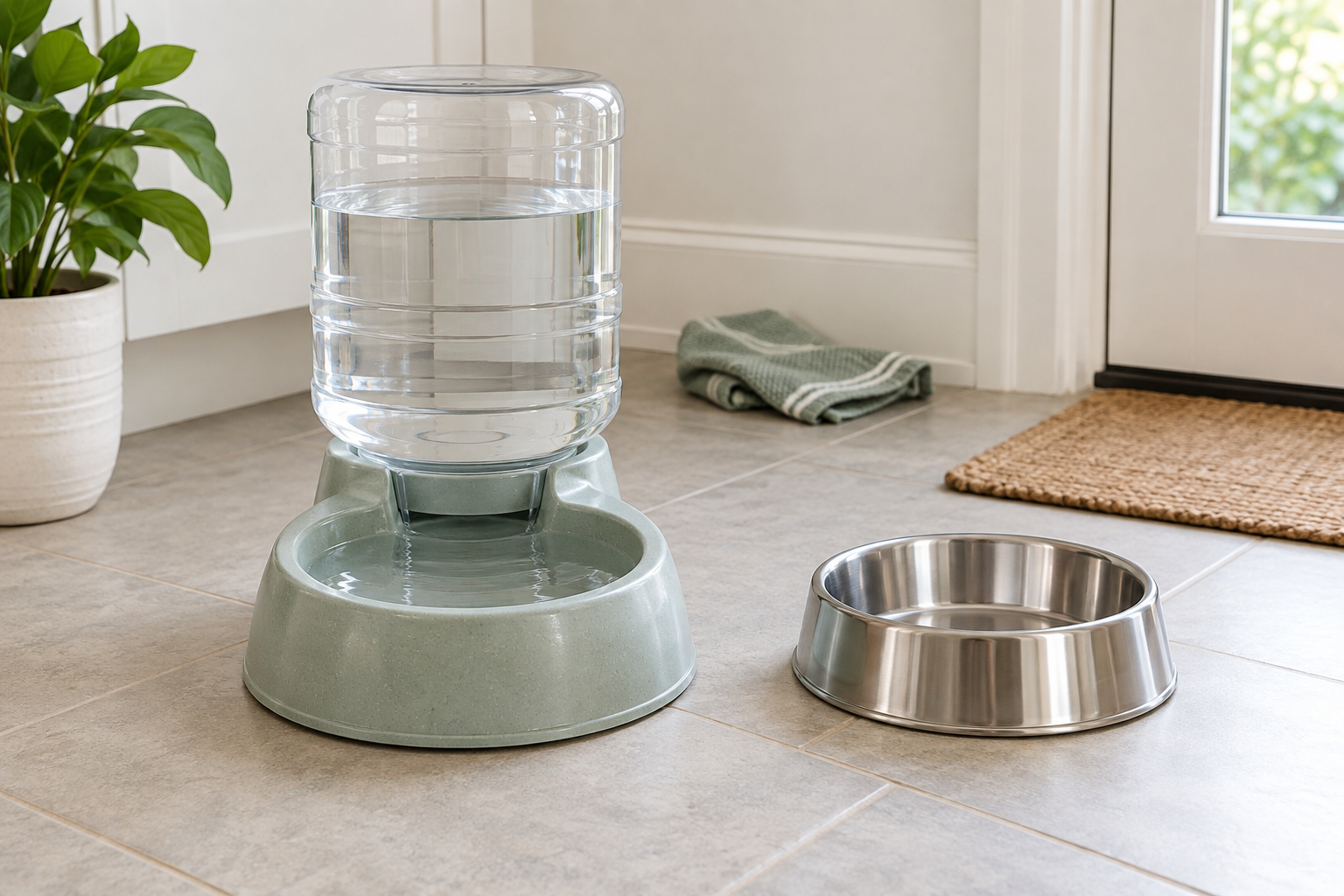
A gravity dispenser is a convenience item, not a health solution and not a set-it-and-forget-it water source. It uses an inverted reservoir to replace water in the attached basin as the level drops; it does not circulate or filter water like an electric fountain. Continue checking the water and the equipment throughout the day, provide an appropriate backup when needed, and follow the maker's care directions. Contact a licensed veterinarian about any sudden or concerning change in how much a pet drinks.
Quick Decision: Buy, Delay, or Keep the Bowls
Buy when ordinary bowl top-ups are a recurring friction point, the assembled unit fits a stable low-traffic spot, and everyone responsible for it can comfortably handle the full cleaning and refill routine. Delay until you can measure the space, confirm the full weight, and inspect current instructions. Keep standard bowls when they are simple to see, refresh, wash, and place in more than one location. Skip when the reservoir hides the water condition, is awkward to clean, or would be difficult for a pet to approach without crowding.
Start With Your Actual Refill Routine
For several ordinary days, note when you check, refresh, and wash the existing bowls. The useful question is not whether a dispenser holds more water. It is whether a larger reservoir removes a real inconvenience while preserving frequent observation and manageable cleaning.
A dispenser may fit when a small bowl needs inconveniently frequent attention during normal household activity. It is less persuasive when bowl refreshes already line up with meals or another reliable routine. A larger volume should not become a reason to look less often, and it does not replace appropriate care arrangements when nobody is home.
Capacity Has a Weight and Space Cost
Compare stated usable capacity rather than judging from photos. Then add the empty product weight to the water weight and consider the awkward shape of an inverted reservoir. Check whether you can fill it without overreaching, carry it securely using only documented handling points, invert or seat it as directed, and place it without trapping fingers or spilling across the floor.
Measure the complete assembled footprint, not just the bottle. Leave room for a pet to stand naturally at the basin and for you to lift the reservoir straight up if required. Check nearby doors, cabinets, vents, appliances, and walking paths. Bigger is a poor trade when the unit cannot fit in the sink or drying area.
Cleaning Access Should Decide the Purchase
Look for current care instructions before ordering. Check whether the reservoir separates fully from its base, whether your hand or an appropriate brush can reach its interior, and whether the valve and basin can be disassembled without improvising. Narrow necks, deep seams, enclosed springs, and decorative channels can add work.
Confirm which parts may be washed by hand or in a dishwasher; do not infer dishwasher compatibility from the material alone. Every washed part needs a practical place to rinse and dry. If you cannot inspect the inside under good light or cannot reach the areas the maker says to clean, a plain bowl is the more maintainable choice.
Check Water Visibility and Reassembly
A clear reservoir makes the remaining level easier to see, but reflections, tint, labels, or placement against a dark wall can still obscure it. Look at the basin too. A full bottle does not tell you whether the outlet is seated correctly, the basin is accessible, or something has entered the exposed water.
Review how the valve seals during filling and opens after installation. Use only included or maker-supported parts, and check seals and attachment points for damage during each wash. Test a new unit exactly as directed on an easy-clean surface before relying on it in the normal water station. Persistent leaking, uncertain assembly, cracks, rough edges, or a valve that does not operate as documented are reasons to stop using it and contact the maker.
Match the Basin to the Pet and the Room
Compare the drinking edge height, available head room beneath any reservoir overhang, and open space around the basin. Watch whether each pet can approach and leave without squeezing past furniture or another animal. Pet preference matters: a dispenser that goes unused is not an upgrade over a familiar bowl.
In a multi-pet household, one larger unit can create a shared pinch point. Separate water stations may be easier for pets to access and simpler for owners to observe. Introduce any new setup while the familiar option remains available unless a veterinarian has instructed otherwise, and monitor interaction without forcing use.
Stability, Floor Protection, and Placement
Choose a level location and compare the product's base width, feet, reservoir connection, and filled center of gravity. Keep it away from steps, electrical cords, busy door swings, and places where people may kick it. Do not add homemade weights, adhesives, or altered parts that conflict with the directions.
For routine drips, place the unit only on a floor and mat combination suitable for that surface and follow floor-care guidance. A washable feeding mat may simplify the reset, but it should lie flat and should not make the dispenser rock. If splashing—not refill frequency—is the real problem, the guide to no-spill pet bowl varieties is the more relevant next step.
Who Should Skip a Gravity Dispenser?
- Homes with an easy bowl routine: extra capacity adds bulk without removing meaningful work.
- Anyone who cannot comfortably handle the filled reservoir: choose smaller, lighter bowls that are easier to carry and clean.
- Tight or crowded feeding areas: the assembled footprint can reduce pet access and create a traffic obstacle.
- Pets that avoid the new shape or shared station: keep familiar, appropriately placed bowls available.
- Setups with poor cleaning access: hard-to-reach reservoirs, valves, or seams can make routine care unnecessarily complicated.
- Health-related drinking concerns: ask a veterinarian what observation or measurement is appropriate instead of trying to solve the concern with equipment.
Simple Alternatives Often Win
A second standard bowl can add another access point without introducing a valve or large reservoir. Two smaller bowls may also be easier to lift, wash, dry, and place in different rooms. If splashes are the annoyance, try a correctly sized washable mat or compare suitable bowl shapes before increasing stored water volume.
If you want circulating water and accept a pump, filters, a cord or charging routine, and more parts, read the pet water fountain worth-it guide. For a first-home setup, the new-pet essentials guide helps separate day-one bowls and cleanup supplies from upgrades that can wait.
Compare the Two Formats Directly
If the remaining question is stored capacity versus a simpler open setup, use the gravity water dispenser versus standard bowl comparison to check visibility, lifting, cleaning, floor space, and multi-pet access side by side.
Bottom Line
A gravity water dispenser is worth it when it solves a documented refill inconvenience and remains easy to see, lift, position, disassemble, wash, dry, and monitor. Choose capacity only after measuring its filled weight and footprint. Keep standard bowls when they already support a dependable routine, and contact a veterinarian—not a product listing—when a pet's drinking changes unexpectedly.