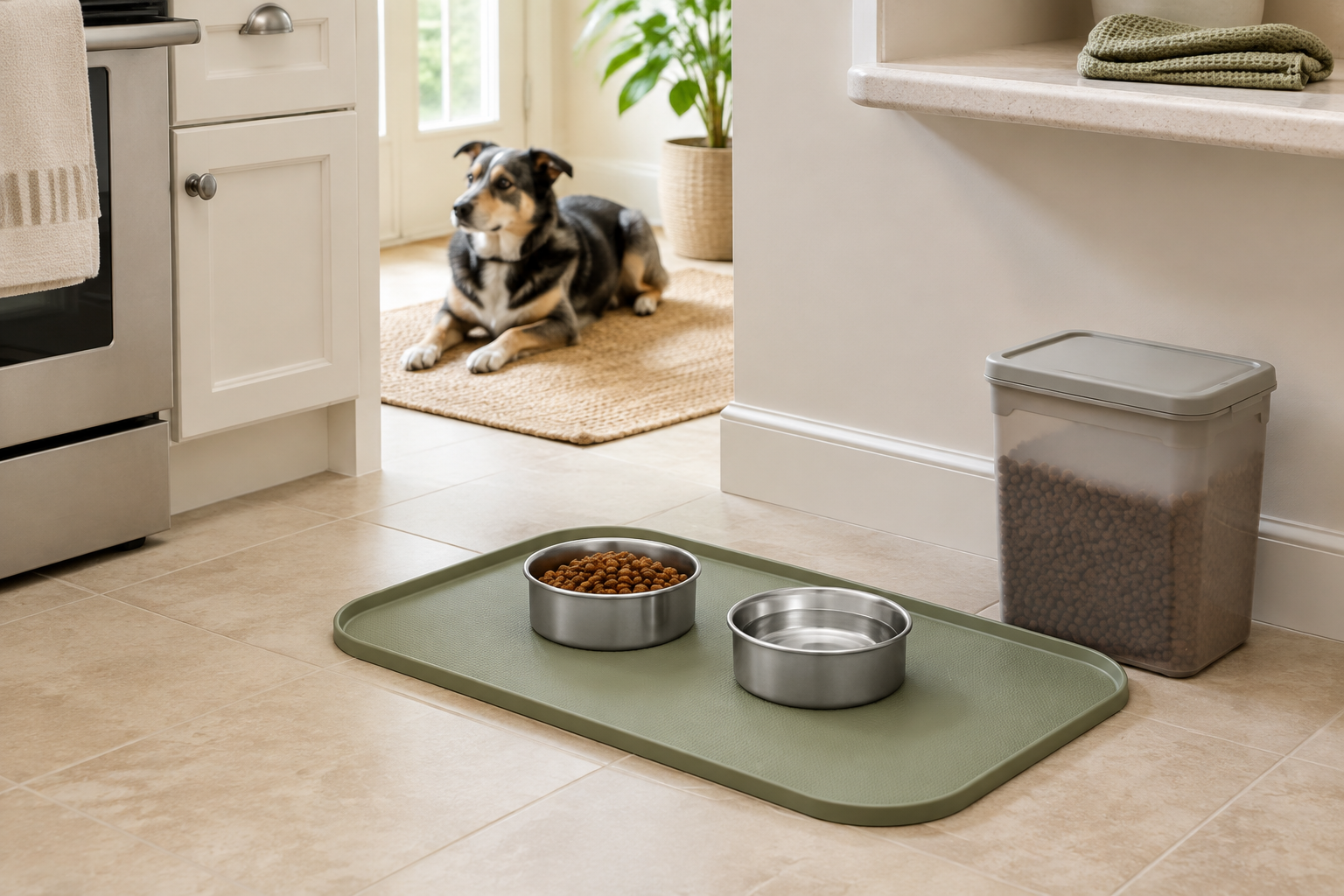
A feeding station is a convenience setup, not a health solution. It cannot correct appetite, swallowing, thirst, pain, guarding, or feeding conflict. Follow food-label and veterinarian guidance, and keep cleaners and other restricted supplies secured away from pets.
Quick Decision: Set Up, Simplify, or Skip
Set up a dedicated area when a measured mat and stable bowls would contain a frequent, predictable mess and the spot stays out of busy traffic. Simplify when one targeted change—moving the bowls, replacing a sliding bowl, or assigning a washable cloth—solves the problem. Skip new products when cleanup is already quick, floor space is tight, or extra seams and furniture would add work.
Run a Three-Meal Mess Audit
Do not shop from the memory of the worst spill. Observe three ordinary meals or water refills and write down where the mess begins and ends. Is water landing beyond the current mat? Is food collecting against a wall? Does the bowl move, or is the location simply in a busy path? Is the food bag the clutter problem?
Measure the farthest routine drip or crumb from the bowl edge. That footprint is more useful than a vague label such as large. If there is no repeated problem, there may be no setup to fix.
When a Feeding Mat Is Enough
A mat is the simplest product path when crumbs and ordinary drips are the main issue. Measure the bowls side by side with space to lift each one without tipping the other. Compare that arrangement with the mat's usable interior, not just its outside dimensions.
Raised edges can contain small drips but also create another edge to wipe and may affect how a small pet approaches the bowls. Confirm floor compatibility, especially on sealed wood or other moisture-sensitive surfaces, and lift the mat regularly so the floor can be checked and cleaned.
When Bowl Stability Is the Better Fix
If a lightweight bowl travels across the floor, a wider or non-slip base may address the problem without enlarging the whole station. Confirm usable capacity and dimensions rather than choosing by pet label alone. Removable rings and multi-part bases add cleaning steps, so inspect how every food-contact and floor-contact part comes apart.
Do not change bowl height or feeding position to address a medical concern without professional guidance. If your pet seems uncomfortable approaching the bowl, coughs, gags, vomits, stops eating, or shows a sudden change in drinking, contact a veterinarian.
When Storage Belongs Nearby—and When It Does Not
Nearby storage can reduce open-bag clutter when it fits the original package, opens without moving the bowls, and remains inaccessible to the pet. Keep the original bag or its full label and lot information, and follow the food maker's storage directions.
Skip combined feeding furniture if its doors, drawers, or tilt-out sections crowd the pet, trap drips in seams, or make bowl removal awkward. Separate storage may be easier to lift, clean, and replace. For that decision, compare an airtight container with original-bag storage.
Measure the Whole Traffic Path
- Bowl footprint: Include handles, wide bases, and room for lifting.
- Mat footprint: Mark the outer edge and any raised lip.
- Approach: Leave an open, comfortable route without cornering the pet.
- Human traffic: Keep the station clear of doors, chair legs, and narrow walkways.
- Cleaning access: Make sure every item can be lifted and the floor beneath reached.
- Multi-pet use: Avoid a layout where one pet can block another's exit.
Cleaning Burden Is Part of the Purchase
Count the pieces that need routine washing: bowls, mat, stand inserts, splash guards, lids, scoops, and storage surfaces. Check each maker's directions rather than assuming a material is dishwasher-safe. A product is not low-mess if its grooves, hinges, or fabric layers take longer to reset than the original spill.
Inspect mats for tears or curling, bowls for cracks, chips, rough areas, or damaged bases, and storage for failed lids or sharp damage. Replace or stop using an item based on its condition and manufacturer guidance, not a universal timetable.
Who Should Skip a Dedicated Station?
Skip it when one bowl on an easy-clean floor already works, the only location blocks circulation, the pet chews mats or loose parts, or the setup would put food next to cleaners, cords, or other restricted items. Also skip a large station if you move frequently or cannot dry washable parts fully before returning them to the floor.
If meals involve guarding, chasing, intimidation, or repeated conflict, rearranging products may not be enough. Ask a qualified behavior professional or veterinarian for appropriate guidance rather than expecting a stand or mat to change the interaction.
Choose the Next Useful Guide
If the station itself makes sense, use the low-mess feeding-station setup guide to plan bowls, mat, placement, storage, and reset steps. Compare silicone and fabric feeding mats when material and drying are the main tradeoff, or use the feeding-mat buying guide to compare clearly defined varieties.
Bottom Line
A low-mess feeding station is worth setting up when one measured, easy-clean arrangement reduces a mess that happens most days. Begin with observation, solve the smallest specific problem, and keep every item easy to lift, wash, dry, and inspect. If the current setup already resets quickly, the calmest choice may be to leave it alone.