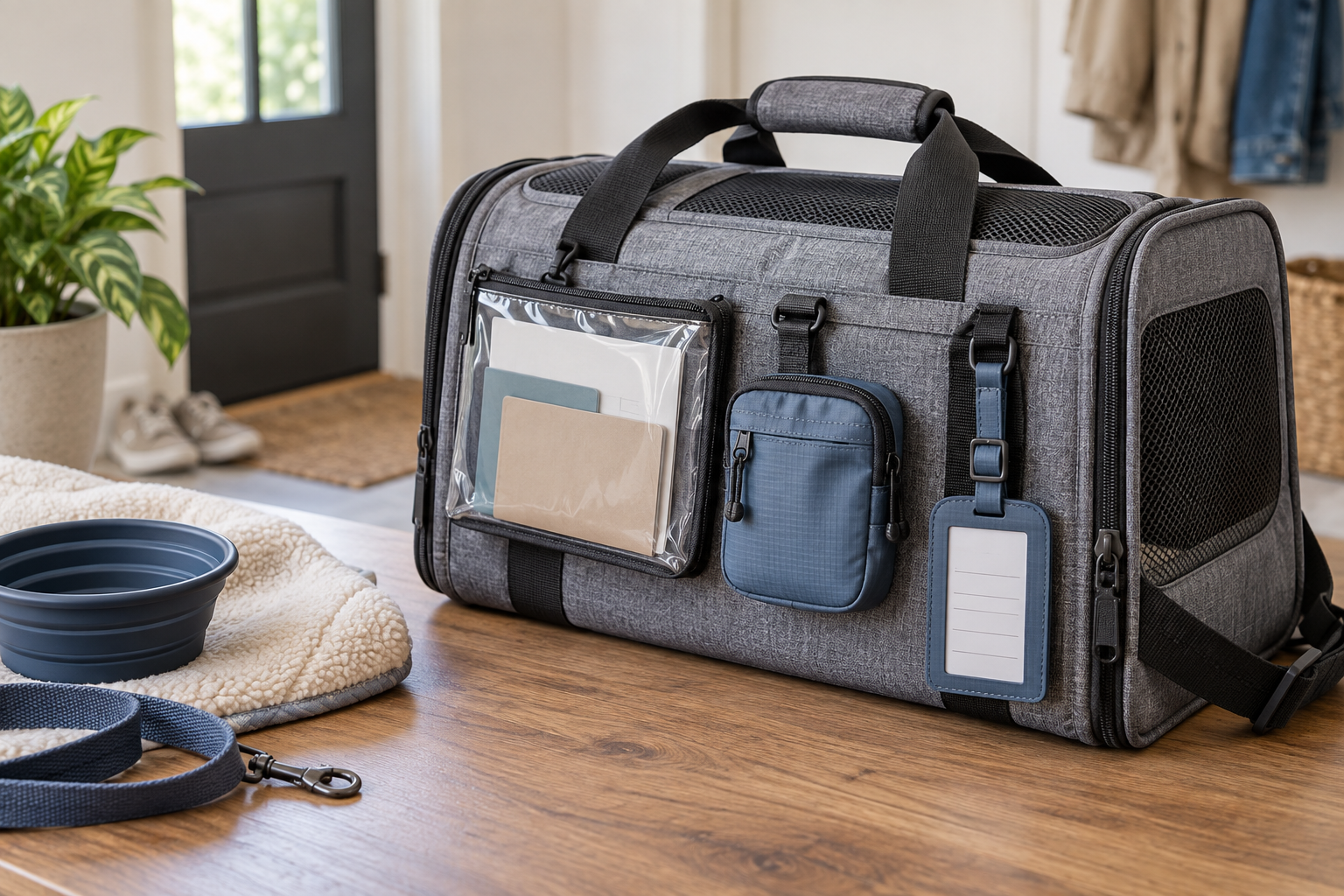
This is an organization decision, not a universal travel-document checklist. Rules can vary by destination, trip, transport provider, and carrier. Verify current requirements with the relevant official source or provider before travel, and ask a veterinarian about health records, medication, illness, distress, or medical transport needs.
Quick Decision: Buy, Use a Tag, Keep Documents With You, or Skip
- Buy a removable pouch when the same replaceable copies or plain checklist must stay with a carrier on recurring trips and a safe external attachment point exists.
- Use a covered luggage tag when basic contact information is the only carrier-attached information you need.
- Keep documents in your own bag when they are original, sensitive, valuable, trip-specific, or rarely needed at the carrier.
- Delay until the transport provider confirms what can remain attached and you have measured both contents and attachment point.
- Skip when the pouch blocks access or ventilation, dangles within pet reach, exposes private details, or adds a snag point.
The Seven-Part Worth-It Test
- Real requirement: Which current, verified trip need makes carrier-attached storage useful?
- Information boundary: Can the contents be limited to a minimal contact card, replaceable copy, or non-sensitive checklist?
- Measured fit: Do the folded contents and any inner sleeve fit without stressing the closure?
- Carrier compatibility: Is there a maker-permitted or otherwise suitable exterior loop or handle point clear of ventilation and operation?
- Privacy: Can personal details face inward or remain covered until someone deliberately opens the pouch?
- Exposure: Does the maker's exact weather wording match the real route, with an inner sleeve where appropriate?
- Upkeep: Will you remove outdated papers, inspect the attachment, clean the pouch, and dry it fully?
Measure Contents and Attachment Separately
Measure the folded paper or card including any protective sleeve. Then compare it with the pouch's usable interior, zipper path, and opening—not only its external dimensions. Overfilling can bow a closure and make papers difficult to retrieve. A large pouch also may swing or protrude even when the documents technically fit.
Inspect the loaded carrier. The pouch must stay outside the pet compartment and clear of teeth, claws, mesh, doors, zippers, handles, wheels, controls, and the main lifting grip. Test ordinary opening and carrying motions at home. Do not modify the carrier or attach hardware through mesh to create a mounting point.
When a Tag or Owner-Carried Wallet Is Better
A covered luggage-style tag is usually the simpler option for a minimal contact card. It adds less bulk and makes the information's purpose clear, though it still requires an intact strap, suitable attachment point, and deliberate privacy choices. A tag does not guarantee recovery and may not meet any provider-specific labeling rule.
An owner-carried document wallet is better for originals, sensitive records, payment cards, keys, medication, or anything difficult to replace. It also avoids leaving papers exposed when the carrier is stored or handled separately. For organizing a larger packing list, first decide whether a dedicated pet travel supply case is worth it.
Cost, Setup, and Maintenance Tradeoffs
A pouch adds purchase cost and a small amount of packed weight, but its larger cost is attention: the papers must stay current, the attachment needs inspection, and damp material must be emptied and dried. Removable designs can move between compatible carriers, while carrier-specific straps may sit more neatly but be less flexible.
An opaque pouch protects casual visibility better than a clear face, but it can make a checklist harder to identify. Clear material gives faster visual confirmation but exposes whatever faces outward. Neither format should be assumed waterproof. Follow current maker care and weather directions, and replace a pouch with a damaged zipper, cracked window, loose seam, frayed strap, or unreliable clip.
Red Flags and Who Should Skip
Skip listings that omit usable dimensions, attachment details, materials, closure views, or care directions. Treat universal “airline approved,” “waterproof,” “loss proof,” or compliance claims cautiously; confirm requirements with the actual provider. Avoid long cords, open hooks, sharp hardware, weak clips, and attachments that can work into the carrier interior.
Skip an attached pouch entirely when trips are rare, an ordinary tag and owner-carried wallet already work, or the pet mouths external accessories. Do not attach irreplaceable originals, medication, keys, payment cards, or sensitive identity documents. If the pet is ill, injured, highly distressed, or needs special transport, contact a veterinarian rather than treating paperwork storage as the main problem.
Bottom Line
A pet carrier ID pouch is worth it for a recurring, verified need to keep a small replaceable copy set with the carrier—provided the contents, privacy boundary, attachment, exposure, and upkeep all check out. Use a covered tag for basic contact details, keep important documents with you, and delay or skip the purchase when requirements or attachment safety are unclear.
Once the category earns a place, use the carrier ID pouch buying guide to compare three formats. For the wider setup, visit the walking, travel, and outing gear hub and the pet carrier guide.