This is a category buying framework, not a hands-on ranking or a travel-document checklist. Requirements vary by destination, carrier, transport provider, and trip. Confirm current requirements with the relevant official authority, veterinarian, and carrier before leaving.
Quick Comparison: Match the Format to the Job
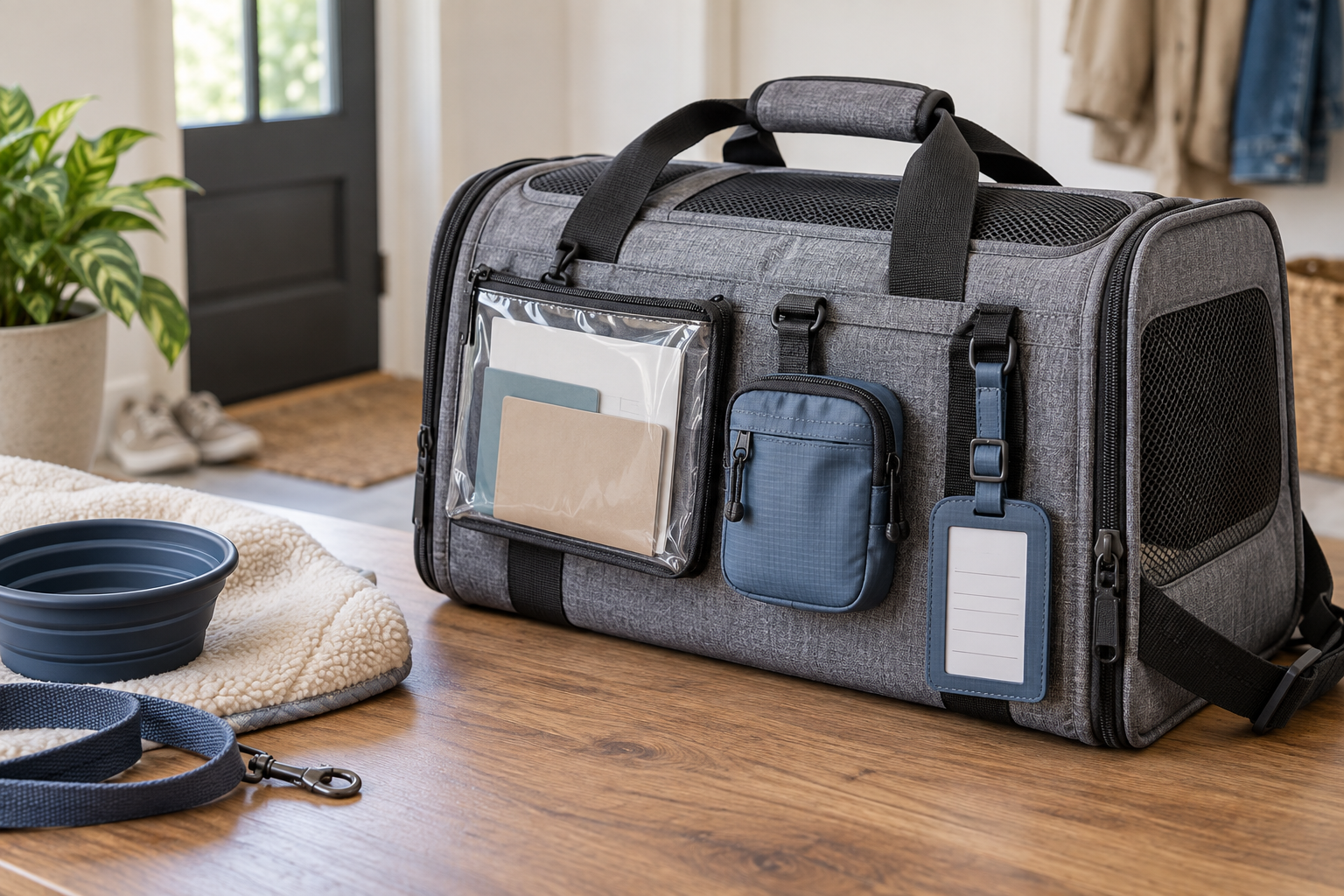
Clear zip pouch: best for quick visual checks
A clear face can make a packing list or non-sensitive copy easy to spot. It also exposes whatever faces outward, so rotate personal details inward or choose an opaque format. Check that the zipper opens fully and the pouch does not cover ventilation, doors, handles, or carrier labels.
Compact enclosed zip pouch: best for removable storage
An opaque or lined pouch gives papers more coverage and can move between carriers if the attachment is easy to release. “Water-resistant” is not the same as waterproof: follow the maker’s description, protect paper inside when needed, and inspect seams and closures after damp trips.
Privacy-cover ID sleeve: best for basic contact details
A luggage-style sleeve is the smallest option and suits a contact card rather than a document bundle. Choose a cover that stays closed but lets an appropriate person find the information. A tag is only one identification layer and does not guarantee recovery or satisfy travel rules.
Selection Criteria That Matter
- Measured contents: Measure the folded papers or card, including any protective inner sleeve, rather than relying on “travel size.”
- Carrier compatibility: Use a designated loop or stable handle point. Never block mesh, zippers, doors, wheels, controls, or the main carry grip.
- Attachment: Compare closed straps, clips, hook-and-loop wraps, and sewn tabs for removal, swing, snag points, and carrier wear.
- Closure: A zipper contains more than an open sleeve; a flap is faster but can lift. Test the closure with the actual load before travel.
- Privacy: Display only information that is useful and appropriate. Keep originals and sensitive documents secured with you.
- Weather exposure: Treat resistance claims narrowly. Use an inner protective sleeve if paper could encounter rain, spills, or condensation.
- Cleaning: Follow the manufacturer’s care directions and dry the pouch completely before repacking paper.
- Pet access: Attach the pouch outside the pet compartment, away from teeth, claws, loose straps, and ventilation.
A Simple Packing Framework
Separate information into three groups: a minimal contact card that may stay on the carrier; replaceable copies or a plain checklist that may go in a pouch; and originals or sensitive records that stay secured with the responsible adult. Label the pouch by purpose without printing private details on the outside.
Before each trip, confirm the attachment is closed, the pouch does not interfere with using or lifting the carrier, and the contents are current. Remove the pouch for storage if dangling hardware could tempt a pet to chew or catch on nearby items.
Who Should Skip a Carrier-Attached Pouch?
Skip it if the carrier has no safe attachment point, your pet can reach the pouch, or the pouch interferes with ventilation or access. A document wallet kept in your own travel bag may be simpler and more private.
Also skip a large exterior pouch when the carrier will pass through tight spaces or automated handling where protruding accessories may snag. Ask the transport provider what can remain attached; do not assume a pouch is permitted because it fits at home.
Build the Rest of the Carrier Setup
Start with the pet carrier guide for vet visits and short trips. Use the hard-sided versus soft-sided carrier comparison when choosing the carrier itself, or the hard-shell versus fabric travel-supply case comparison when documents should travel separately.
The Bottom Line
Choose a clear zip pouch for quick visual checks, an enclosed zip pouch for removable covered storage, or a privacy-cover sleeve for a basic contact card. Measure first, protect private information, keep originals with you, and treat the pouch as organization—not proof that a travel setup is complete or approved.